


Reykjavik has quite a lot of museums: big and small, typical and truly bizarre. They are obviously not the most important thing to see when you come to Iceland, but when you have a bit of free time on your trip, some of these museums are well worth a visit.
See what museums you can find in Reykjavik and which ones, in my opinion, are worth visiting.
The most interesting museums in Reykjavik
Reykjavik is a charming, colorful little city that often serves as a base for exploring Iceland, but on its own it is a rather minor attraction. We come to Iceland for its stunning nature, so most of us plan to spend our time outside the cities. Sightseeing in Reykjavik is best done on the side, at the end of the trip, when we have half a day to spare and all the more interesting places have already been seen.
What is worth seeing in Reykjavik and how to plan a walk that covers all of its highlights – read this article: Sightseeing Reykjavik – top things to see and do.
However, if the weather is exceptionally unfriendly, you have a free day, or you want not only to look at Iceland but also to get to know it a little deeper – its nature, history and culture – the museums listed below are certainly worth a visit.
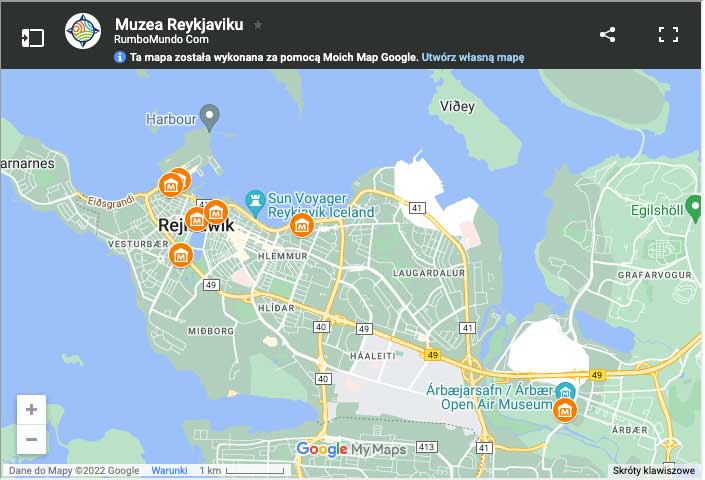
Map: The most interesting museums in Reykjavik — click to open the interactive map
The Arbaer open air museum
Árbæjarsafn (Arbaer Open Air Museum; literally: the Arbaer collection) is an open-air museum in Reykjavik, showcasing everyday life of Icelanders in the late 19th and early 20th century.
A visit to Arbaer is an interesting and educational experience, especially on a nice day, when we have 2-3 hours in the city. The museum is open all year round and has around 30 historic residential houses and other buildings. Most of them have been moved here from the vicinity of the museum or from the center of Reykjavik. You can go inside all of these buildings to see their arrangement and design. The museum does a very good job of illustrating not only the differences between today and the late 19th century but also the striking gap between the poor country life and wealth in the city.
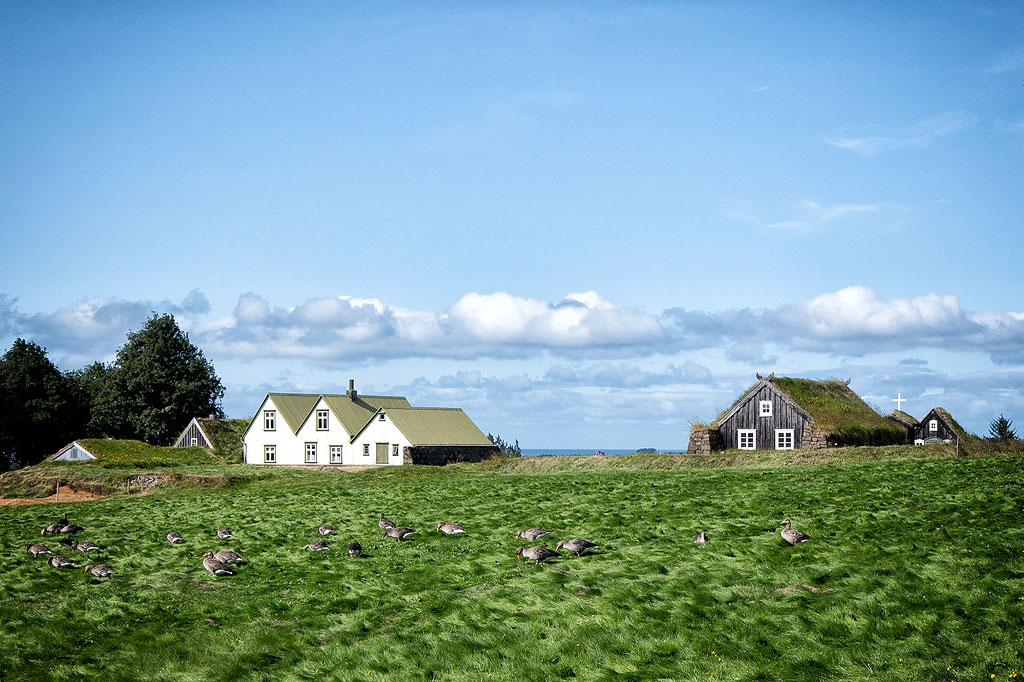
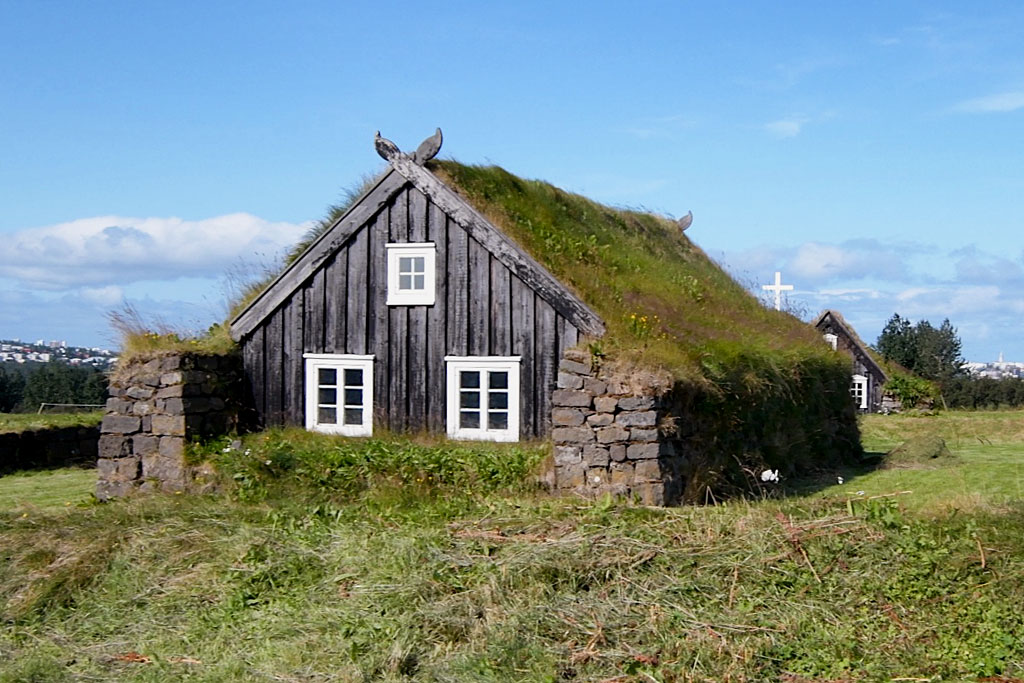

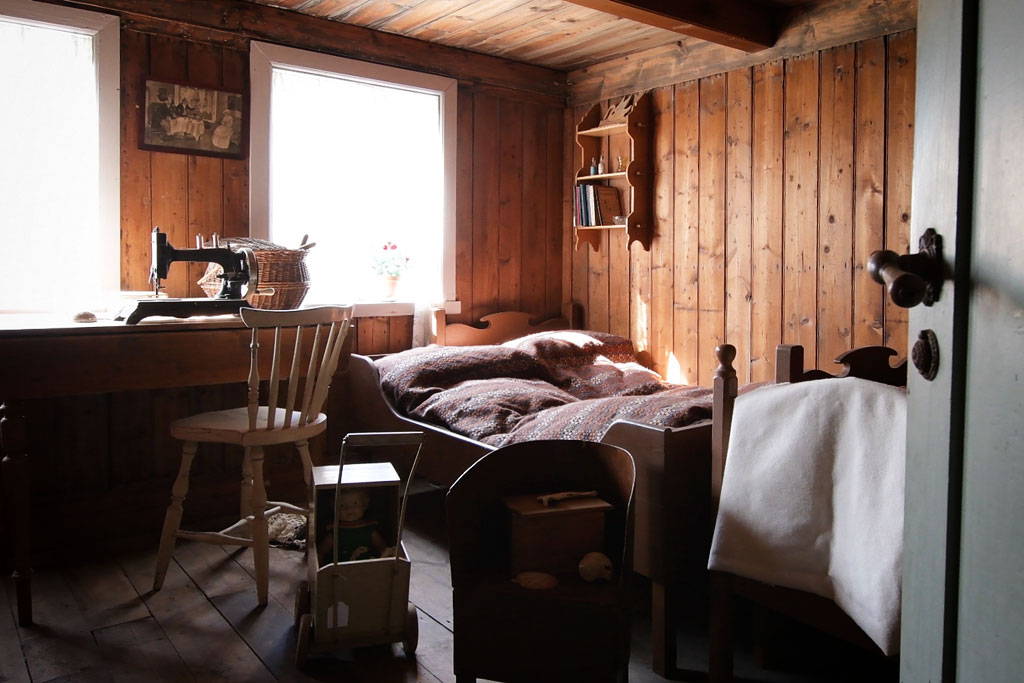
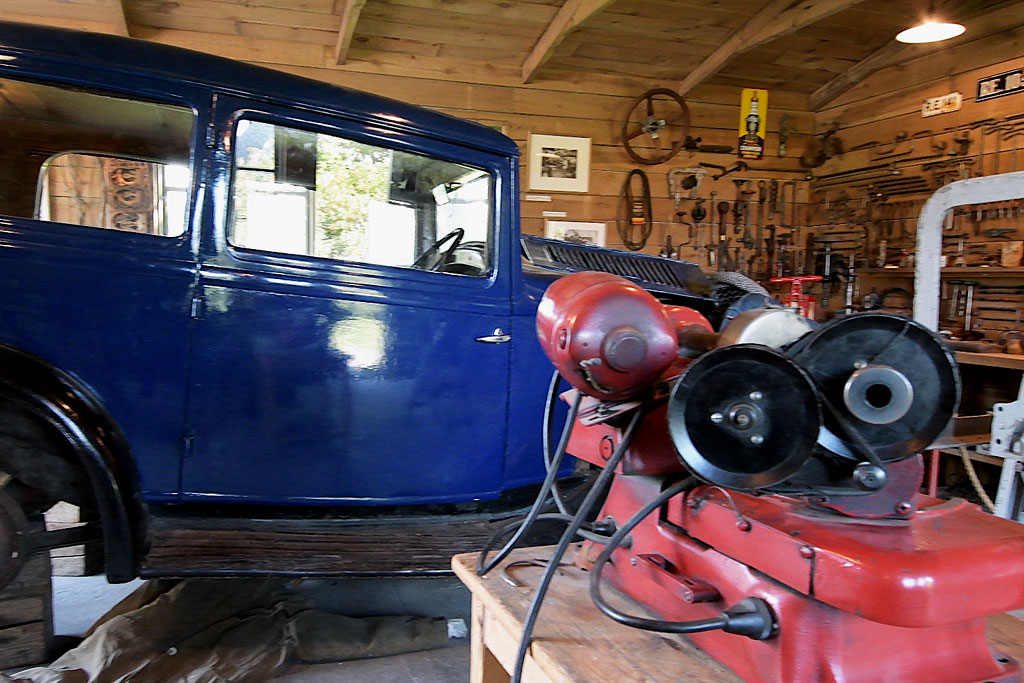


Among the buildings you will find a city main square, a school, village and farm buildings (a smithy, stable, granary, henhouse, etc.), a church, a repair garage, a gas station and even a mountain cabin from 1920 where scouts stayed on their trips. You can also see up close a drill shaft brought to Iceland to mine for gold and finally used to drill for thermal water. There is a Norwegian house here, too – one of the original houses that were moved to Iceland in parts (produced in Norway) in the early 20th century and were assembled here.
The museum organizes numerous exhibitions and events devoted to specific periods and aspects in the history of Reykjavik, such as: crafts days, old vehicles, Christmas shows and many more. You will meet the museum staff dressed in traditional Icelandic outfits walking around the area, and in the summer you can also see farm animals and pets.
The museum offers a charming view of Reykjavik, over the Ellidaar valley – a large recreational area with beautiful groves and quaint landscapes.
History of Arbaer
The Arbaer museum was first established in 1957 as a response to the rise of big business, which was weakening local culture and traditions.
The first attempts to establish the museum were initiated in 1942, when the city council received a petition to open an open-air museum. The petition was sent to the Reykjavik Association – a group dealing with local history. Around the same time the process of collecting documents related to the history of the city started, which laid the foundation for the municipal archives.
In 1947 the city council decided to set up the Reykjavik City Museum and launch an exhibition about the city’s history. The exhibition was organized in 1949 in the newly built National Museum and was the first occasion to collect exhibits illustrating the history of Reykjavik.
In 1957 the city council agreed that a museum could be established on the old Arbaer farm. The place had already been popular as a stop on the way into and out of Reykjavik. The open-air museum opened in the summer of 1957, and in 1968 the History Museum in Reykjavik was merged with the Árbær open-air museum, receiving the name of Árbæjarsafn.
Árbæjarsafn – address, how to get there, opening hours, admission fees
- The museum is open daily: from June to August 10 a.m. to 5 p.m., from September to May 1 p.m. to 5 p.m.
- A guided tour in English starts daily at 1 p.m.; tours for groups (10+ people) can be arranged beforehand.
- Admission fees (2026, without the Reykjavik City Card):
- adults – 2,550 ISK (about $21);
- children and youth under 18 — free admission;
- students with a student card — 1,550 ISK (about $13).
- There are two shops in the museum: one right next to the ticket counter, and the other one in the Lækjargata 4 house. You can buy souvenirs, postcards, sweets and snacks. Holders of the Reykjavik Culture Pass get a 10% discount.
- You can get to Arbaer on public transit – buses 12 and 24 stop close to the museum. Additionally buses 5, 6, 15, 16, 18, 57, 105 and 106 will take you to within 800 m (0.5 mi) of the place.
- The museum is located about 8 km (5 miles) east of the center of Reykjavik. When driving there, take the big road 49 and then turn south into Hofdabakki street. There is a small parking area next to the museum.
- Arbaer’s website: Reykjavík City Museum (with the current rate list).
The Settlement Exhibition — what remained of the oldest settlements
The Settlement Exhibition (Landnámssýningin) is a chance to get a glimpse of the life of the first Icelandic settlers (essentially, Vikings).
The exhibition (like the Arbaer open-air museum and the Maritime Museum) is managed and maintained by the Reykjavik City Museum and first opened in 2006. Its exhibits come from archeological excavations that have been taking place in Reykjavik since 2001. This is precisely when one of the oldest Icelandic man-made structures was discovered: a fragment of a wall predating 871 and a so-called longhouse (one-building farmhouse) from the 10th century. The whole exhibition is built around these two exhibits. Apart from these, you will find artifacts from the Viking Age discovered in central Reykjavik and on Videy island.
The very format of this exhibition is really exciting and engaging. As you peer into different “windows”, you learn what the homes of Icelandic settlers looked like, how they built them and how they lived. The multimedia table shows large models of different buildings and provides details of the daily lives and work of settlers as well as interesting findings from archeological research.
You can also use touch screens to learn more interesting facts about cultural similarities of nations from the North Atlantic region, the expansion of Vikings and how they settled in other countries. Visitors can use audio guides in Icelandic, English, French, German and Norwegian.
The Settlement Exhibition – address, how to get there, opening hours, admission fees
- The museum is on Aðalstræti street, number 16, in the very city center, not more than 500 m (0.3 mi) from the Harpa building and literally 100 m (330 ft) from the Ingólfstorg square.
- The nearest bus stop is Radhusid (Ráðhúsið – the Town Hall), with buses 1, 3, 6, 11, 12, 13 and long-distance 55.
- There are several parking lots in the vicinity, but here you have to pay for parking.
- The exhibition is open every day from 10 a.m. to 5 p.m.
- An adult ticket is 3,100 ISK (about $26), a student ticket 2,000 ISK (about $17) – 2026 prices.
- In summer a guided tour in English starts daily at 11 a.m.
- The exhibition has a special area for children, where they can engage in games based on how Icelandic children played in the times of early settlement.
- The museum has a souvenir shop.
- The Settlement Exhibition website: The Settlement Exhibition.
The Reykjavik Maritime Museum
The Reykjavik Maritime Museum (Sjominjasafnid) is another branch of the Reykjavik City Museum. As its name suggests, it focuses on the bond between the lives of Icelanders and the surrounding nature, especially the ocean, with its fish and whales.
The museum’s main permanent exhibition is Fish & folk – 150 years of fisheries; alongside it there are temporary exhibitions (in 2026: A View of the North), and the Coast Guard vessel Óðinn is moored at the pier outside.
Fish & folk – 150 years of fisheries
As you can guess from the title, the exhibition looks into fisheries in Iceland – from the late 19th century up until modern day. This is the period of dynamic growth of industrial fisheries based on motor fishing boats and larger fishing vessels. You can follow the entire cycle of the “production of fish” – from when they live in the ocean, to the catch, industrial processing and distribution to stores and restaurants. Another big, and perhaps the most interesting, part of the exhibition focuses on fishing vessels as well as various and evolving methods of fishing.
Óðinn Coast Guard Vessel
Because Iceland has no military forces of its own, the Coast Guard is the country’s humble substitute for a navy. Odinn took part in the so-called Cod Wars, when Iceland defended its fishing rights and grounds. The ship’s main weapon was a 57-mm gun on the bow, but its most effective weapon used during these wars was the trawl wire cutter that was able to cut off the nets of unauthorized fishing vessels. Apart from these adventures, the ship was instrumental in a number of rescue operations – it towed broken-down boats to port over 200 times; it helped several vessels stranded on the shallows; and on two occasions it rescued crew members of sinking vessels. Guided tours of Odinn (a little under an hour) start at 1 p.m., 2 p.m. and 3 p.m., daily from March 1 to October 31. You need separate tickets for these.
The Reykjavik Maritime Museum – address, how to get there, opening hours, admission fees
The Maritime Museum is naturally located in the port district – at Grandagarður 8.
Not far from it, you can find the Whales of Iceland exhibition, the Saga Museum and plenty of street-food places. Your visit to the Maritime Museum can be a part of a nice walk around Reykjavik’s port district.
It is best to get here on bus 14, getting off at Grandagarður. The port is within walking distance of the city center – only about 30 minutes on foot from Hallgrimskirkja, with the most interesting parts of town on the way.
The museum is open every day from 10 a.m. to 5 p.m.
An adult ticket is 2,550 ISK (about $21), the Odinn tour 1,940 ISK (about $16), and a combo ticket 3,850 ISK (about $30) – 2026 prices, students 1,550 ISK (about $13).
The Maritime Museum website: Reykjavík City Museum (with the current rate list).
The National Museum of Iceland
The National Museum of Iceland (Þjóðminjasafn Íslands) is the major source of knowledge about the history of the settlers in Iceland, the nation and the country. Its main permanent exhibition has a telling title: Making of a Nation – Heritage and History in Iceland.
Compared to its counterparts in bigger countries, the National Museum of Iceland is clearly small, with about 2,000 exhibits on display, while the Metropolitan Museum of Art in New York holds more than 1.5 million objects. But all this means that you can visit this place in a shorter amount of time and still learn about major milestones in the settlement process and the making of the Icelandic nation.
Exhibitions run chronologically, so visitors are taken through the entire history of the island – from the first Viking ships and homes to modern-day industrial achievements. The museum also has an interesting collection of sacral paintings that came from various Icelandic churches as well as many everyday objects and equipment such as tools or boats.
The whole visit will take 2 to 3 hours.
The National Museum of Iceland – address, how to get there, opening hours, admission fees
The museum is at Sudurgata 41, which is about 750 m (0.5 mi) south of the centrally located Ingólfstorg square and about 1 km (0.6 mi) west of Hallgrimskirkja.
The easiest way to get here is on bus 12 – up to the Þjóðminjasafn stop; however, if you want to come by car, there is a large parking lot next to the museum.
The National Museum of Iceland is open daily from 10 a.m. to 5 p.m., all year round.
The Reykjavik City Card holders, children and youth under 18 and persons with disabilities get free admission. An adult ticket is 3,300 ISK (about $28), students and seniors pay 1,600 ISK (about $13) – 2026 prices.
The National Museum of Iceland website: National Museum of Iceland.
The Saga Museum – history comes alive
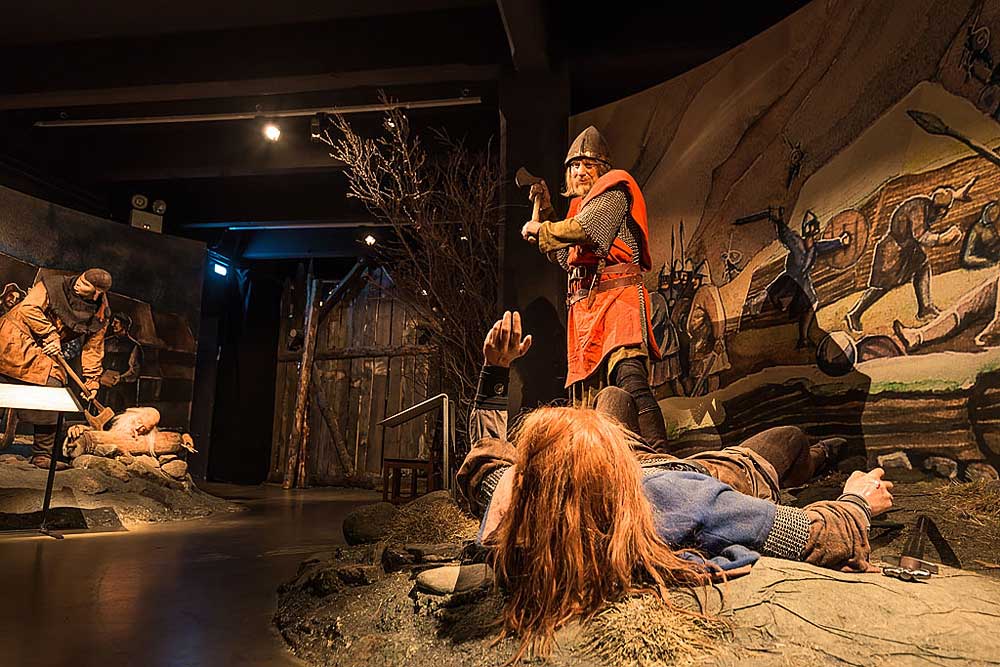
The Saga Museum
If you let your imagination run free when you enter the Saga Museum, you can feel like a time traveler as you explore the masterfully designed and made replicas of Icelandic historic figures based on sagas and Viking chronicles. The clothing, weapons and everyday objects have been made using traditional methods that have been kept alive over centuries. Woolen and linen items were dyed by hand, while all wooden artifacts were created based on designs handed down from generation to generation.

The Saga Museum exhibition
The Saga Museum – address, how to get there, opening hours, admission fees
- The Saga Museum is located in the port district of Reykjavik, at Grandagarður 2.
- In the vicinity you will also find the Maritime Museum, the Whales of Iceland and plenty of small (street-food) restaurants. Your visit to the Saga Museum can be a part of a nice longer walk in this area of town.
- Best to come here on bus 14, getting off at Grandagarður.
- The museum is open daily from 10 a.m. to 5 p.m.
- Admission (2026) is 4,000 ISK (about $35) for adults, 3,400 ISK (about $28) for students and seniors (60+) and 1,200 ISK (about $10) for children aged 6-12. With the Reykjavik City Card you get 10% off.
- While visiting the museum it is good to take the audio guide, which is available in Icelandic, English, French, German, Russian, Spanish and Swedish. You can also buy a printed guide (a brochure) at the reception.
- Photography is allowed here.
- The Saga Museum website: The Saga Museum.
Hofdi House – a place from the end of the Cold War

The Hofdi House
History of Hofdi House
Hofdi, built in 1909, initially was home to Mr. Brillouin — the French consul in Iceland. Interestingly, it was specially ordered and brought over from Norway. When the consul left the country at the beginning of World War I, the house was bought by Einar Benediktsson – poet, lawyer and businessman. Then the British vice-consul lived here, followed by the British ambassador.
Hofdi also became famous as the scene of the first radio transmission between Iceland and Europe.
The house has also been visited by celebrities, monarchs and politicians, such as Queen Elizabeth II, the President of Italy, German Chancellor Willy Brandt, Winston Churchill, and Marlene Dietrich.
Now the Hofdi House belongs to the city and is mostly used for formal receptions and meetings.
Hofdi – address, how to get there, opening hours, admission fees
- The Hofdi House is on Höfðatún street, in the northern part of the city center. It is only some 500 m (0.3 mi) northeast of the Hlemmur bus terminal. Buses 4, 12 and 16 stop nearby (Hofdatorg bus stop).
- Across the street, on the other side of Hofdatun, there is a big parking lot.
- The house is not open to visitors, so there are no tickets or admission fees.
The Icelandic Phallological Museum
Reykjavik, as well as the rest of the country, is rather full of small exhibitions and museums run by passionate hobbyists of different and rather bizarre topics. Usually such places are moderately attractive at best; however, the Icelandic Phallological Museum (Hið Íslenzka Reðasafn) is an exception in this category.
The very topic of the exhibition may be rather unusual, but it has been treated comprehensively and with scientific reliability. It doesn’t aspire, or even allow itself, to be erotic in nature. It is definitely a scientific place, despite the main topic, which could suggest otherwise.
A wide collection of nearly 300 penises comprises specimens that represent a great variety of mammals, both land and aquatic. There is a great degree of diversity and at the same time many similarities between these body parts belonging to different species, which makes you wonder about the beauty and chaos of evolution.
The museum has no erotic subtexts or content whatsoever and children are welcome to visit. But it is up to parents to decide whether their little ones are ready to experience the exhibition from a purely scientific point of view.
The museum is on Hafnartorg – literally 250 m (820 ft) from Harpa. The nearest bus stop is Arnarhóll / Lækjartorg, where buses 3 and 14 stop. Still, it is in the very city center, so it makes sense to visit it as you do your walk around Reykjavik. You can drop in on your way from Harpa to the port or the Settlement Exhibition, or to Hallgrimskirkja.
The Icelandic Phallological Museum is open daily from 10 a.m. to 7 p.m., and an adult ticket costs 3,900 ISK (about $35) (2026). Children under 13 – accompanied by adults – don’t pay for admission. Holders of the Reykjavik City Card get 20% off.
The Icelandic Phallological Museum website: The Phallological Museum.
Interesting museums in other parts of Iceland
Iceland has quite a lot of small, family-run museums devoted to a variety of different topics. Most of them are not terribly interesting, but if you are in the vicinity and want to take a break from waterfalls, canyons and volcanoes, these places may not be a bad idea.
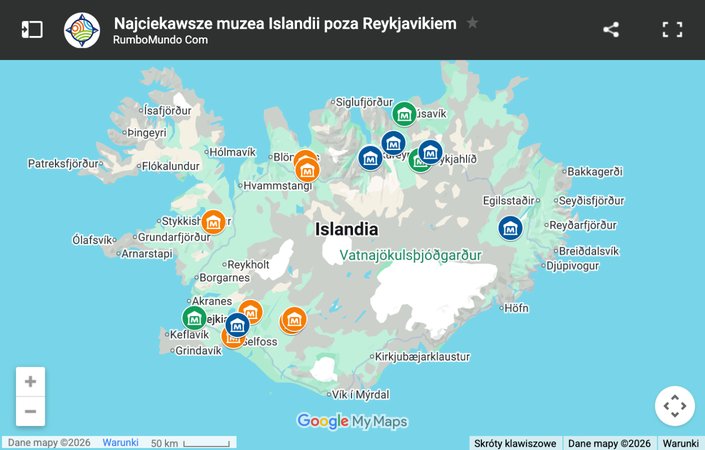
Map: interesting museums in Iceland outside Reykjavik — click to open the interactive map
Open air and history museums
- Glaumbaer
A restored farm that illustrates life in Iceland in the 18th and 19th centuries. It works as a museum and is located in Skagafjordur, northern Iceland. Glaumbaer – experience the life of 18th-century Icelanders. - Eiriksstadir – Viking Longhouse
The former home of a Norse outlaw – Eiríkur Þorvaldsson, known as Erik the Red – in western Iceland, where the Snaefellsnes peninsula and the Westfjords part ways. Eiriksstadir – you can feel like a Viking! - Þjóðveldisbærinn Stöng
A reconstructed farm from the late Viking Age. The original farm buildings were buried by volcanic ash in 1104, after the eruption of Hekla. Stong and Thjodveldisbaer – the life of Vikings. - Vidimyrarkirkja
The oldest preserved Icelandic church with a turf roof. It was built in 1834 and is maintained by the National Museum of Iceland. You will find it in the village of Vidimyri, close to Varmahlíð in northern Iceland. Vidimyrarkirkja – old turf-roofed church. - Laugarvatn Fontana
These are hot pools, not a museum, but they also show here how traditional rye bread is prepared and baked in hot earth. Laugarvatn Fontana – hot pools, baths and bakery all in one. - Ingólfsskáli Viking Restaurant
As the name suggests it is mostly a restaurant, however, it also showcases traditional dishes and other everyday objects inspired by those made in the 11th and 12th centuries. You can also try some of the popular Viking leisure activities, like axe throwing…
Nature museums
- Husavik Whale Museum
The Husavik Whale Museum (Hvalasafnið á Húsavík) is devoted to cetaceans, and especially whales and whaling (whale hunting). It illustrates the history of whaling, the lives of whalers and above all the evolution of cetaceans and their role in the marine environment. The most impressive exhibits you will find here are skeletons of whales, the largest and best preserved of which is that of a blue whale. It comes from a dead 25-meter (82-ft) long female that was washed ashore in Ásbúðir, north Iceland, in 2010. Húsavík Whale Museum. - Whales of Iceland
The Whales of Iceland exhibition is not strictly a museum – it does not showcase or hold original whale skeletons. What it does, though, is present life-sized models of these fascinating mammals. So we no longer need to try and imagine what they look like and how huge they are based on photos or skeletons. We can see them up close and in detail. Learn more about this exhibition in my other article here: Interesting exhibitions in Reykjavik. This place is in the port district, close to the Reykjavík Maritime Museum and the Settlement Exhibition. - Sigurgeir’s Bird Museum
Even though there are many places in Iceland recommended for birdwatching, in practical terms it is easier said than done, especially if you don’t have the knowledge or experience. Except for puffins, whose huge colonies cannot be overlooked or mistaken for anything else, the very abundance of bird life in Iceland can easily go unnoticed by us tourists. Sigurgeir’s Bird Museum (Fuglasafn Sigurgeirs) is trying to prevent that, showcasing about 300 birds and a similar number of eggs.There are birding observation points around the museum, where you can watch the bird species of lake Myvatn. The name of the museum comes from the name of its founder – Sigurgeir Stefánsson. The place is at Ytri-Neslönd, on the northwestern shore of the lake. It is open daily: from June to August noon to 5 p.m., in the rest of the year 2 p.m. to 4 p.m. An adult ticket costs 2,400 ISK (about $20), a ticket for children aged 7-14 and for seniors is 1,400 ISK (about $12), while children under 7 get free admission (2026 prices, fuglasafn.is).
Technology museums
Although we visit Iceland mostly for its nature, one can find a few technology museums here. State-run technology museums mostly focus on hydropower and geothermal plants, while privately managed ones show old cars, motorbikes and planes.
- Ljosafoss power plant (Ljósafossstöð)
This exhibition (Powering the Future) illustrates the development of the electric power industry and, using approachable experiments, explains how electricity is generated. Obviously, the place focuses mostly on wind, water and geothermal power plants. The plant is located at the outlet of lake Úlfljótsvatn, on road 36, near its junction with road 360, more or less halfway between Thingvellir national park and the town of Selfoss, in southwest Iceland. The exhibition is open in the summer season only (in 2026 from May 19 to August 30; current dates). - Krafla power plant (Kröflustöð)
Krafla is one of Iceland’s most famous volcanoes and its whole neighborhood is one of the largest geothermal areas in the country. The Krafla power plant is one of the oldest geothermal plants in Iceland – it came online in 1978 and has a capacity of 60 MW. Naturally, its exhibition focuses on geothermal energy. It is located in the Myvatn region, near road 863 that leads to such places as the Viti crater and the Leirhnjukur lava field. Note: the visitor center is closed in winter, and in the summer of 2026 it stayed closed because of construction work at the plant (Landsvirkjun). Krafla – a huge volcano near Myvatn. - Fljotsdalur power plant (Fljótsdalsstöð)
Fljotsdalur is an unusual hydropower plant. It is unique in that it draws water from 3 dams that feed it via underground tunnels. These tunnels collect water from three lakes and dam it up (a drop of over 600 m / 2,000 ft in total), because the plant is located far below the dams and the lakes. The whole facility and the turbines are also underground, inside the mountain called Valthjófsstadarfjall in East Iceland. Almost all the electricity generated here (about 690 MW) is used by the aluminum smelter in Reydarfjördur on the east coast. The plant’s exhibition is located in the buildings near the Kárahnjúkar dam, close to the canyon Hafrahvammagljúfur, near road 910. You can get a guided tour from June till August, on Thursdays and Saturdays, from 2 p.m. to 5 p.m. - Ystafell Transportation Museum
Ystafell Transportation Museum (Samgönguminjasafnið Ystafelli) is located in privately owned buildings about 35 km (22 miles) south of Husavik, near road 85. Driving along road number 1, between Myvatn and Akureyri, you need to take road 85 north and drive along for about 10 km (6 miles). The museum has several dozen remarkably maintained cars, mostly dating to the first half of the 20th century, as well as selected vehicles from later decades. It is surely an appealing stop for all car enthusiasts. - Museums in Akureyri
In south Akureyri, in the vicinity of the local airport, there are a few technology museums. One of them is a small one called Iðnaðarsafn (Industry Museum), mostly focusing on the production of clothes. Opposite you will find the Motorcycle Museum of Iceland (Mótorhjólasafn), and farther south, on the airport grounds, there is, probably the most interesting, the Icelandic Aviation Museum (Flugsafn) showcasing one chopper and some 30 bigger and smaller planes. You can get aboard some of the bigger ones. So if you are a fan of aviation, it is definitely a good place to visit.
You can read about other interesting exhibitions in Reykjavik that are not strictly museums in this article: Interesting exhibitions in Reykjavik, and learn more about the history, interesting places and sightseeing in the capital here: What to see in Reykjavik and how to best go about it.