

Seeing up close how volcanoes are built and how they work is one of Iceland’s greatest attractions. In Vidgelmir Cave you get to know a volcano not just up close, but from the inside!
What is a lava cave?
A lava cave is an underground rock tunnel through which a stream of lava once flowed from an erupting volcano. If the lava flow is big enough, its surface starts to cool and harden into a solid rock roof while the lava beneath keeps flowing. When the eruption stops, the still-molten lava drains out from under the hardened roof, leaving an empty tunnel behind. All it then takes is for the tunnel’s natural ceiling to cave in somewhere. That collapse becomes an entrance, and the tunnel itself becomes a lava cave.
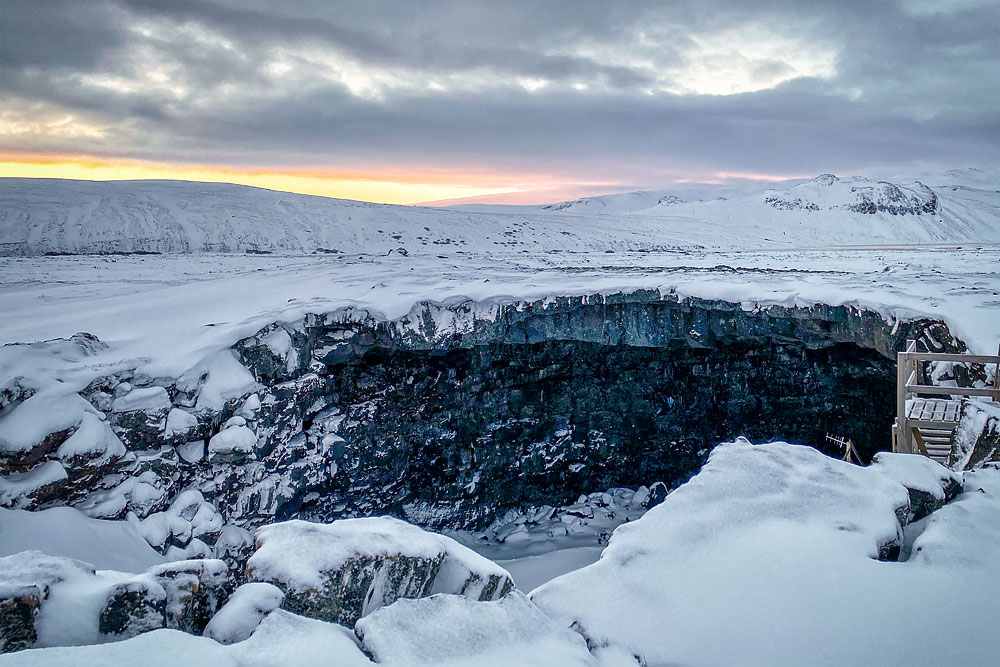
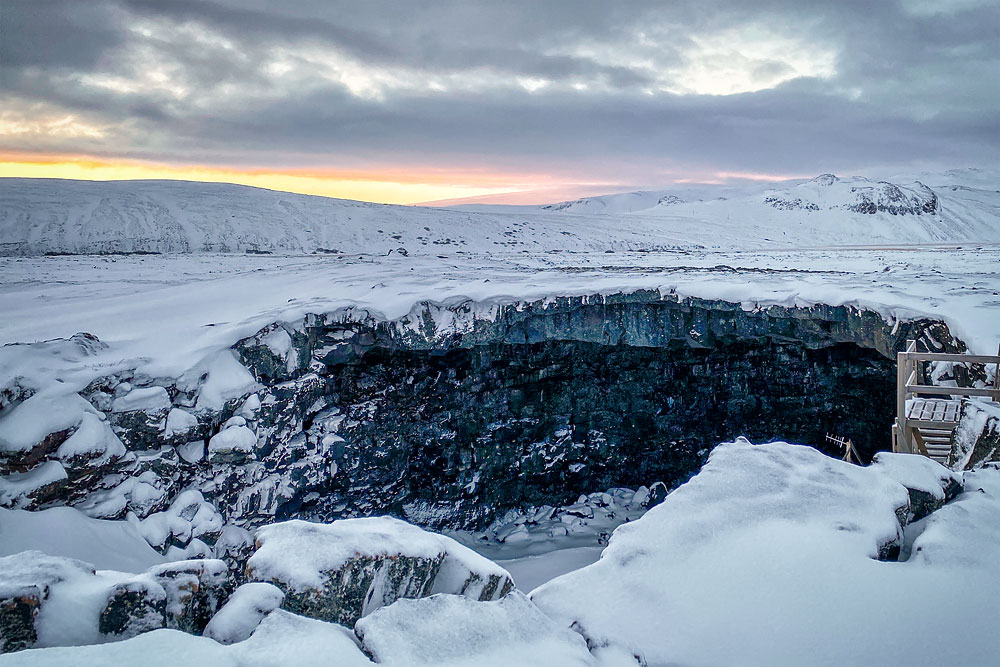
Entrance to Vidgelmir cave
A lava cave is a fairly unique and rare geological formation. Even in Iceland there are only a few of them. Or at least only a few are open to tourists…
It is also worth mentioning that Iceland has a second, completely unusual type of cave worth seeing: the ice cave (or, more precisely, the glacier cave). It forms in a fairly similar way, but in a completely different environment: not in the hot lava of a volcano, but in the cold, compacted ice of a glacier… For our complete guide to visiting them, see The Amazing Ice Caves.
Vidgelmir Cave: Iceland’s largest lava cave
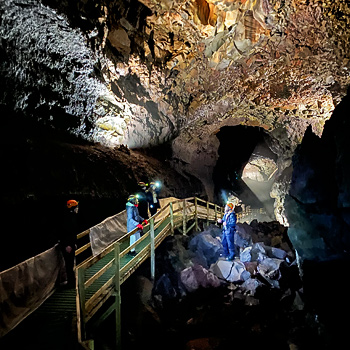 Vidgelmir Cave (Víðgelmir Cave) is one of the largest lava caves in Iceland and in the world. Officially, the longer one is nearby Surtshellir, but if you go by volume, Vidgelmir is said to be the largest.
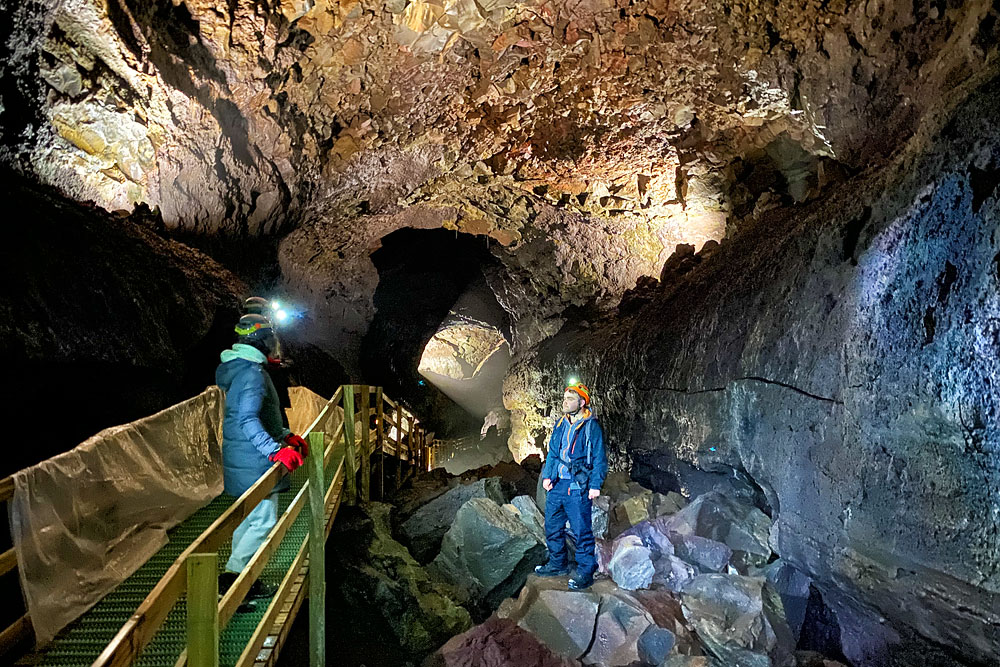
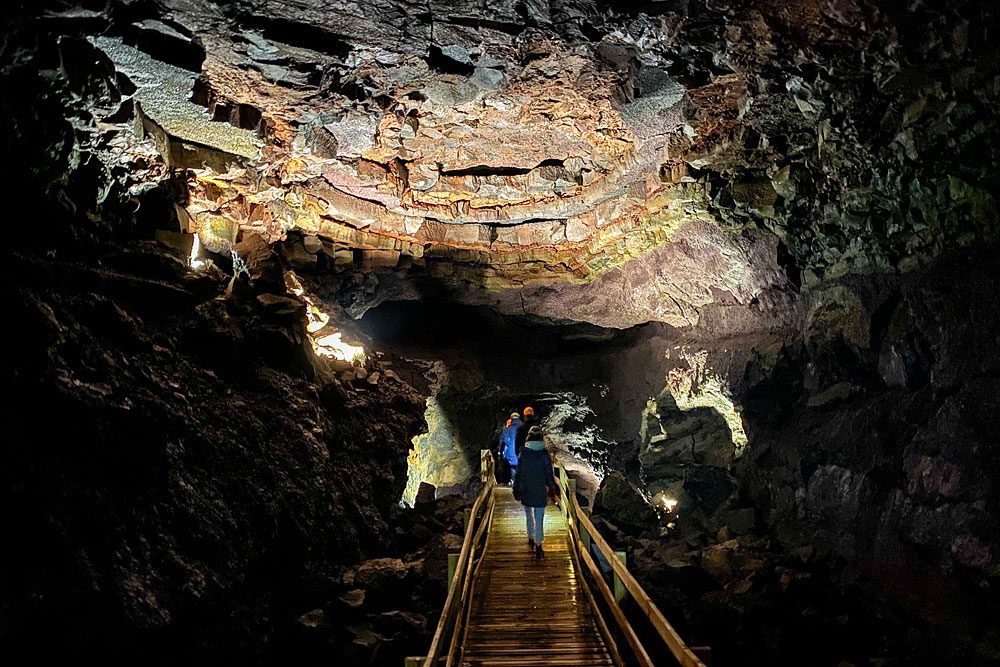
Importantly, although Surtshellir is longer, it is not set up for visitors at all. You can go in, but at your own risk and without any facilities. Vidgelmir, on the other hand, is lit and fitted with comfortable stairs and wooden walkways along the entire section open to visitors.
Thanks to the walkways and lighting, Vidgelmir is one of the easiest caves to visit. Without any hassle and quite quickly, you will “dive” more than 1.5 km (0.9 miles) into it, which in a truly wild cave (like Surtshellir) would be difficult, risky and very time-consuming.
What you can see in Vidgelmir Cave
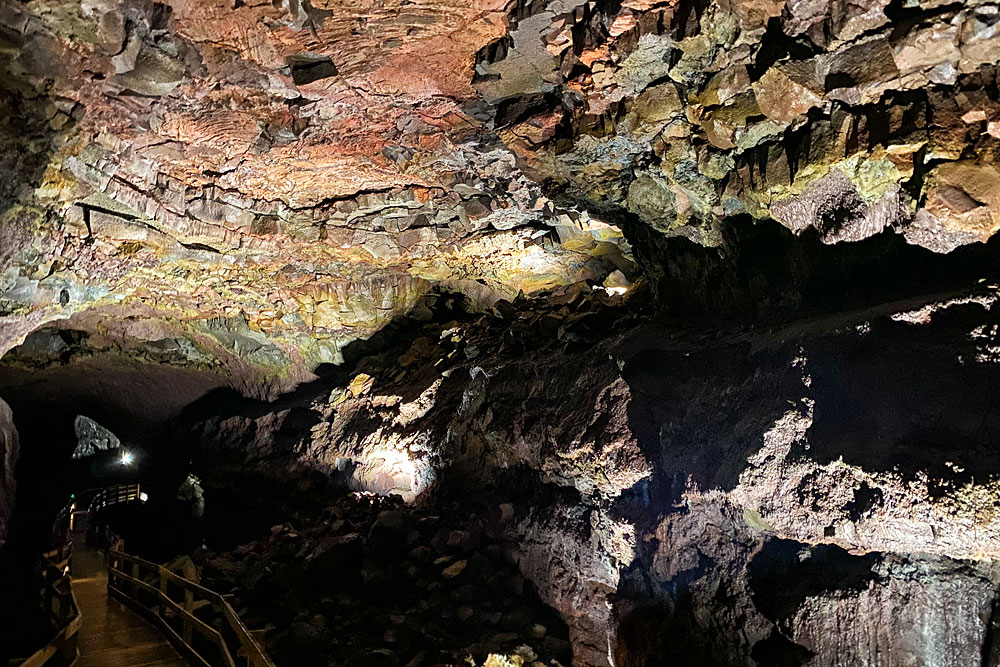
Making the cave accessible to tourists lets you explore it not only faster and more safely, but also much more thoroughly. Strong but not excessive lighting makes it much easier to admire the various rock formations inside.
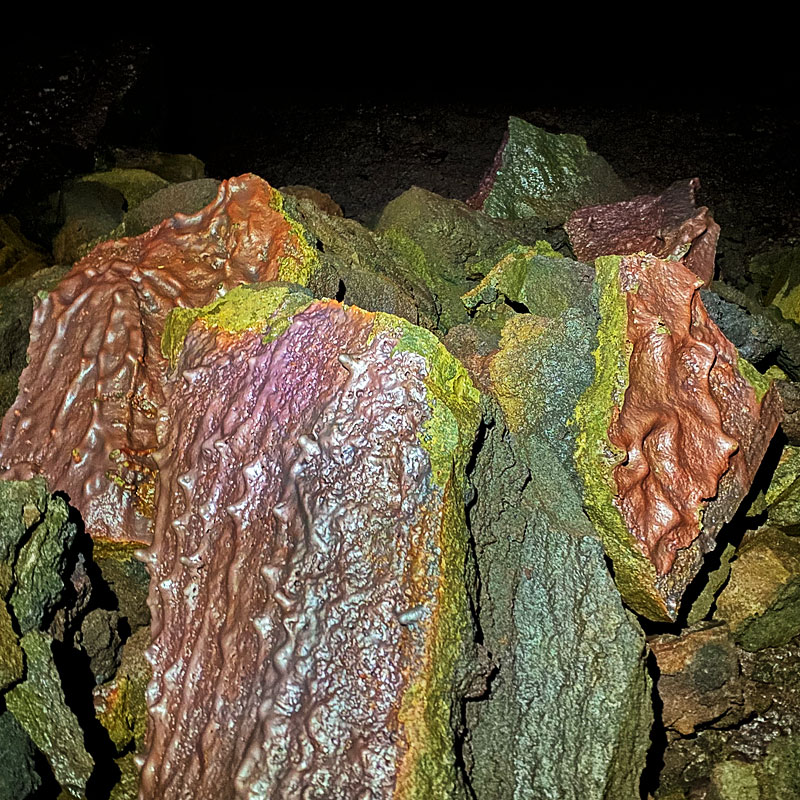
Mineral deposits in Vidgelmir
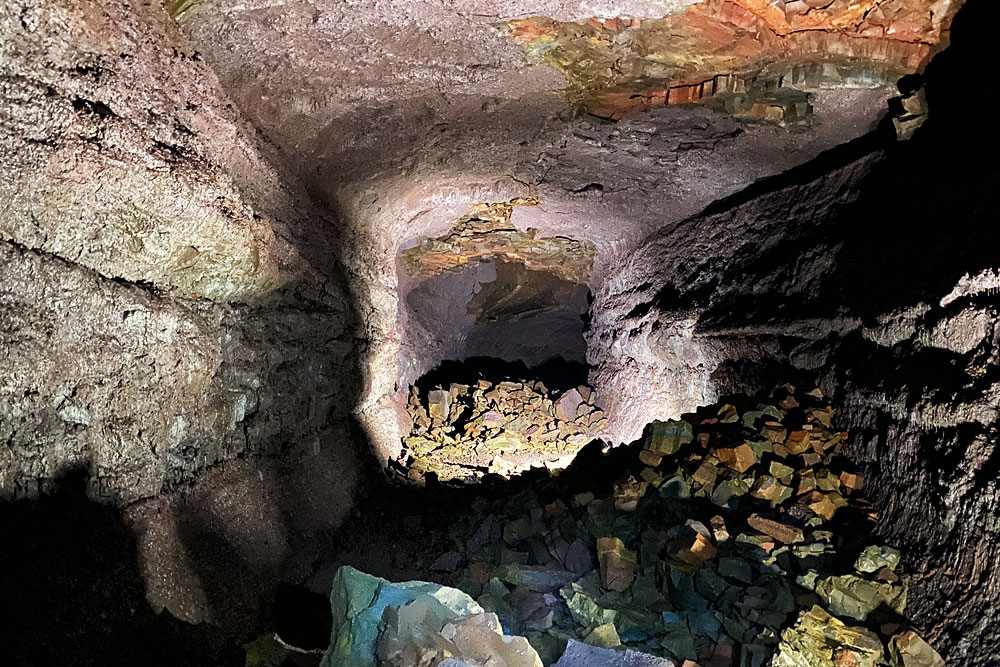
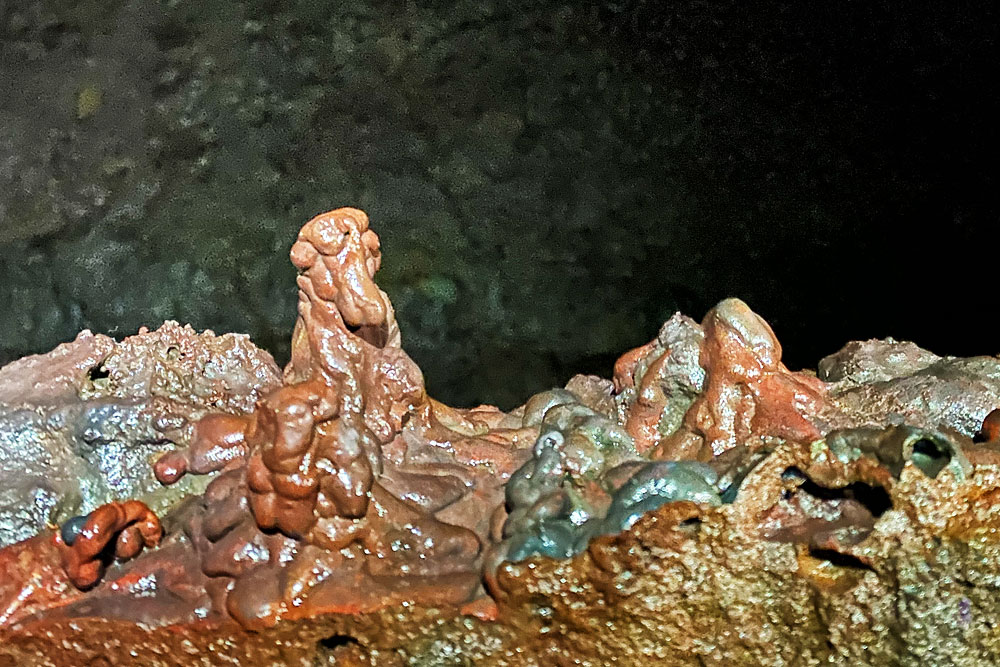
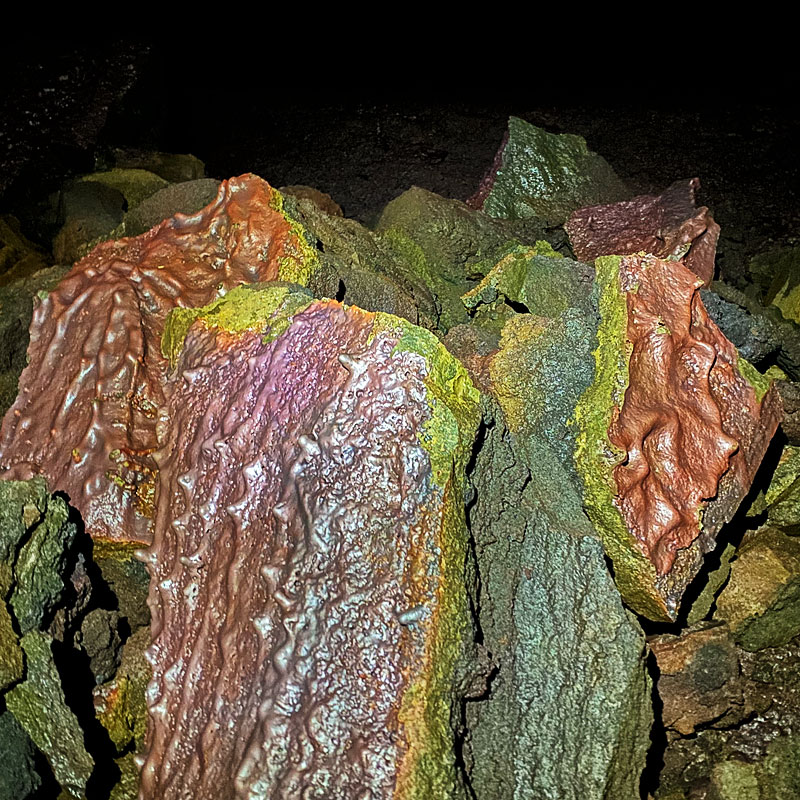
The most distinctive and fascinating feature of the cave is the variety of mineral deposits on its walls. Some of them look a bit as if the rock had been coated in some kind of plastic or ‘slime’ that then hardened.
Others may make you feel as if you had somehow ended up in a tunnel of Iceland’s sewer system, carrying waste from all over the island… Still others look like pieces of the skin or armor of some mighty dragon that just happened to shed its old scales here. The deposits are incredibly varied, and they bring to mind hundreds of different things…
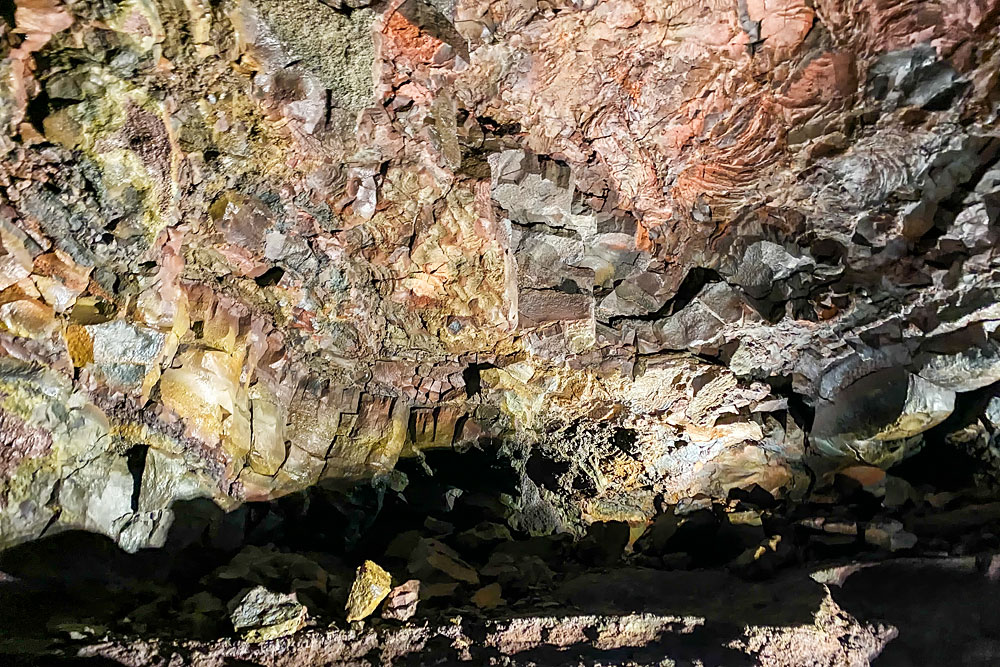
Another “design element” of the cave is the multicolored rock, on which various elements from the volcanic eruption have settled, above all, perhaps, sulfur. The yellow veins of sulfur on the ceiling look really nice.
The cave also has stalactites and stalagmites. Unlike many other large and famous caves, however, Vidgelmir has (almost) no columns, that is, a stalactite and a stalagmite joined together. This is, first, because the cave is very young in geological terms, and second, because the water dripping from the ceiling here, as everywhere in Iceland, is extremely pure. It contains very little iron, calcium or other minerals from which stalactites and stalagmites form, so they grow extremely slowly here. That is why, although you can see stalactites and stalagmites here, they are very small. Sometimes comically tiny.
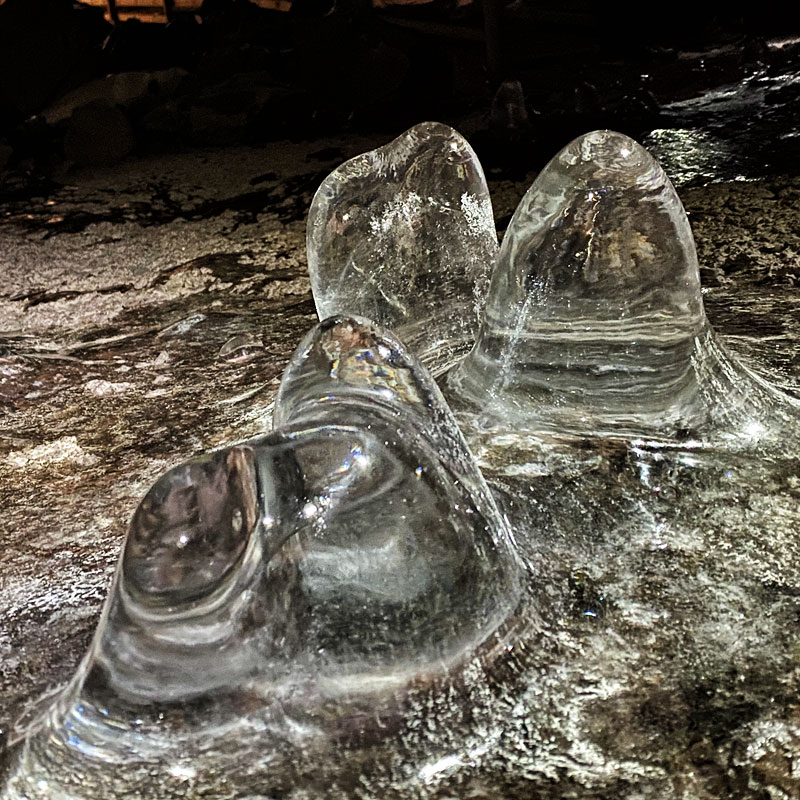
Ice stalagmites
In winter you can also see “ice stalactites and stalagmites”. Since the temperature inside the cave stays at around 2–3 °C (36–37°F) all year, they only form just inside the entrance, and only in winter. While the huge icicles hanging from the ceiling are nothing surprising (though they are certainly beautiful), the “ice stalagmites” growing up from the ground are a real curiosity.
On the walls of the cave you can also admire rock formations that bear witness to the site’s lava history. The traces show quite clearly where the lava flowed, where it had already started to harden and was covered by a new flow, and so on. You will also see characteristic cracks and fissures.
Visiting Vidgelmir Cave
The land where Vidgelmir Cave lies is private property, and the cave can only be entered on paid guided tours.
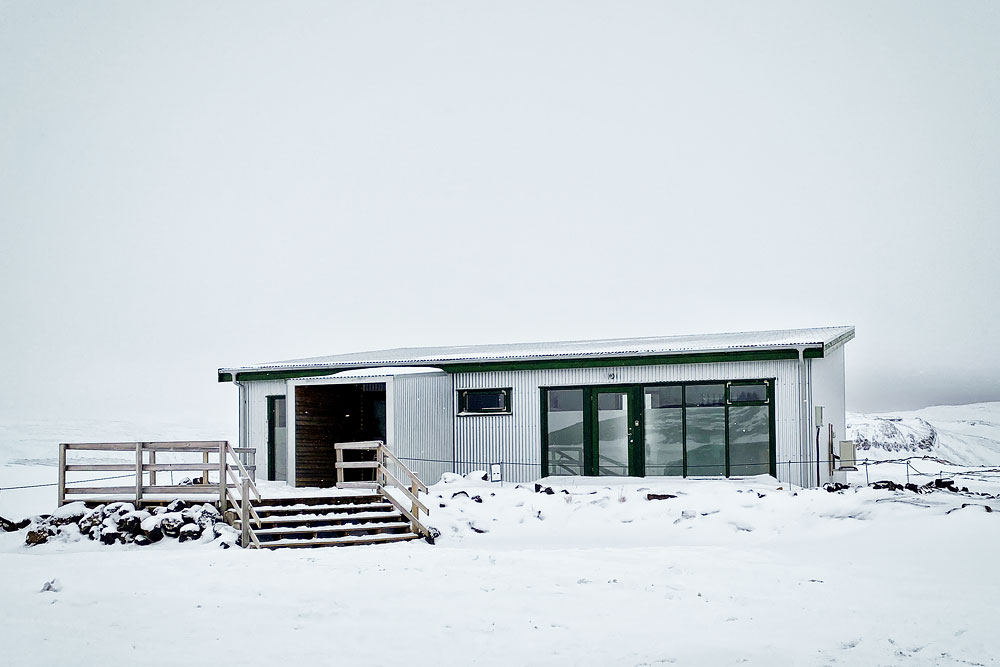
The tours start and end at a pavilion about 11 km (7 miles) north of Husafell (about 6 km, or 4 miles, as the crow flies). You can book your ticket here: Cave Explorer Tour. Ticket prices (2026): adults 9,000 ISK (about $75), youth aged 7–15: 4,500 ISK (about $40), children under 7: free.
Guides are available all year round, and tours head into the cave roughly every two hours. Because you walk on comfortable stairs and walkways the whole time, you cover the roughly 1.5 km (0.9 miles) inside the cave quite quickly. The whole tour takes about an hour and a half and is made memorable not only by the beauty of the cave itself, but also by the interesting stories the guide tells.
Naturally, the organizers provide helmets and headlamps (without artificial light the cave is pitch dark), but it is up to you to dress for the temperature of about 2 °C (36°F) that prevails in the cave all year round.
It is best to buy tickets online, well in advance. In winter the cave is not crowded and you can almost always just join the next group, but in summer you should book at least a few days ahead, especially if you want to start the tour at a specific time.
Víðgelmir Cave: tips and practical information
- The cave is open all year round. The tour organizers provide helmets and headlamps.
- The attraction is suitable for visitors of all ages, including children.
- Unlike caves you can enter for free, such as nearby Surtshellir, Vidgelmir is fully set up for visitors: among other things, it has stable walkways and permanent lighting. As a result, even people with no caving experience will feel confident and safe inside.
- Walking through the cave is not particularly demanding. You never have to crawl or crouch, although in places you need to mind your head.
- Entry is allowed only with a guide. To visit, go to Cave Explorer Tour and book a tour. An adult ticket costs 9,000 ISK (about $75). The tour takes about 1.5 hours.
- In season, tours run daily from 10 a.m. to 6 p.m.
- In 1993, bones and jewelry from the Viking Age were found in the cave.
- The temperature inside the cave is low. Make sure to wear warm clothes (a hat and gloves are recommended even in summer, but that is the norm in Iceland anyway).
- For about 90% of the year you can easily reach the cave in a regular passenger car. In winter a four-wheel-drive car may be needed, but the cave is also included in many day trips starting and ending in Reykjavik.
| Vidgelmir Cave: details | |||
|---|---|---|---|
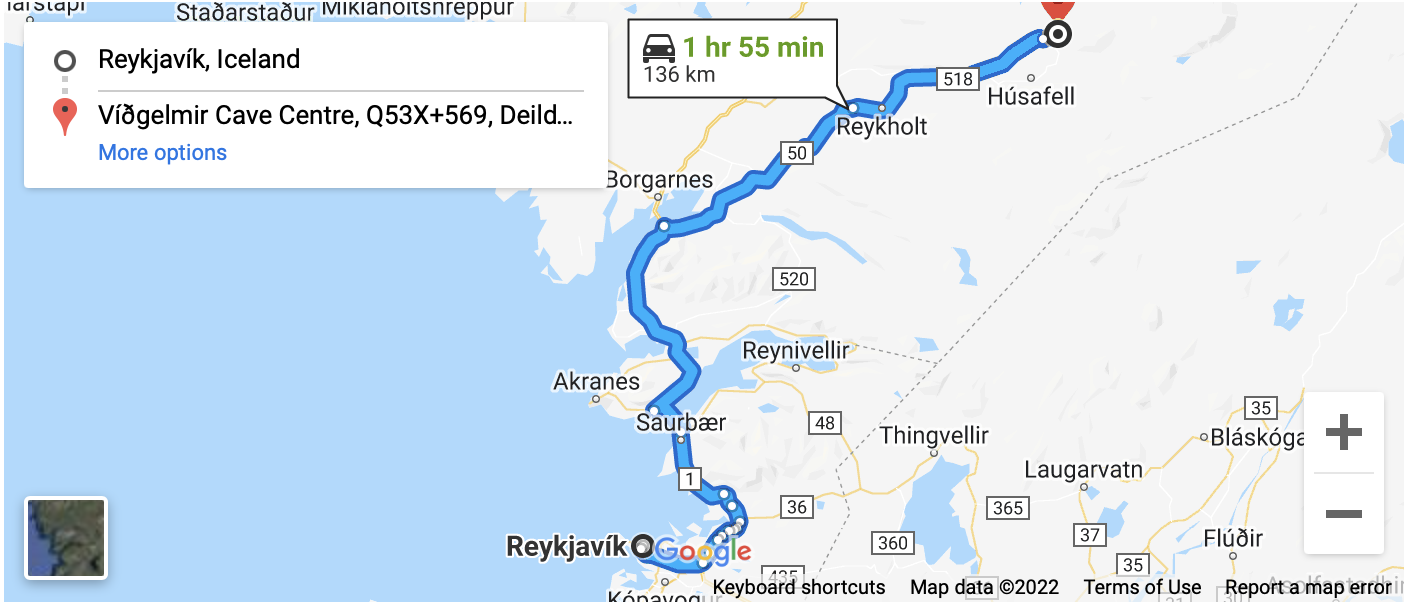 Map: driving route from Reykjavik to Vidgelmir Cave — click to open the interactive map | |||
| location | West Iceland | ||
| GPS coordinates | 64.7530122737519, -20.801107568701532 | ||
| length | 1.5 km (0.9 miles) | ||
| opening hours | daily, 10 a.m.–6 p.m. | ||
| entry cost (2026) | adults: 9,000 ISK (~$75) youth (7–15): 4,500 ISK (~$40) children under 7: free | ||
| remarks | Guided group tours only. Tour length: about 1.5 hours. | ||
| website, tickets | Cave Explorer Tour | ||
| tour from Reykjavik | Silver Circle Day Tour: Lava Cave, Waterfalls & Icelandic Horses (~$230 pp) | ||
How to get to Vidgelmir Cave
Vidgelmir Cave lies at the eastern end of the Kalmanstunga area, a little northeast of the bend in Route 518.
To visit the cave, buy tickets online and check in at the Vidgelmir Cave Center, or, if you book this option in advance, the organizers will pick you up at Húsafell Bistro in nearby Husafell.