Húsavík Whale Museum is run by a non-profit organization founded in 1997, when Ásbjörn Björgvinsson opened a small exhibition here under the name Hvalamiðstöðin – the Whale Centre. Its goal has not changed since: to explain what whales are and what their habitat looks like, using real skeletons and interactive displays rather than text panels alone.
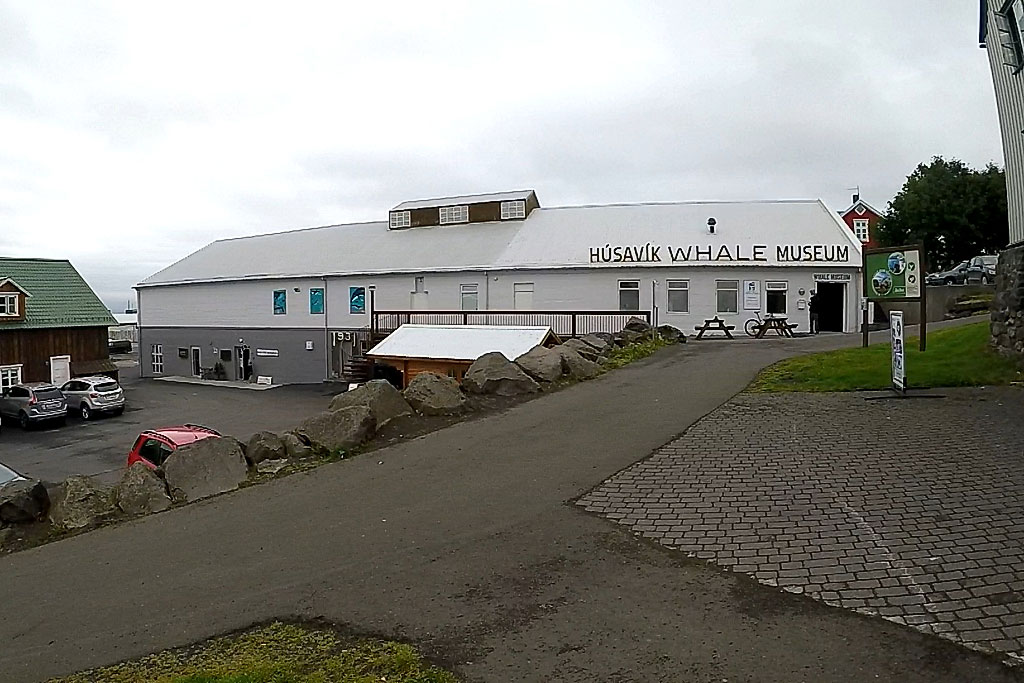
The museum sits in the town’s old slaughterhouse right on the harbor, a few steps from the pier where the boats leave for whale watching in Skjálfandi Bay off Husavik and further out in the open ocean. It’s worth a look here before your cruise to get a better understanding of the animals, which you’ll later – if you’re lucky – see live in their natural habitat.
The museum has more than 8 exhibition halls spread over 1,400 square meters (about 15,000 square feet) and is one of the few museums in the world dedicated exclusively to whales. Its collection includes skeletons of 13 whale species.
Blue whale skeleton
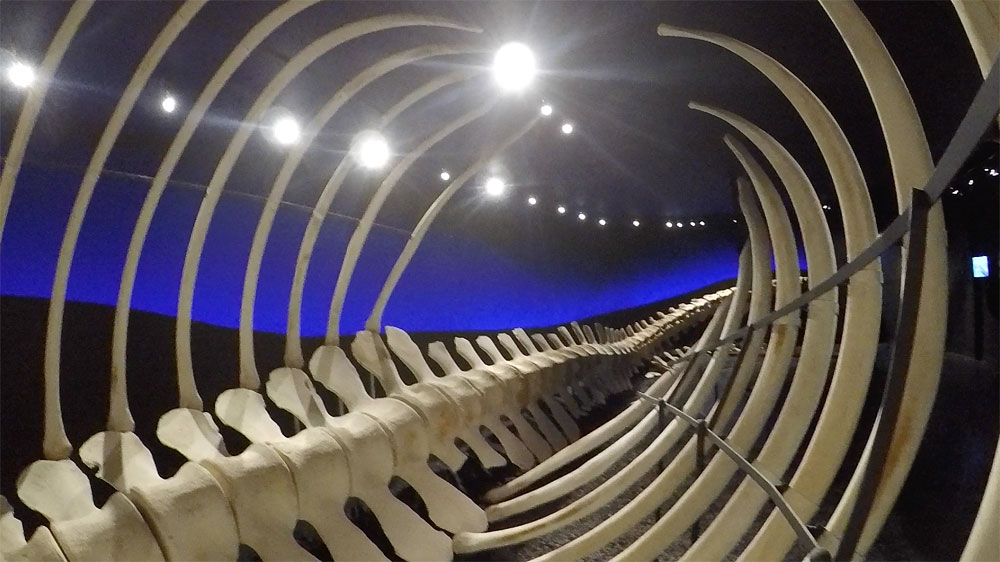
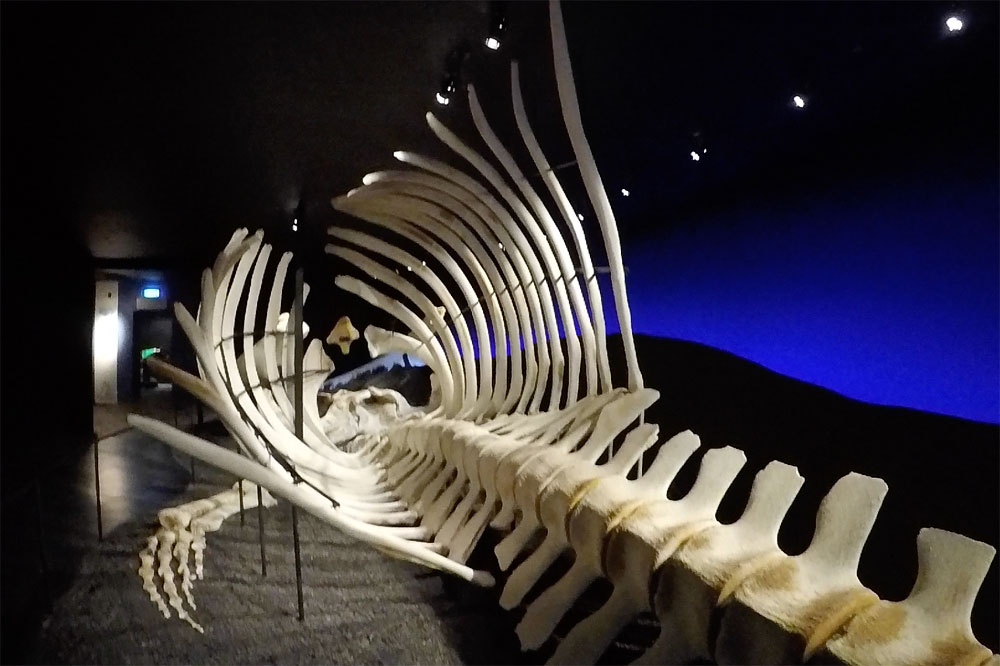
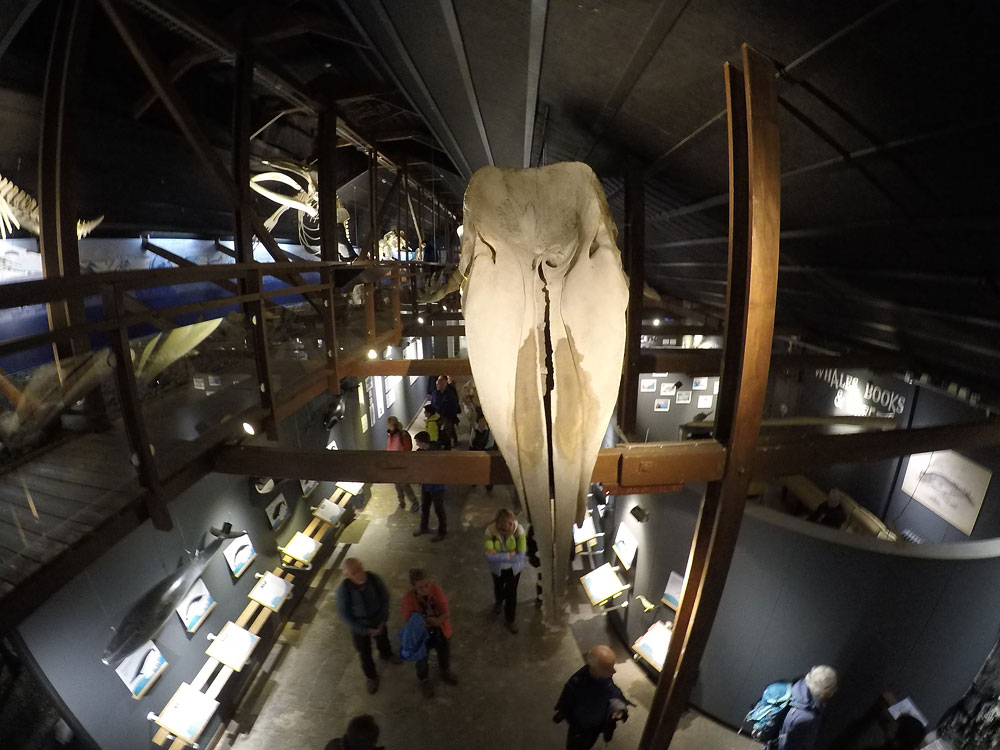
The museum’s centerpiece is a real, natural skeleton of the largest mammal living on Earth – the blue whale. It comes from a 25-meter (82-foot) female that washed ashore at Ásbúðir on the Skagi peninsula, between Húnaflói and Skagafjörður, in late summer 2010. There are only a few such full-sized blue whale skeletons in the world. The only one in Iceland is on display right now at the Whale Museum in Husavik. The skeleton is presented differently from the others, because it is as if the whale were lying on its back. This is to show how most of the fallen whales are actually found, including the female from which the skeleton came. A blue whale grows up to 30 meters (100 feet) long and weighs more than 150 tonnes.
Where I book my own Iceland trips
Best Iceland deals
Selected partner sites, best prices
Other exhibits
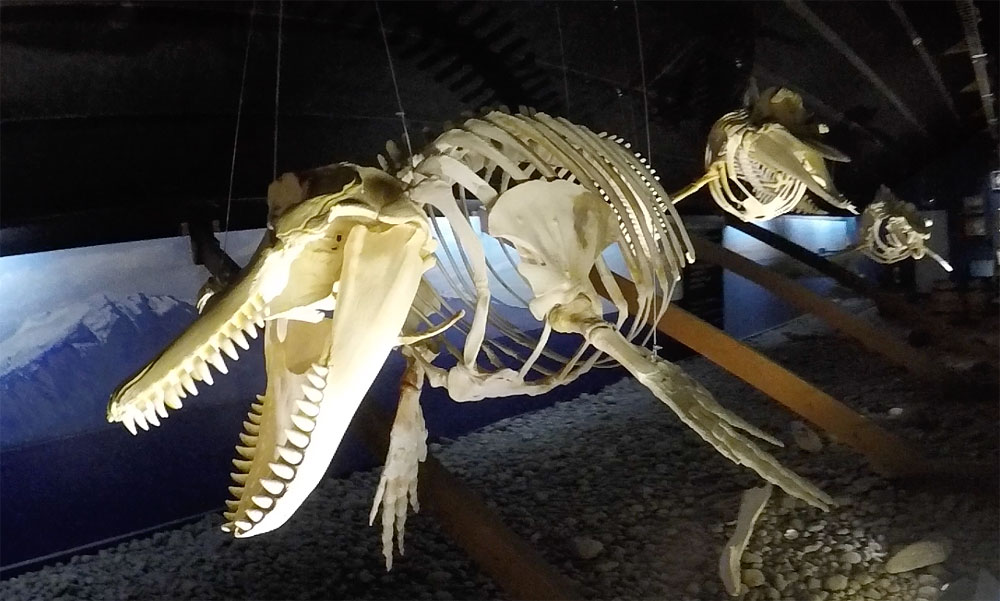
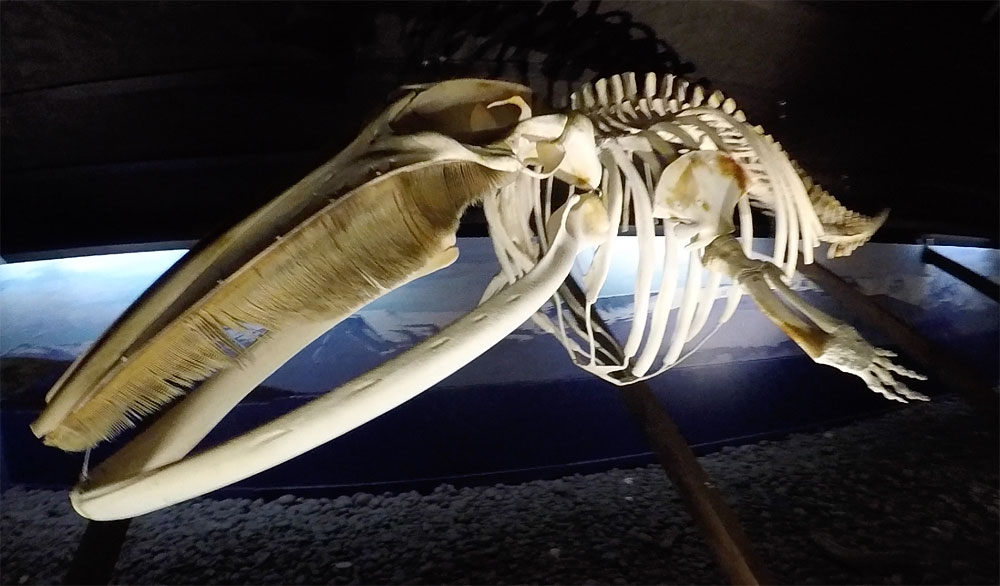
The whale room – the museum calls it the Whale Walk, and it takes up the entire upper floor – holds 11 whale skeletons. All of the animals died of natural causes or in accidents in Iceland, with the exception of the narwhal, which was a gift from Greenland. Within a few steps you can compare an orca with a sperm whale, a harbor porpoise with a humpback, and a pilot whale with a minke whale.
The History of Whaling exhibition presents information on whaling in Iceland, as well as the history of whaling worldwide. For centuries the hunting off Iceland was done by others – the Basques and the Dutch in the 17th century, the Norwegians some 200 years later – and Icelanders themselves only went into commercial whaling after the First World War.
The museum shows art as well. The exhibition by Renata Ortega was a tribute to the world’s largest living creatures, in all oceans and seas; she treated whales not as animals but as pure art, and that is how she portrayed them. Art exhibitions here change every season, so check what is on before you go.
The exhibition Evolution and Biology explains how whales have evolved over time, how they live and how they behave. It also covers how their senses work and goes through the main whale species of the North Atlantic – ten minutes well spent before you board a boat.
The cinema room
The museum has its own cinema room and admission to the screening is included in the museum ticket. What runs there now is “Sounds of the Ocean”, an award-winning immersive piece by Joshua Sam Miller and Elise Lein built out of whale and dolphin song – closer to a meditation than to a nature documentary. Screenings start at 10:00 am, 11:00 am, 12:00 pm, 1:00 pm, 2:00 pm, 3:00 pm and 4:00 pm, every day.
Earlier the museum screened two documentaries in the same room: “Giants of the Deep” (60 minutes), a celebration of the extraordinary beauty of whales, and “Voice over Nature” (12 minutes), on noise pollution in the deep sea – on how fish and marine mammals use sound for communication, navigation and hunting, and on what that means when as much as 90% of the world’s trade goes through the oceans.
Opening hours of the Húsavík Whale Museum
- May – September: 9:00 am – 6:00 pm
- October – April: 10:00 am – 4:00 pm
Ticket prices
- Adults: 2,650 ISK (about $22)
- Children aged 16 and younger: free, but they have to be accompanied by an adult
- Guided tour (up to 30 people): 15,000 ISK ($125); in Icelandic or English, must be booked at least 5 days in advance
These are the prices and hours the museum publishes for the 2026 season – checked 13 September 2026, source: hvalasafn.is.
Photos from the Whale Museum