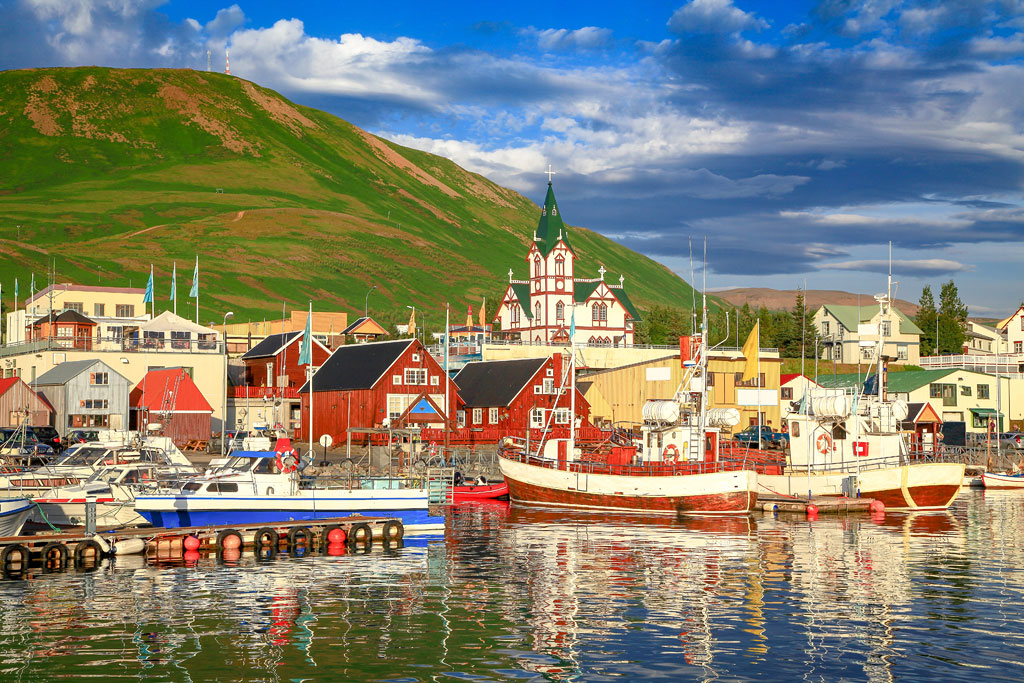


Húsavík is a town that was founded and developed thanks to whaling. Today it makes its living by protecting and showcasing these beautiful animals.
Husavik – the whale watching capital of Iceland
Húsavík is Iceland’s undisputed whale capital. That used to mean hunting whales and processing them for blubber, oil, leather and so on. Today, it’s mostly about showing these beautiful marine mammals to visitors from all over the world. Husavik is the best place in Iceland to see whales, especially the largest ones – blue whales often visit the bay north of town.
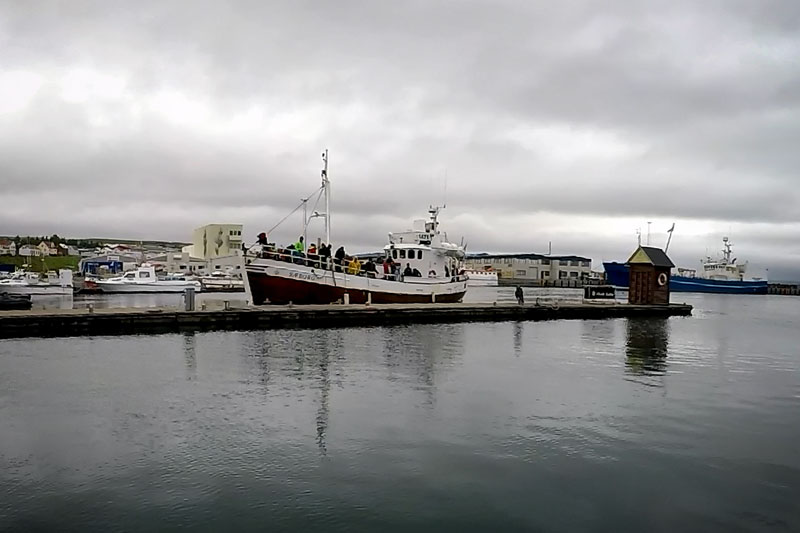
Unsurprisingly, there are many companies in town offering whale watching tours (strictly speaking, cetacean watching, since you may also see dolphins or orcas). Even in high season, you shouldn’t have trouble booking a spot on a boat.
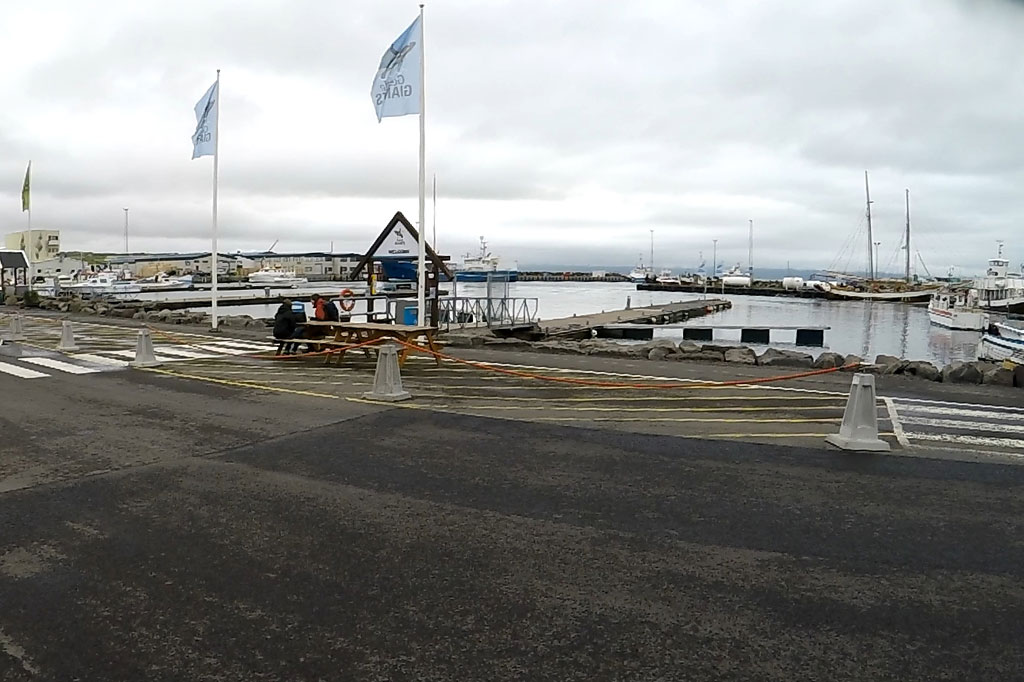
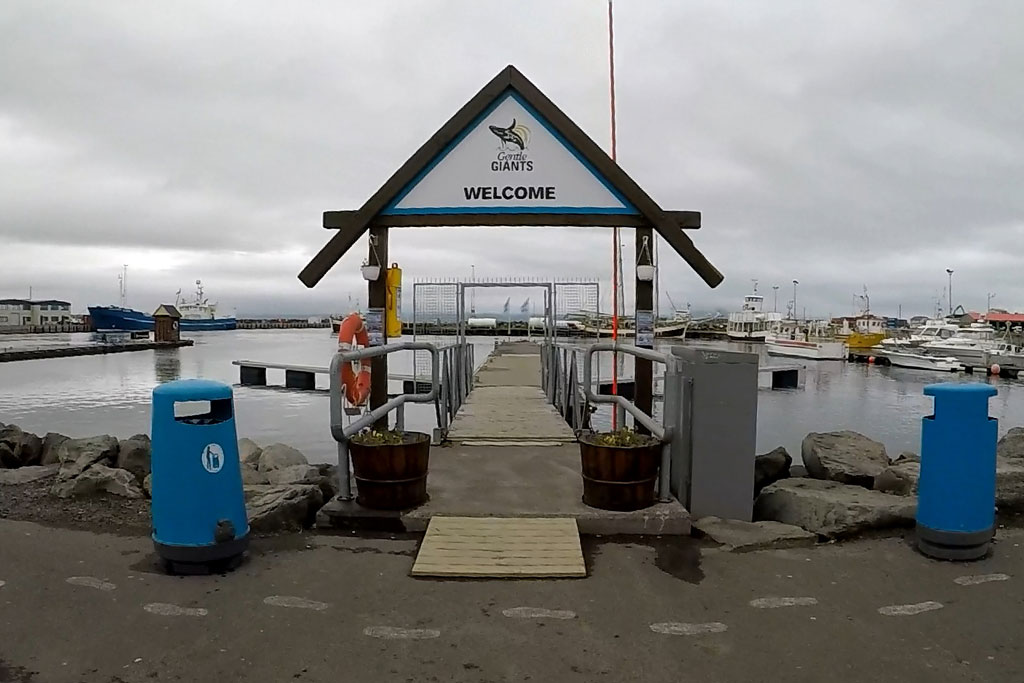
The tour companies are based at the harbor, but you can also book online (prices September 2026):
- Gentle Giants
– Big Whale Safari & Puffins – a RIB boat tour combined with a visit to a puffin island (from 21,990 ISK, about $185 per person)
– traditional whale watching on an oak boat (from 12,490 ISK, about $105 per person); - North Sailing
– Original Whale Watching on a traditional oak boat (from about 14,000 ISK, about $115 per person); - Husavik Adventures
– Big Whales & Puffins RIB tour (from 23,990 ISK, about $200 per person).
The most important thing to keep in mind before a tour is the weather – be prepared for it and flexible about changing your plans. You also need to decide between a traditional boat and a so-called RIB (I recommend RIBs). You can read more about whale watching tours in a separate article: Whale Watching in Iceland – All You Need to Know.
Where I book my own Iceland trips
Best Iceland deals
Selected partner sites, best prices
Husavik – charming port town
The heart of Husavik is, naturally, the harbor. Colorful and usually bustling, it’s full not only of fishing boats but also of tour boats.
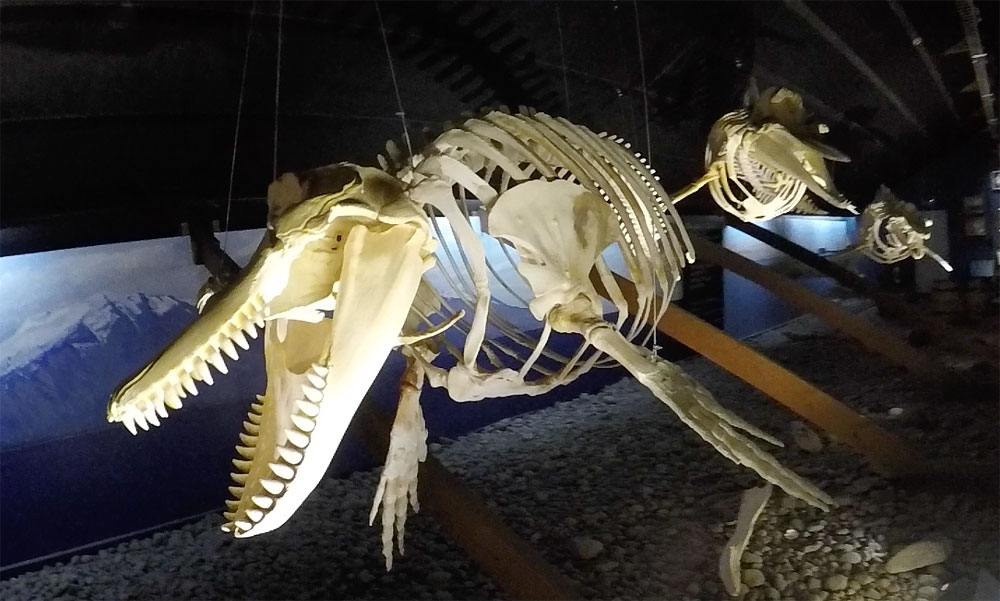
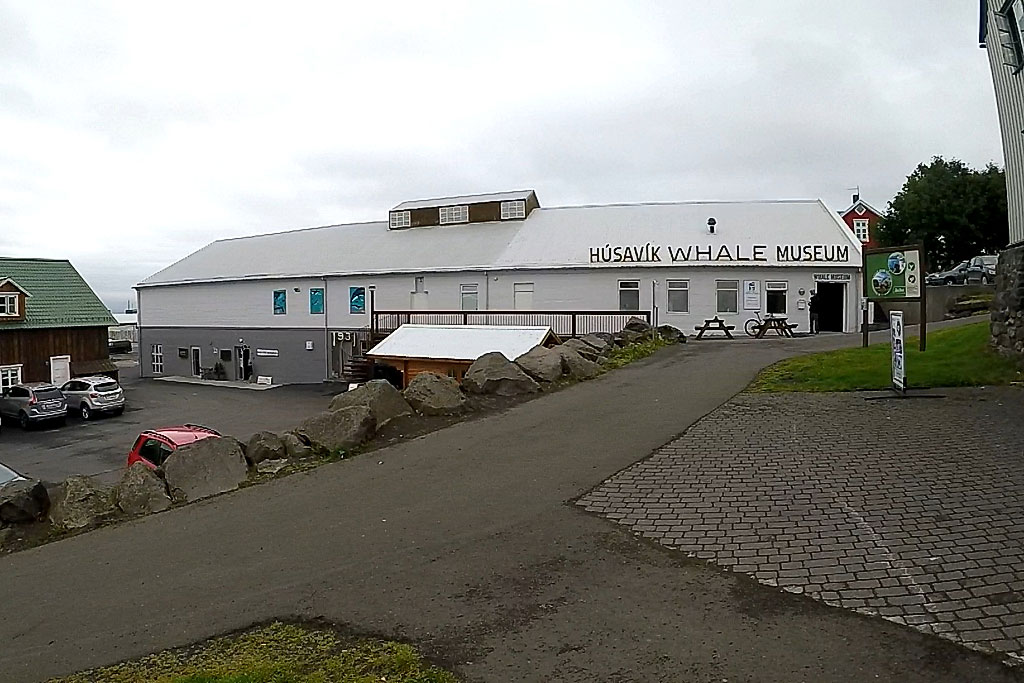
The harbor is also home to a small Whale Museum with many exhibits about both whales and whalers. Its main attraction is certainly the skeletons of several whale species, including the complete skeleton of a blue whale that washed up on a beach. It’s by no means a stunning museum, but it’s a good way to spend some time if, for example, you’re waiting for your tour and have already done your shopping.
On the town’s main street stands a church built in 1907, which also appears on the town’s coat of arms. Another landmark is the Culture House (Safnahúsið), home to museum collections: a regional collection, district archives, a natural history collection, a maritime collection, and a photo and film archive.
Husavik’s tourist attractions
Besides whale watching, Húsavík offers visitors all the amenities they need and several other attractions. Here you’ll find a hotel, guesthouses, stores, restaurants, a campsite, gas stations, a park, museums, a swimming pool, geothermal springs, a golf course and many pleasant walking trails of varying difficulty. One of the most popular is the trail around Lake Botnsvatn, just outside town.
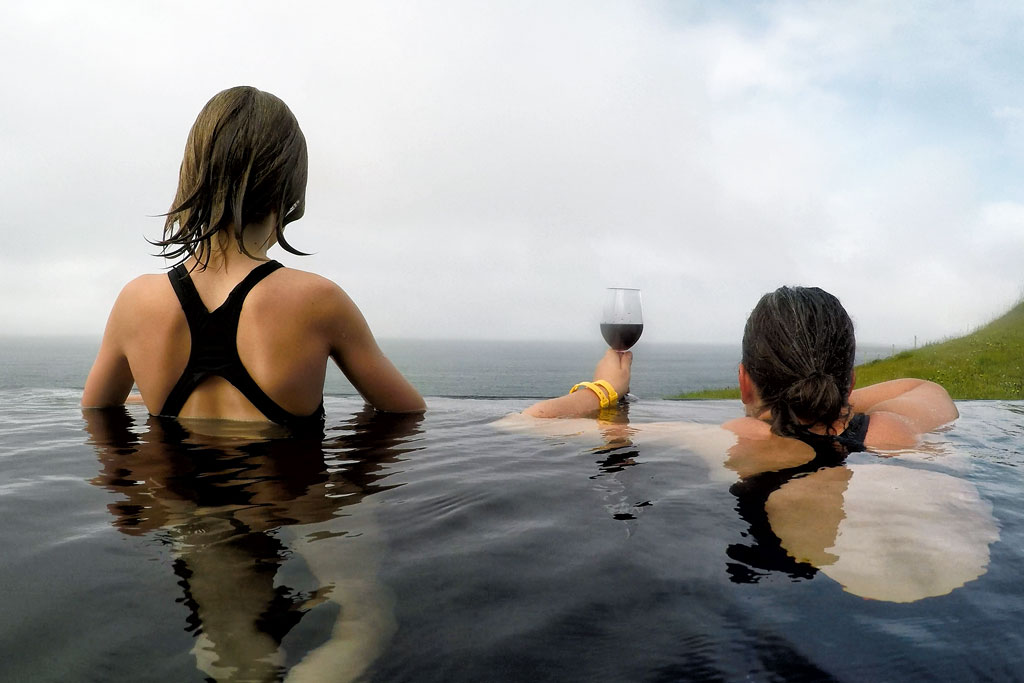
In the northern part of town, right on the bay, is a modern hot pool and spa complex: GeoSea. It’s relatively new and definitely on the intimate side, with just two medium-sized pools, one small pool and a wading pool, but everything (including the changing rooms and the adjacent restaurant) is elegant, and the pools offer beautiful views of the bay. Drinks and snacks are served right in the pool.
Book your GeoSea ticket here: Husavik: GeoSea Geothermal Baths Entrance Ticket (from 7,490 ISK, about $60 per person).
Video: GeoSea in Husavik
As in many other places in Iceland, you can also go horseback riding and sea kayaking near town. Here’s a short selection of tours:
- Whales & Horses – 4+ hours of whale watching combined with horseback riding, from 22,990 ISK (about $190) per person.
Husavik Airport
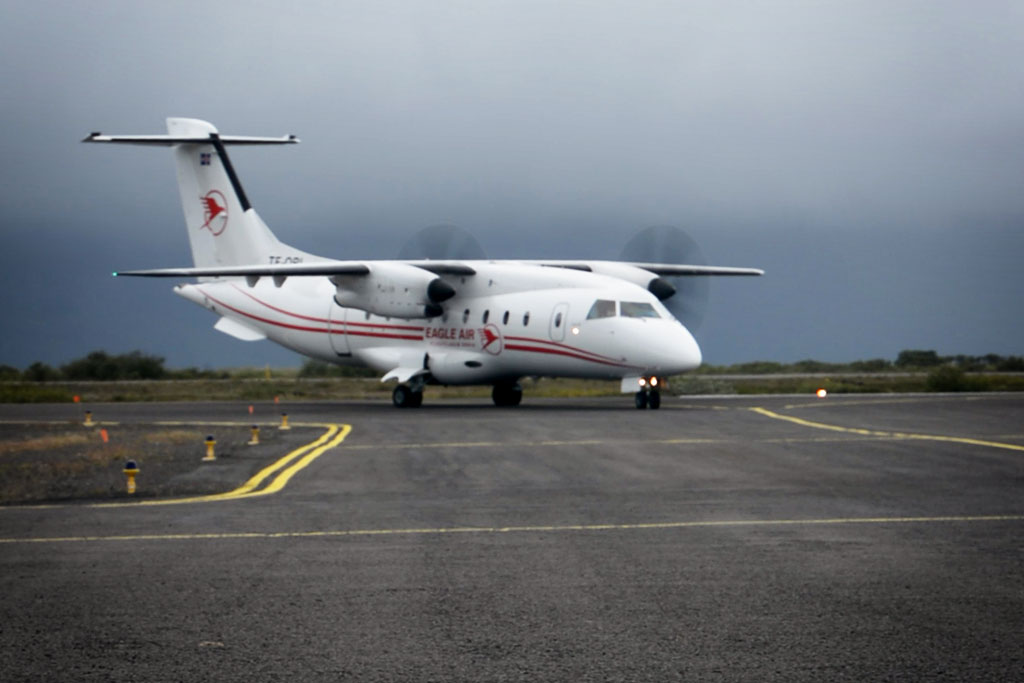
South of town is a small airport (Húsavíkurflugvöllur) with a single runway. Scheduled flights used to connect it with Reykjavík, and the planes also carried courier parcels.
Húsavík Airport opened in 1957, and a new terminal was built in 1986. Over the years, it has been served by local airlines including Icelandair, Norlandair, Air Iceland, Mýflug Air and Eagle Air. The only scheduled route was to Reykjavík: 293 km (182 mi) long, with a flight time of about 55 minutes and a one-way fare of about $120. Flights to Husavik Airport (HZK) departed from Reykjavik City Airport (RKV), not from Iceland’s main airport, Keflavik International Airport (KEF).
Transfers between the airport and town were run by Fjallasýn and Skutlþjónustan Húsavík, and two car rental companies operated in the terminal.
How to get to Husavik
Husavik lies on Route 85, about 55 km (35 mi) northeast of the regional capital, Akureyri, and 40 km (25 mi) from Route 1. It’s a good base not only for whale watching but also for trips to the Myvatn region, Asbyrgi canyon and Dettifoss waterfall.
North of town, 20 km (12 mi) away at the tip of the peninsula, lies the rather interesting North 66.12 campsite. It has good restrooms, beautiful ocean views, very friendly owners and even a small open-air museum (Mánárbakki Museum).
The most natural way to get to Husavik is, of course, to turn off onto Route 85 or Route 87 while driving the Ring Road (Route 1) around Iceland. You can also take bus line 79 from Akureyri; the trip takes just over an hour.
And when scheduled flights are running, you can also fly here fairly quickly and inexpensively straight from the airport in downtown Reykjavik (see above).