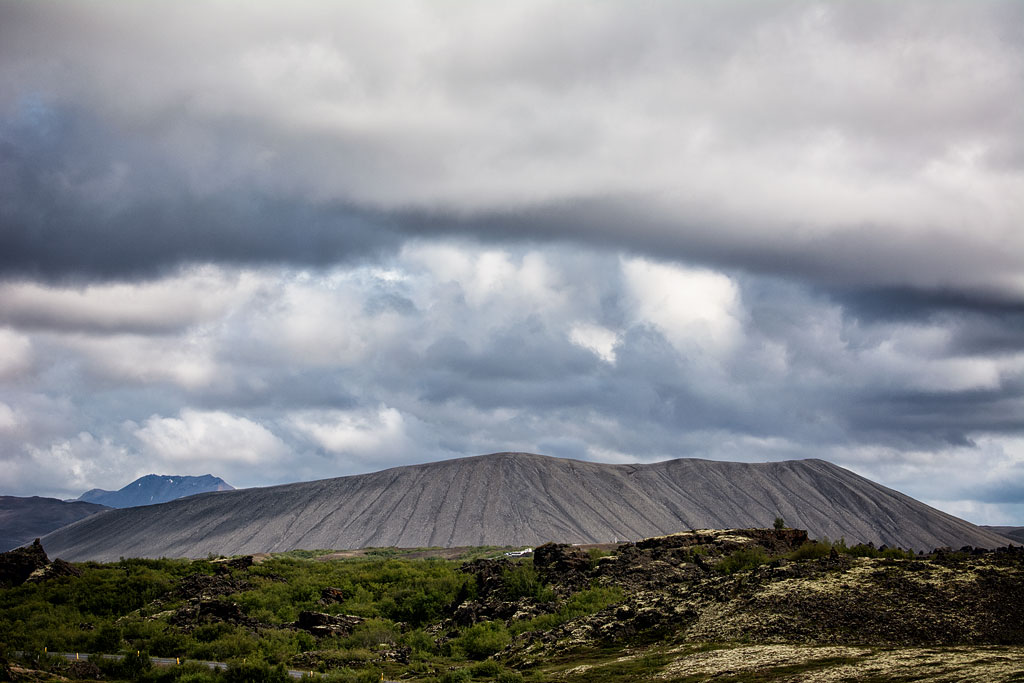


Hverfjall, also known as Hverfell, is a beautiful but very unusual volcano on the eastern shore of Lake Mývatn.
A unique volcano – even for Iceland
Hverfjall owes its beautiful appearance and interesting structure and name to its unusual formation. Hverfjall in Icelandic roughly means “hot spring mountain” – and in a way this describes its genesis.
After all, Hverfjall was formed about 2500-2800 years ago during a so-called phreatomagmatic eruption – the cone piled up in a short time, in a shallow lake that then covered this part of the Myvatn region. To put it somewhat simply (for more on this, see the article How Iceland’s volcanoes work), a phreatomagmatic eruption is an eruption of steam, not lava. Water entered the magma chamber of the volcano through underground channels, turned into steam, the pressure of which gradually increased until it finally erupted, bursting the vault of the magma chamber and any crater that may have been there. The result of such an eruption is volcanic tuff – a lightweight and highly porous rock, bonded by a siliceous binder. Therefore, Hverfjall is not a mountain of solid basalt, but a so-called tuff cone – basically a mountain of gravel (and pumice) 😉
So it is not a typical volcano or crater. However, unlike the so-called pseudo-craters of the nearby Skutustadagigar, the Hverfjall cone very much is – or rather was – connected to the main magma chamber. That’s why it’s counted as a volcano (albeit a specific group), and not, for example, pseudo-volcanoes.
Hverfjall volcano cone
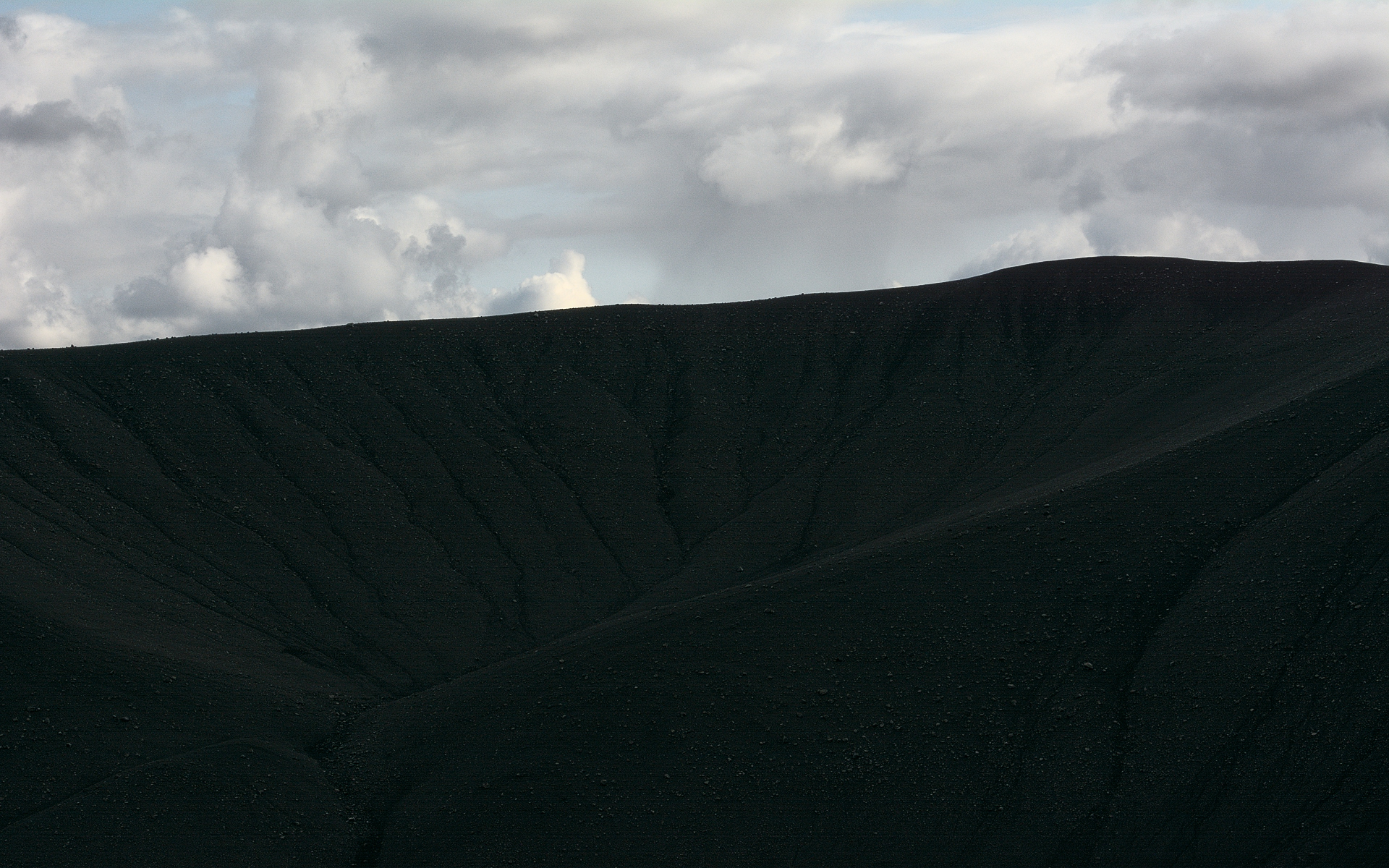
The aforementioned tuff cone is the most distinctive feature of Hverfjall volcano, providing it with a unique appearance. The crater may appear pinkish or gray from a distance, while up close it is practically black. It is (almost) perfectly circular, and its diameter is more than 1,000 meters (3,300 ft) – it is considered one of the largest ash cones of its kind on Earth, and the crater bowl is roughly as deep as the cone is high. Hverfjall is also the southern end of an eruptive fissure at least 1,800 meters (1.1 mi) long. In the central part of the crater’s interior is a small hill. Although its genesis is not precisely explained, it is believed to have been formed by cyclical small eruptions.
If you decide to climb to the top of Hverfjall – the cone rises 90-150 meters (300-490 ft) above the plain around it – you will not regret it. The view is truly spectacular and allows you to admire not only the interior of the volcano itself, but also the area around the nearby Lake Mývatn. Although the path to the top of the crater is not difficult, it requires suitable footwear, adapted to the gravelly ground.
Hverfjall – tips and practical information
From road 848 (the one along the banks of Myvatn) you can see Hverfjall clearly and without any trouble you will find the road leading to it (formally it is numbered 8816, but in the field it is marked simply as the road to Hverfjall). It is a dirt road, but any car can handle it. At the foot of the volcano you need to turn left and drive a bit more to the parking lot, where the path to the summit begins. The parking lot is not free: the landowners collect the fee through Parka – 1,200 ISK (about $10) for a car with up to eight seats and 400 ISK (about $3) for a motorcycle, toilets included. The ticket covers the whole calendar day and you can still pay online up to 24 hours after you leave (prices September 2026, Parka price list).
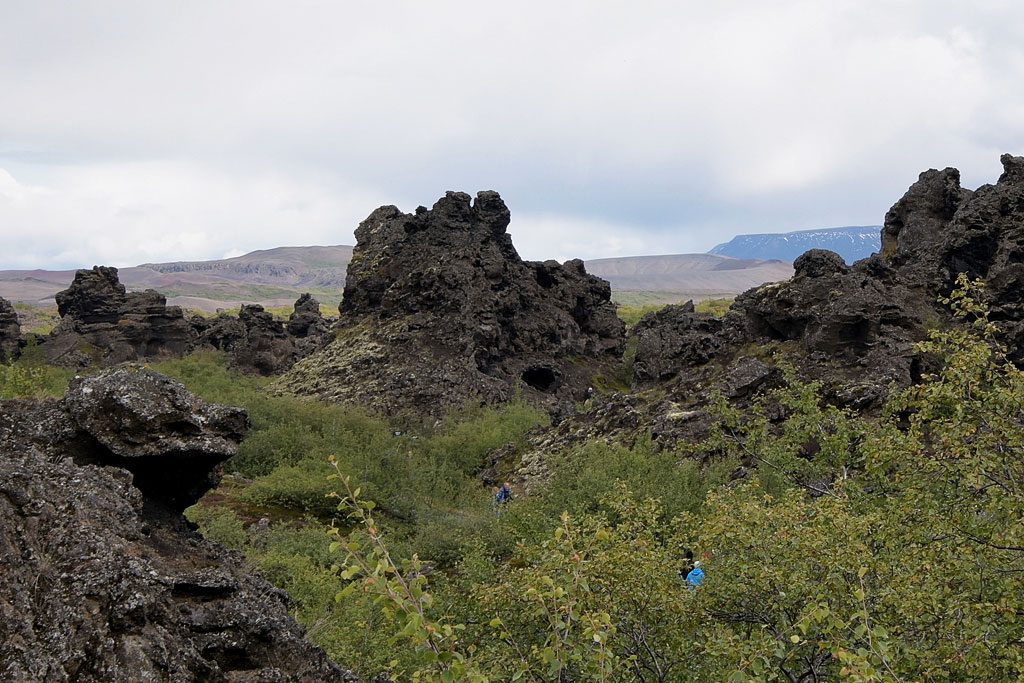
The climb to the volcano from the parking lot – the route marked HV1 – is about 20 minutes, and the walk around the crater rim (HV2) is about an hour. There is also a second path to the top of the crater – from the south side (HV3). However, it is much steeper, and I really don’t see any reason to ascend or descend it, unless you want to walk further south – to the nearby lava field Dimmuborgir (the path leading there starts right at the southern slopes of Hverfjall). The site’s management plan calls HV3 unsafe and hard to maintain and means to replace it with a safer southern route one day. Bicycles are allowed on HV1 and HV2, but they give way to walkers.
Hverfjall itself – when properly lit – looks downright magical, and there are also beautiful views of Lake Myvatn from the top. That’s why you absolutely have to come here and climb to the edge of the crater.