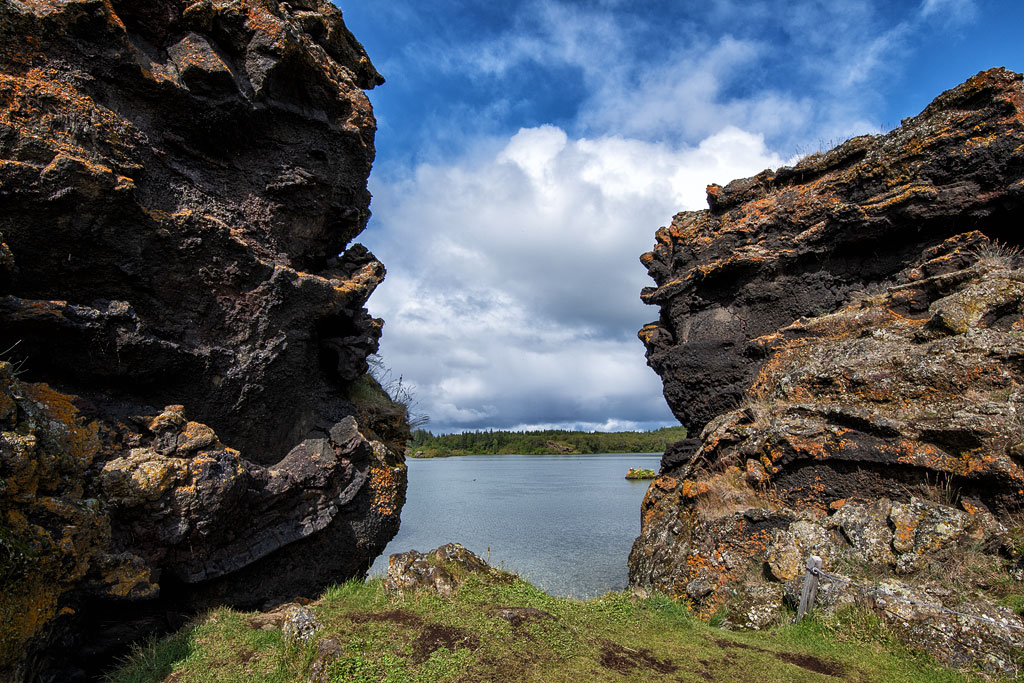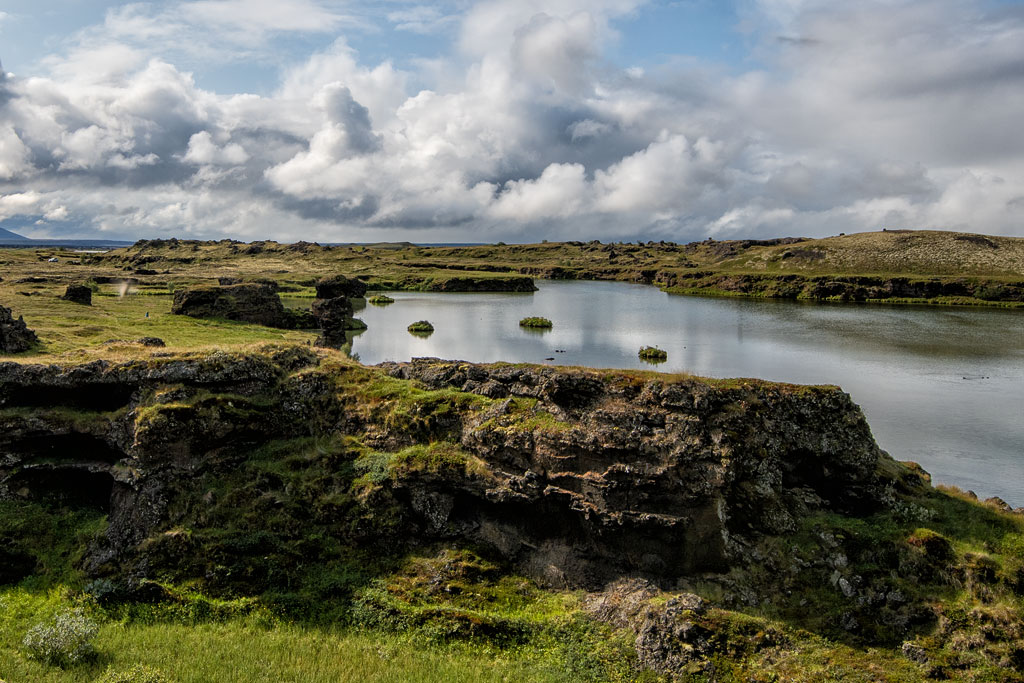


Höfði is a surprising green oasis on the rocky, lava-strewn shore of Lake Myvatn, right next to the lava pillars of Gud Fingur. Together they form the beautiful eastern shore of the lake.
Hofdi, an unusual park
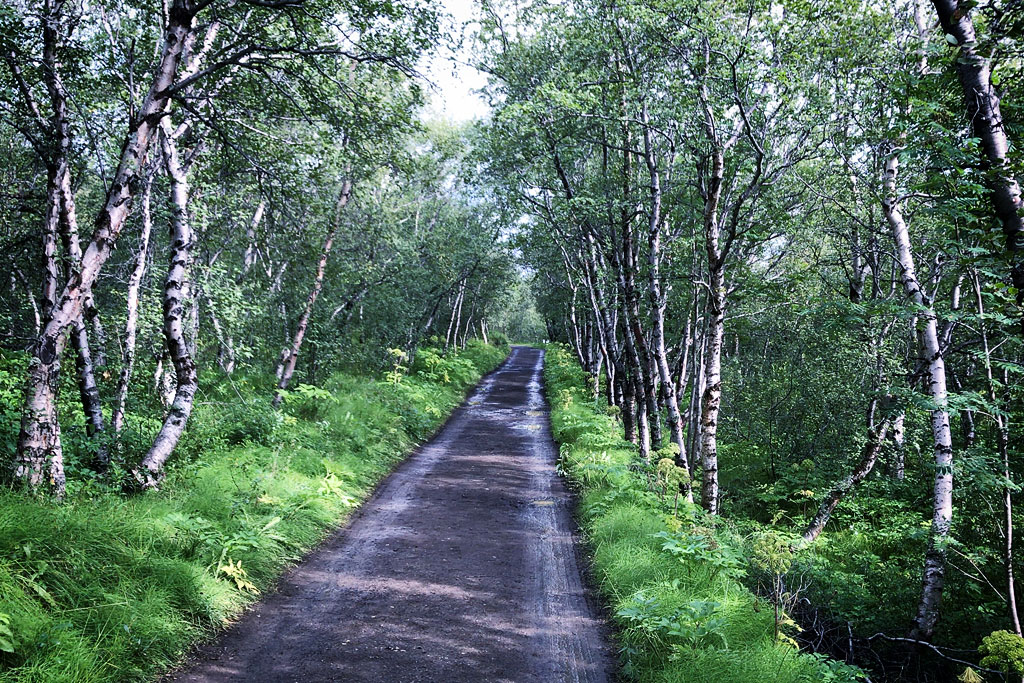
Hofdi park
Hofdi Park (Höfði) lies on a small lava promontory jutting out into Lake Myvatn. Scenic paths wind across it, between trees, through flowery clearings and over a small hill. Woodland like this is quite rare in Iceland and is one of the most distinctive features of the area. From the top of the hill there is also a lovely view of the lake itself.
The headland used to be called Hafurshöfði (“Buck Point”); the name Höfði stuck after a small farm was built here in 1912. Around 1930 the land was bought by Héðinn Valdimarsson, a Reykjavik member of parliament and labor leader, and his wife Guðrún Pálsdóttir. They built a summer house and started planting trees on a large scale, and after Héðinn’s death Guðrún kept up the planting for decades. In 1970 she donated most of Höfði to the local municipality, and the area has been open to visitors ever since (source: archaeological survey of Höfði, PDF, 6 MB – a large file, best opened over Wi-Fi, in Icelandic with an English summary).
With the calm waters of the lake and the lush greenery all around, Höfði is a great place to relax and take a break from the tourist crowds.
Gud Fingur lava pillars
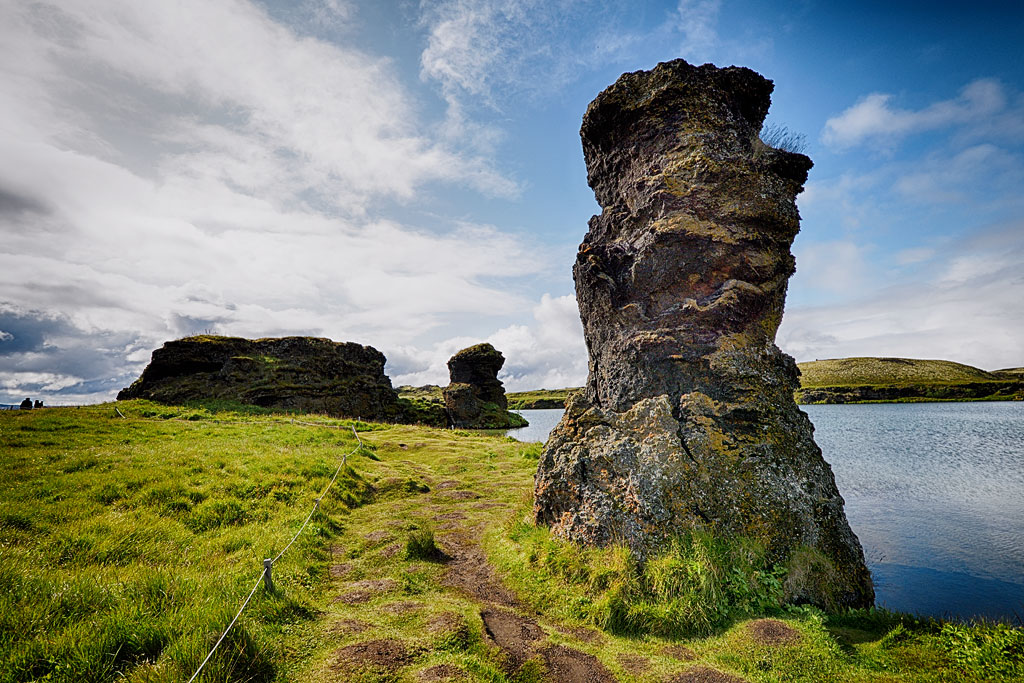
Gud Fingur
Gud Fingur (Icel. Guð fingur, literally “God’s Finger”) is a rock formation south of Höfði, in Kálfastrandarvogur Bay. Together with the other pillars in the bay, it belongs to the formations known as Kálfastrandarstrípar or Klasar (Visit North Iceland). It is essentially the western end of the Dimmuborgir lava field, and this “finger” (and several others in the area) formed the same way as Dimmuborgir itself.
In a nutshell: an obstruction in the lava flow trapped molten rock under a solidified crust, and a lava pond built up. Steam rising through the pond chilled the lava into pillars, and when the melt finally drained away to the west, the pillars were left standing (Náttúruverndarstofnun).
What makes Gud Fingur and the pillars around it special is that they are surrounded by water. Some stand right in Kálfastrandarvogur Bay, others, like Gud Fingur itself, on its shore. This creates a very different, perhaps more painterly landscape than similar formations inside the Dimmuborgir lava field.
Tips and practical information
- Both sites are located on Road 848, on the eastern shore of Lake Myvatn, south of the Dimmuborgir lava field.
- A path leads into Hofdi Park from the parking lot marked “Hofdi Nord.” The walk through the park is about 1 km (0.6 mile) of pleasant strolling. Just take care going up and down the hill if it is raining or has rained recently. The paths are well marked and safe.
- To see the Gud Fingur pillars, it is best to drive to a separate parking lot on Kálfastrandarvogur Bay, marked on Google Maps as “Lake Myvatn panoramic point,” about 500 meters (1,600 feet) farther south. Gud Fingur is about 200 m (650 ft) from the parking lot.
- For more on how the area was formed, see Geologic History of the Myvatn Region.