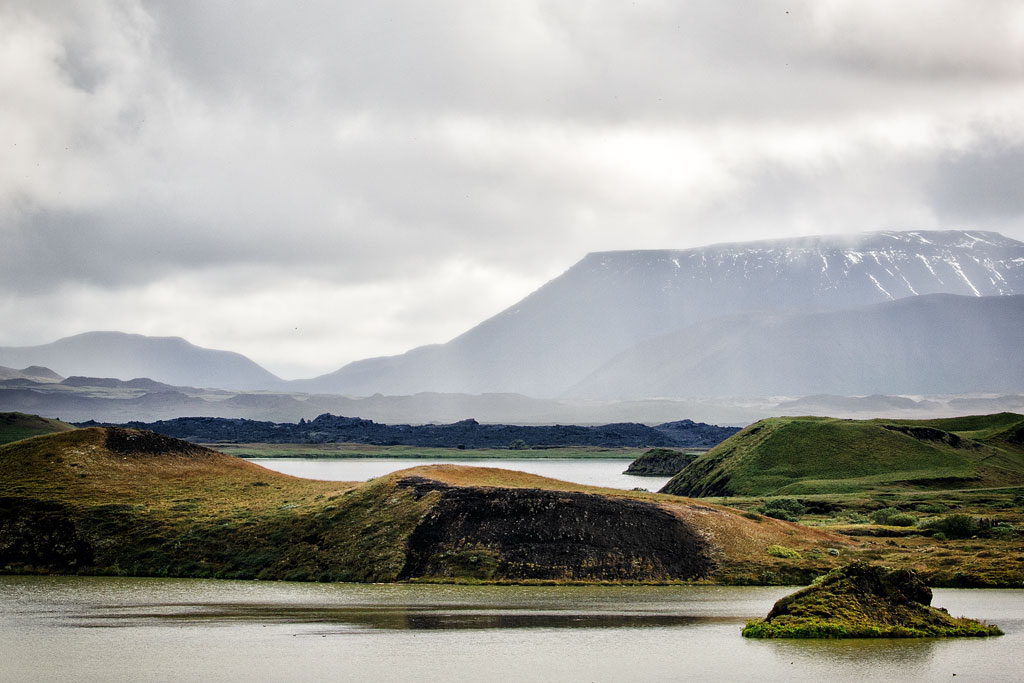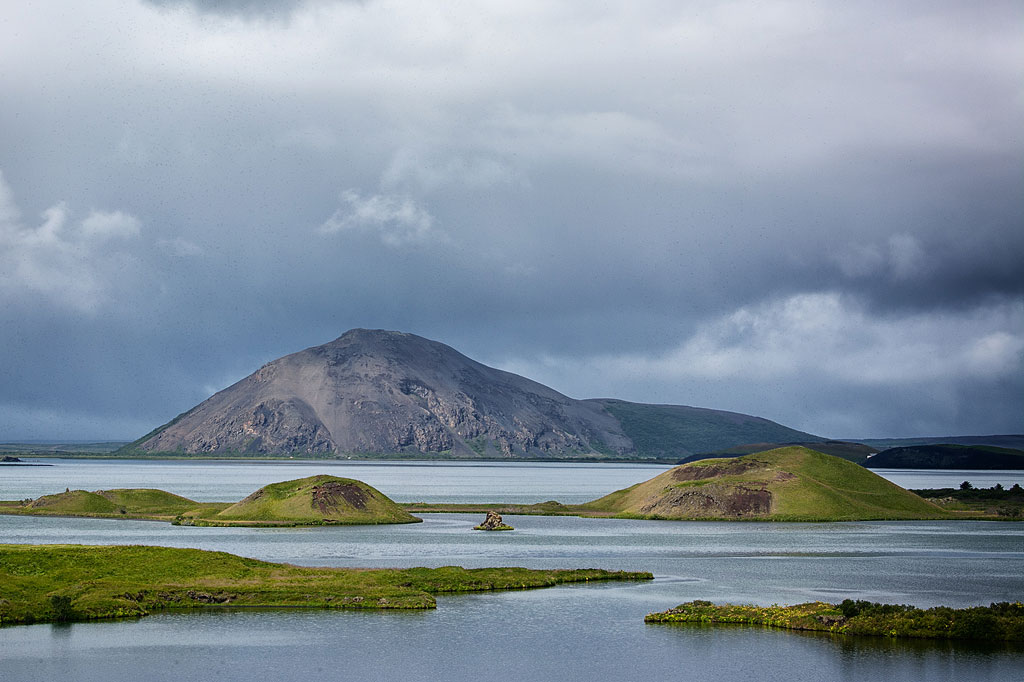


Skutustadagigar are pseudo-craters (rootless cones) – truly unique volcanic formations, even by Icelandic standards.
How the Skutustadagigar pseudo-craters were formed
The Skútustaðagígar pseudo-craters lie in the Lake Mývatn region. These peculiar formations were created by the special structure of the lake itself and by the fact that the whole region is volcanic.
Lava from an eruption of Threngslaborgir, a volcano about 10 km (6 miles) to the east, covered underground watercourses here. The water trapped under the hot lava turned into steam, forming pockets under ever-increasing pressure (more and more water kept flowing in). Eventually, these “bubbles” burst, leaving shapes on the surface that look just like volcanic craters or meteorite impact craters. Because these craters were never directly connected to a source of magma, they are called pseudo-craters. The small peninsula holds a cluster of a dozen or so of them, large and small.
For more on how volcanoes work and what other unusual formations they have left behind in Iceland, see these guides:
Skutustadagigar – tips and practical information

Map of the Skutustadagigar trails
- There is a public parking lot by Road 848, which takes you to Skutustadagigar, next to the Gígur visitor center (travel information, an exhibition, and restrooms). Nearby, you will also find a restaurant, a café, and a gas station.
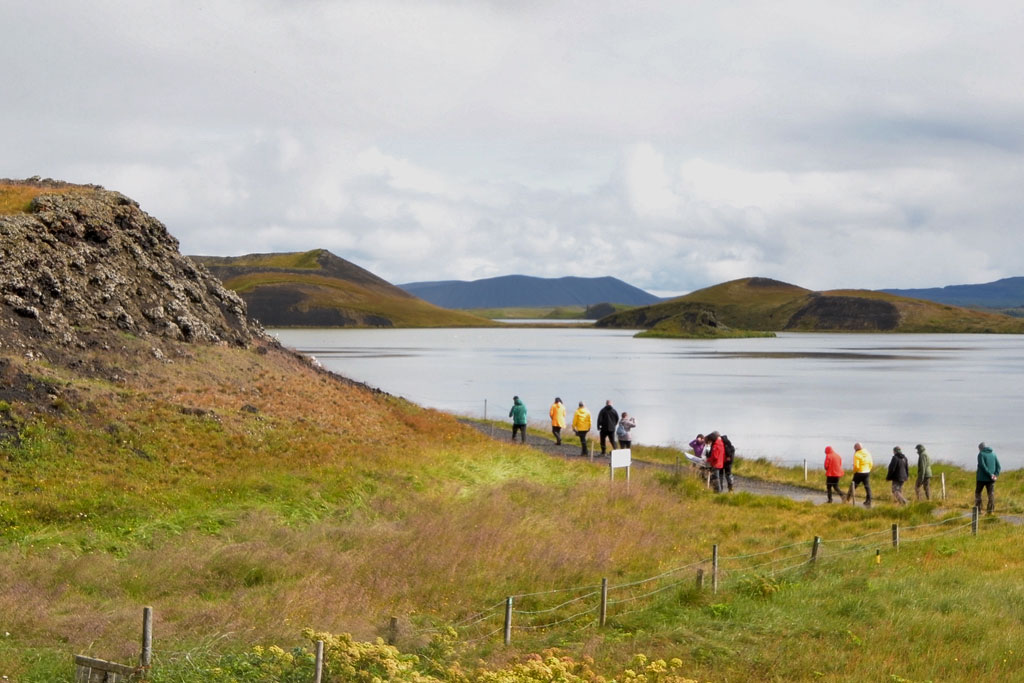
- From the parking lot, be sure to take the shorter trail by the Stakhólstjörn pond – it is about 1 km (0.6 miles) long and passes at least 10 craters. It will take you no more than half an hour.
- The longer trail – around Stakhólstjörn – is about 2 km (1.2 miles) and has a few more craters. If you have time, it is definitely worth it, but it is not essential, and you can easily skip it.
- Skutustadagigar has been a protected natural monument since 1973 (Náttúruverndarstofnun). While walking around, keep to the marked paths – this keeps you safe and protects the unique Icelandic nature.
- The Skutustadagigar area is also a great place for birdwatching, especially ducks, which nest here in large numbers.