


Stöng and Þjóðveldisbærinn (the Commonwealth Farm) are two sites a few kilometers apart in the Þjórsárdalur valley in South Iceland that together show how Icelanders lived at the end of the Viking Age. Stöng is the original: the excavated ruins of a large farm abandoned after an eruption in 1104 – today little more than stone and turf wall foundations inside a light, enclosed protective shelter. Þjóðveldisbærinn is a modern, full-size reconstruction of what that farm probably looked like, built nearby in the 1970s – not a historic building, but a place where you are encouraged to touch everything and even dress up as a Viking.
Stöng – ruins of a Viking Age farm
In the 11th century Þjórsárdalur was a fertile valley with about 20 farms and an estimated 400 to 600 inhabitants (source: the Commonwealth Farm). Stöng (literally “pole”) was one of the largest farms in Iceland at the time. It was abandoned after the eruption of the Hekla volcano in 1104, though at least one farm in the valley, Sandártunga, remained inhabited for longer. For centuries afterwards, the valley’s forest was used for charcoal production and ironworking, but the landscape was otherwise left largely untouched – which is why an entire region abandoned early in the Middle Ages has survived here almost undisturbed.
In 1939, a joint Nordic team of scientists excavated six farms in the valley, including Stöng, to study how Norse architecture developed around the North Atlantic. It was during this research that the geologist Sigurður Þórarinsson laid the foundations of tephrochronology – dating by layers of volcanic ash, a method used in Icelandic archaeology and geology ever since (source: the information board at Stöng).
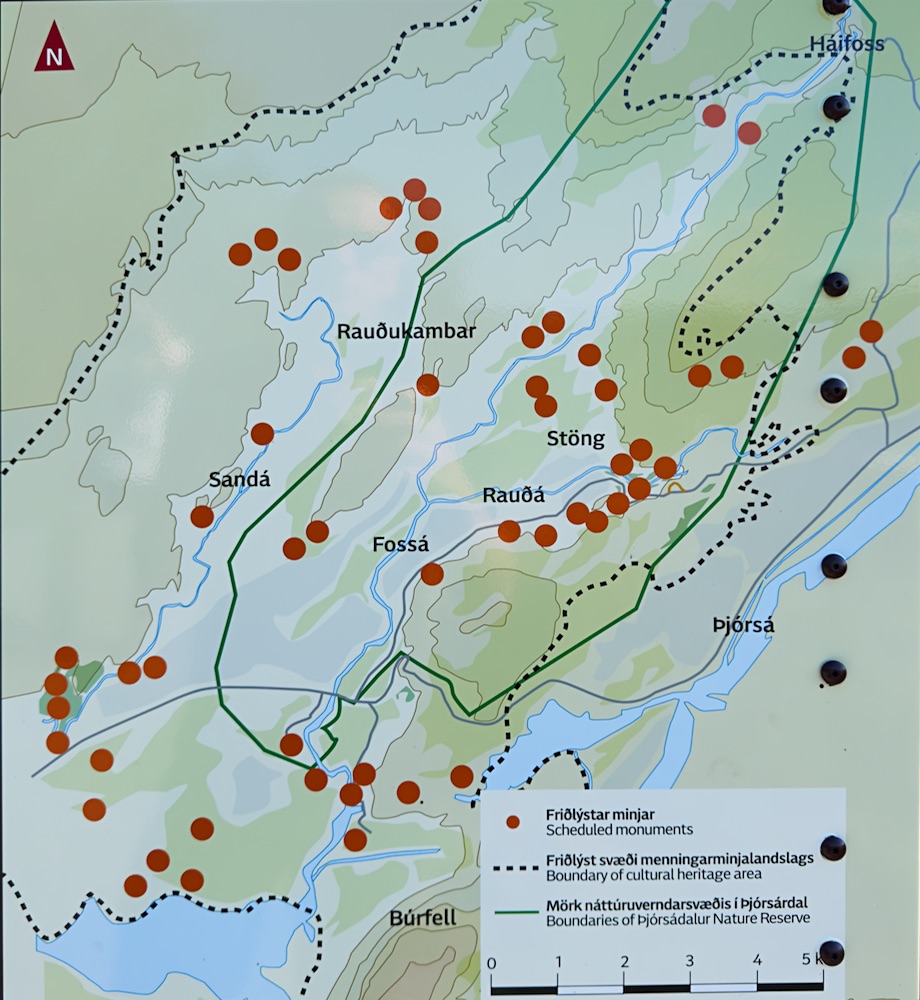
Scheduled monuments in Þjórsárdalur – map from the information board at Stöng
Stöng also hides a saga mystery. Its best-known resident was Gaukur Trandilsson, a wealthy warrior whose saga was never finished and is considered lost. Only a medieval verse survives, hinting at an affair between Gaukur and Þuríður, a married woman from the neighboring farm of Steinastaðir. Gaukur was killed by his foster brother Ásgrímur Elliða-Grímsson, Þuríður’s cousin.
Stöng – tips and practical information
- Visiting the ruins is free. On the farm mound, besides the longhouse, you will find the remains of a cowshed (with clearly visible stone stalls), a barn and a smithy that still contains features used in blacksmithing. A stone-paved path runs alongside the longhouse. The ruins of a church, uncovered by the National Museum of Iceland at the end of the 20th century, are not visible today.
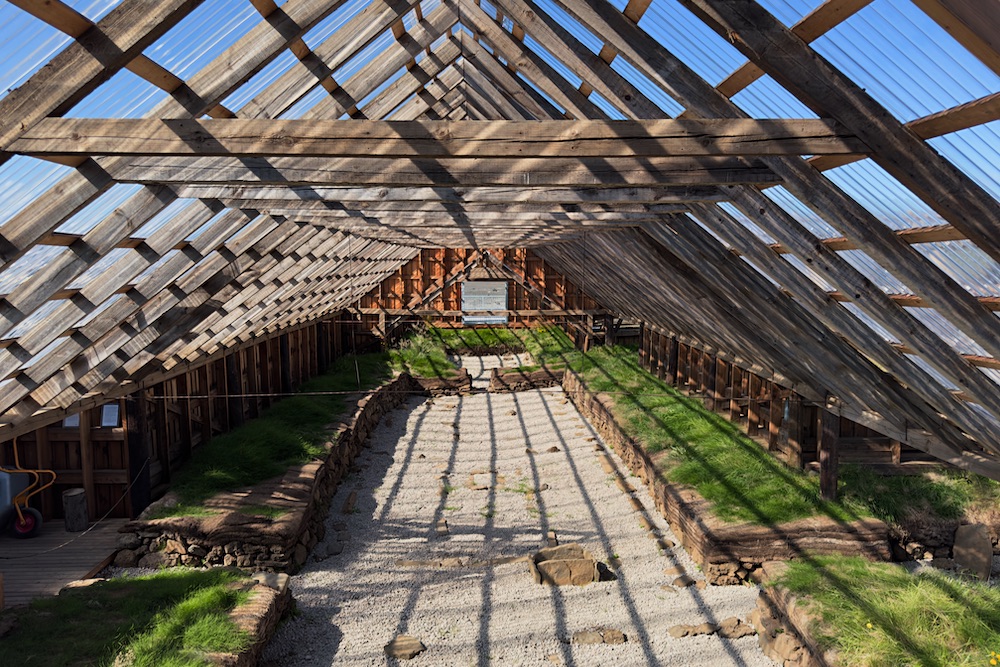
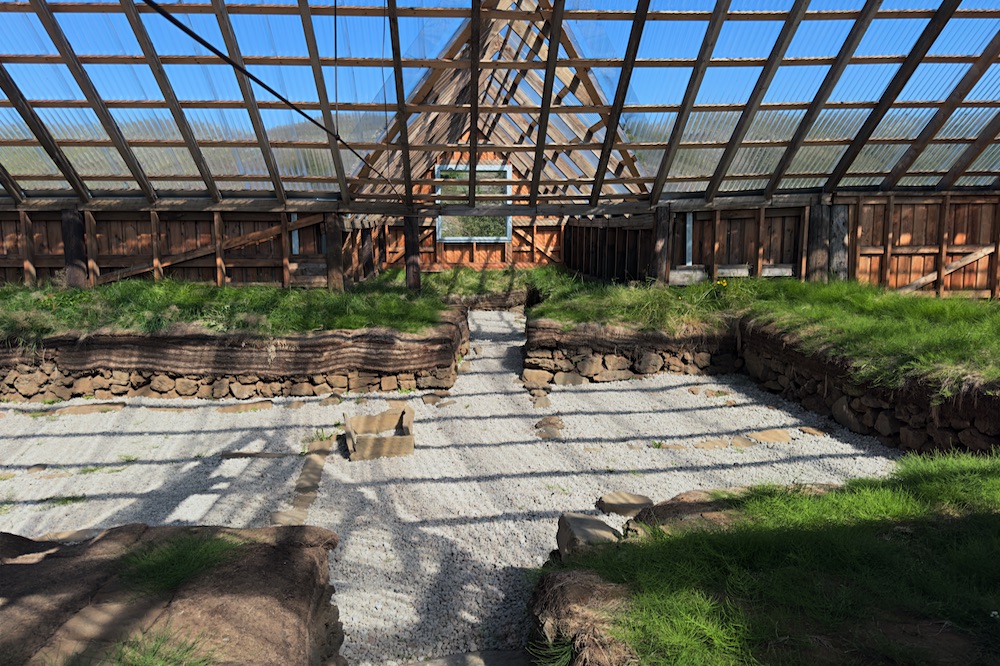
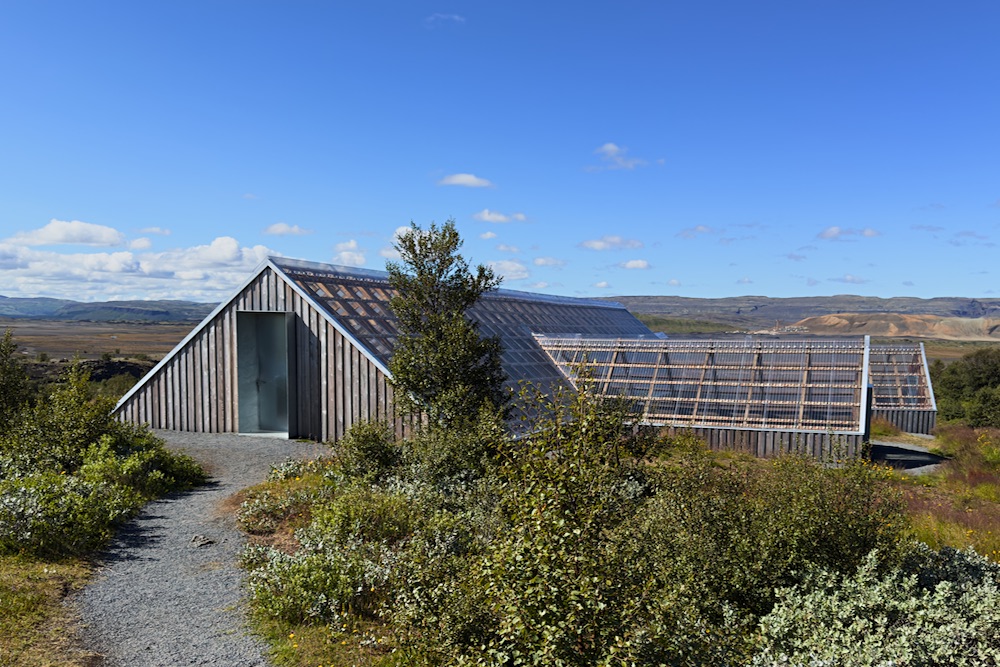
- The longhouse ruins – with the stone outline of the building, its central hearth and a shared toilet (with fresh water flowing through it) – have been protected by a shelter since 1957. In 2023 it was rebuilt as a light, enclosed structure with a transparent roof: you can no longer walk inside the longhouse, but you get a better view of the ruins from viewing platforms and large window openings.
- On a sunny day it gets remarkably bright inside the shelter – and very, very hot, so dress in layers you can easily take off.
- The ruins, like the other ancient farm sites in the valley, are looked after by Minjastofnun Íslands (the Cultural Heritage Agency of Iceland).
- Road 327 to Stöng (and Gjáin) is a gravel road in poor condition – bumpy and full of potholes. We don’t recommend it without a 4×4, and in winter the road may be impassable.
- When you get there, park by the toilets, cross the pedestrian bridge over the river and follow the path uphill.
- From Stöng, a path about 1 km (just over half a mile) long leads upstream to Gjáin, a beautiful green hollow with lush vegetation, small waterfalls and interesting rock formations. The walk takes about 20-30 minutes.
Þjóðveldisbærinn – the Commonwealth Farm
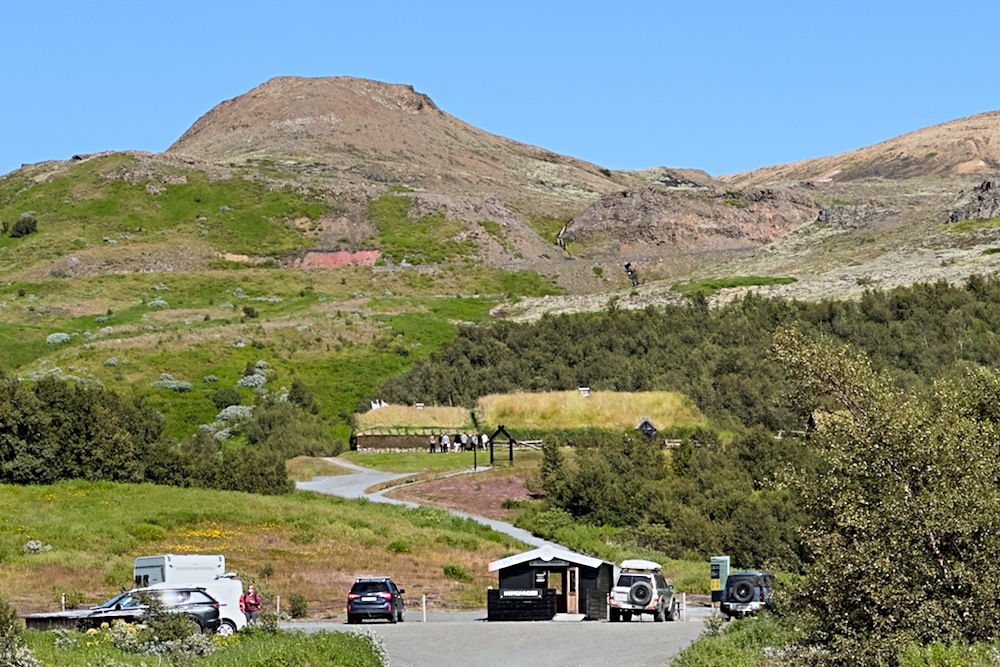
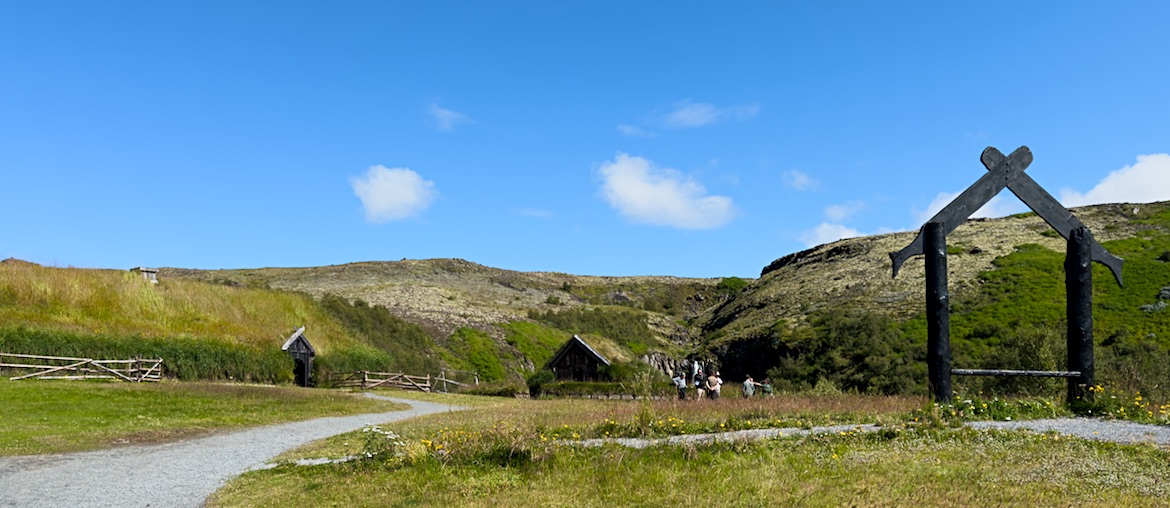
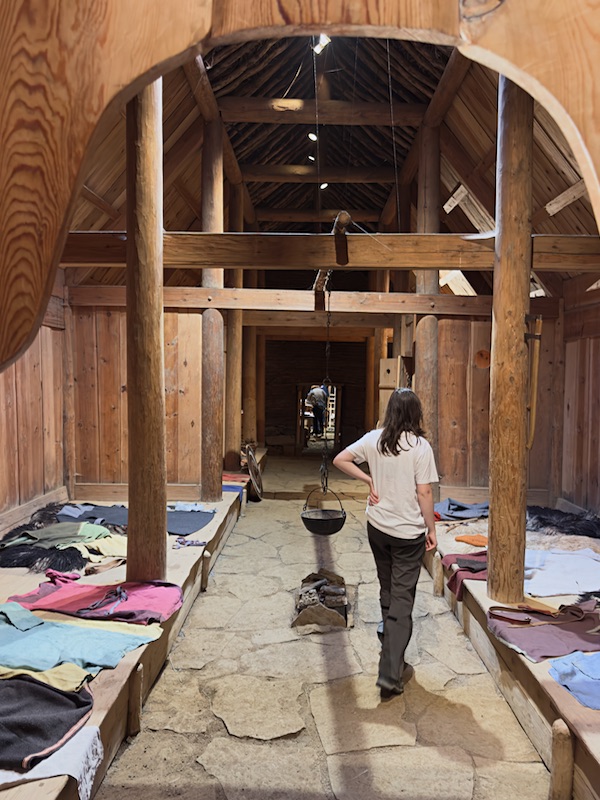
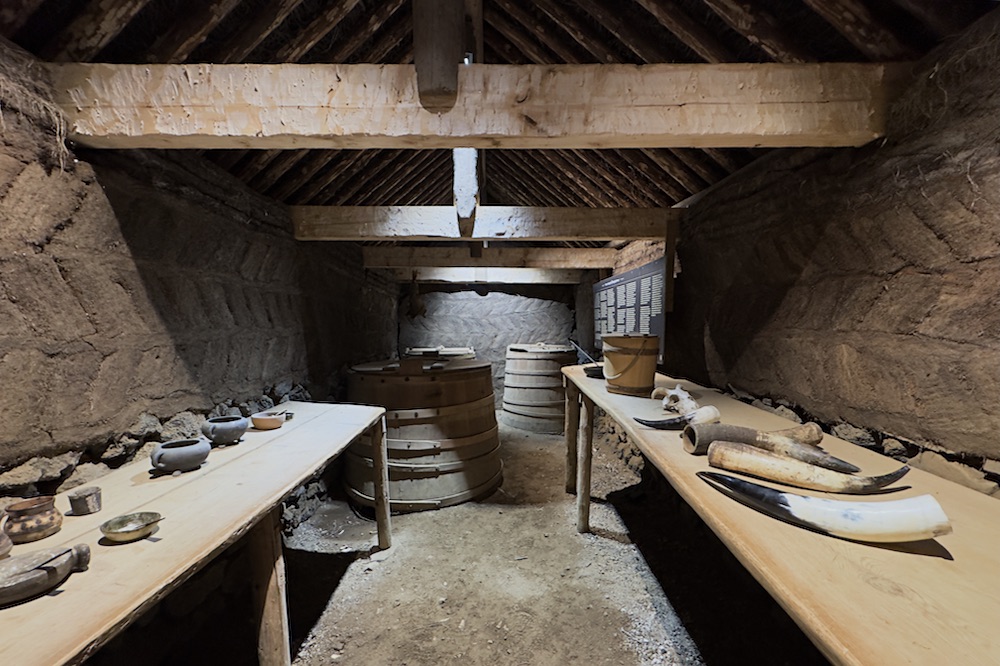
About 6 km (nearly 4 miles) by road from Stöng – by the same junction on Road 32, just on the other side of it – stands Þjóðveldisbærinn (Thjodveldisbaer), a reconstruction of the farm. The buildings are entirely new, not historic: they show how the farm at Stöng most likely looked. It was built in 1974 to mark the 1,100th anniversary of the settlement of Iceland and officially opened in 1977. The size, location and layout of the Stöng ruins served as the model, and the rest was pieced together from remnants of old Icelandic carpentry, medieval buildings in Greenland, descriptions in old manuscripts and Nordic stave construction (source: thjodveldisbaer.is).
Next to the farm stands a small church – a replica of a medieval house of prayer whose 11th-century ruins were found at Stöng during excavations in 1986, 1992 and 1993. The replica was first set up in the National Museum of Iceland in 1997 and rebuilt next to the farm in 2000, for the 1,000th anniversary of Christianity in Iceland.
Thjodveldisbaer – tips and practical information
- The buildings are roofed in the traditional way – with turf, that is, a layer of lush, green, living grass.
- Inside, you can try on medieval clothing, play cards in the hall and weave on an old warp-weighted loom.
- The farm is open daily from 10 a.m. to 5:30 p.m., from May 1 to September 30 (the homepage says until October 15, so check before a late-season visit). Groups can book a visit all year round by email.
- Admission (prices September 2026): adults 2,500 ISK (about $21), children aged 6-12 500 ISK (about $4), children under 6 free.
- It is only a short walk from the parking lot up to the farm.
- The Commonwealth Farm is a joint project of the Ministry of Education, Science and Culture, the National Museum of Iceland, the Skeiða- og Gnúpverjahreppur municipality and Landsvirkjun, the national power company, which runs it day to day.
- For up-to-date information, see the museum’s website: thjodveldisbaer.is (good to know).
How to get to Stöng and Thjodveldisbaer
The Stöng ruins and the Commonwealth Farm are two separate stops – you will need the car to get from one to the other, as walking along the road is not an option worth considering. Both are in the upper part of the Thjorsardalur (Þjórsárdalur) valley, along Road 32 (Þjórsárdalsvegur). You can get there from the Golden Circle side (via Fludir or Selfoss) or from the interior, along Road 26 from the Hrauneyjar Highland Center – Road 32 ends at Road 26 just beyond the valley.
To reach Stöng, turn north onto the smaller Road 327 (Stangarvegur) just east of the Fossá river; the parking lot at Stöng is 5.6 km (3.5 miles) down this road.
The access road to the Thjodveldisbaer farm branches off Road 32 to the south at almost the same spot where the western end of Road 327 branches off it to the north.
On the way you can also stop at Hjálparfoss, a waterfall near the Búrfell power station. Further up the valley lies Háifoss, one of the highest waterfalls in Iceland – an 8 km (5-mile) hiking and cycling trail links it with Stöng. If you don’t have a car, you can see Hjálparfoss, Stöng and Gjáin on a private Þjórsárdalur Valley tour, with an optional stop at the Commonwealth Farm (admission not included).
Other places where you can feel like a Viking
Stöng and the Commonwealth Farm are not the only places in Iceland that bring the settlement era to life. If you enjoyed this valley, the following are also worth a visit:
- Eiriksstadir
A reconstruction of the longhouse of Erik the Red in the Dalir region of West Iceland – a “living museum” where you can try out the weapons of the time and dress up as a Viking. - Glaumbaer
A turf farm museum in Skagafjörður, North Iceland. Its buildings date from the 18th and 19th centuries, but the ruins of a Viking Age longhouse were found about 150 meters (500 ft) away. - The Settlement Exhibition (Landnámssýningin)
A museum in the center of Reykjavik with the most scientific approach to the Vikings – it shows the lives of Iceland’s first settlers. - The Árbær Open Air Museum (Árbæjarsafn)
An open-air museum in Reykjavik with around 30 historic buildings – most of them from the 19th and 20th centuries, but some older ones too. You can go inside all of them. - The Viking village at Stokksnes
A Viking village below Vestrahorn in Southeast Iceland. It is not a historic site but a film set built in modern times; access to the area is paid at the Viking Cafe.