


Gjáin (Gjain) is a picturesque green hollow in the Þjórsárdalur valley in South Iceland. It is also home to one of Iceland’s smaller but more charming waterfalls.
Gjáin – a picturesque troll hideaway
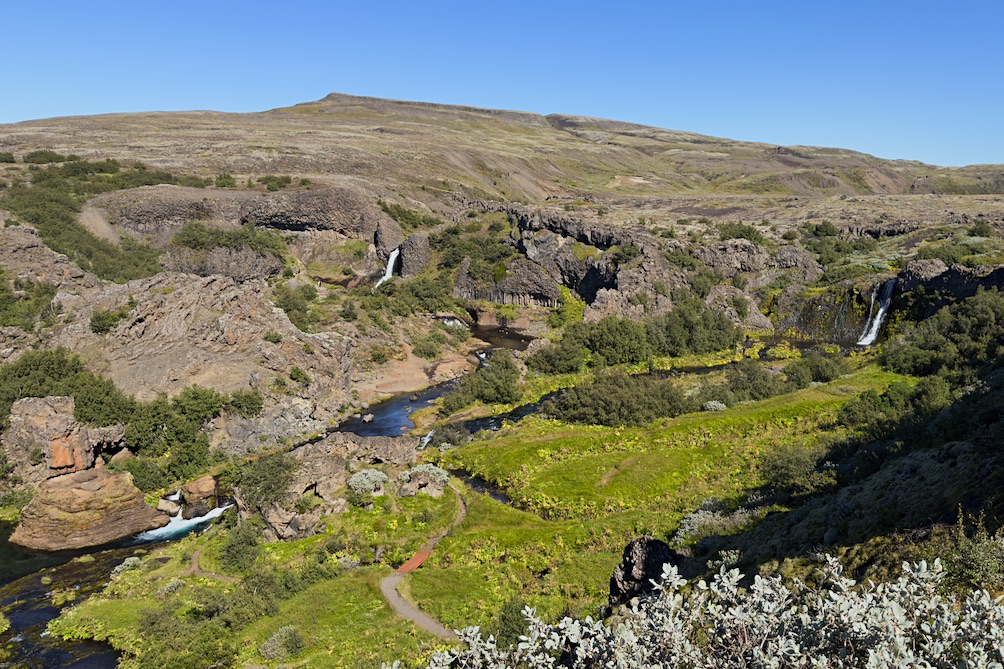
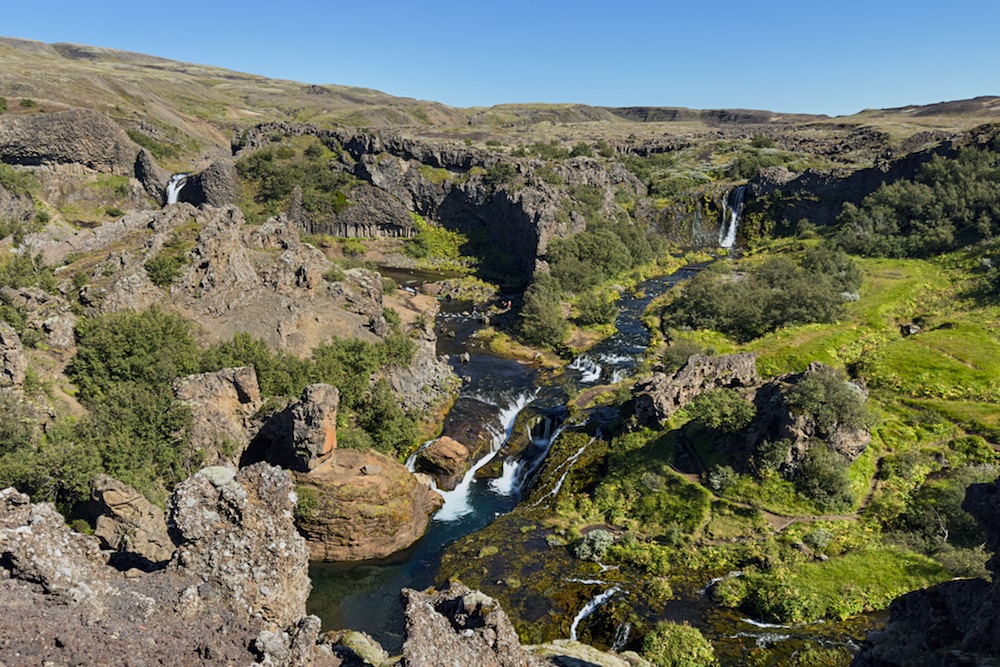
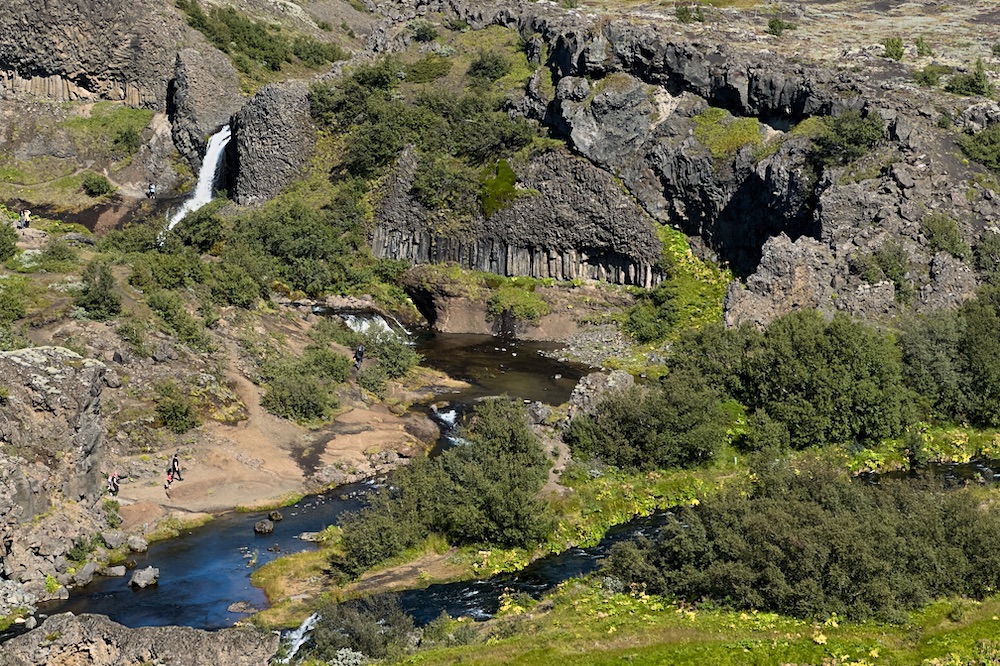
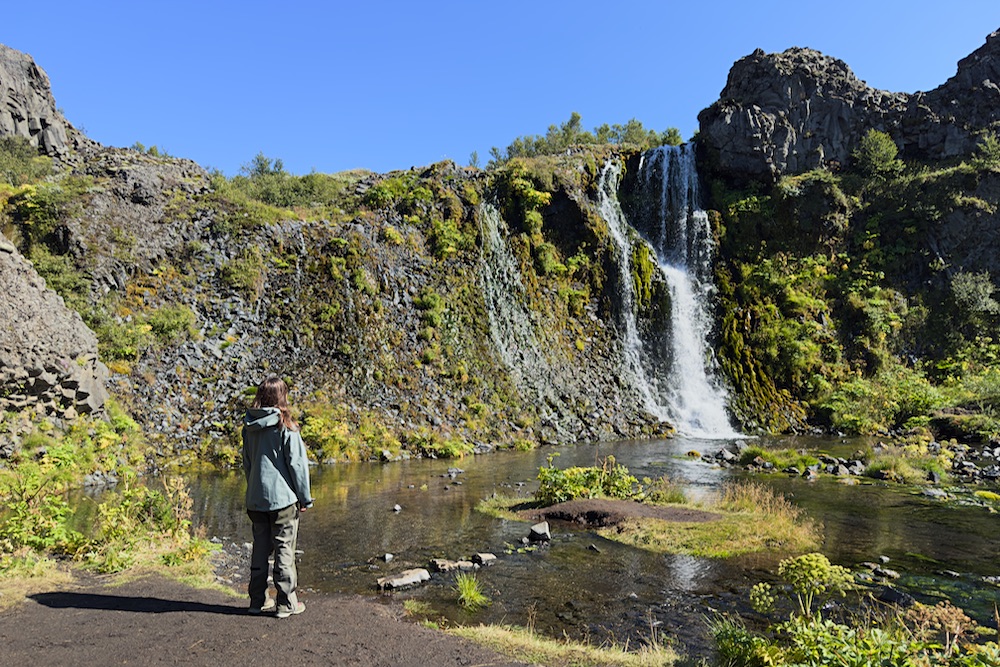
Gjáin is a great choice if you’re looking for a short walk, peace and quiet. It feels like a miniature fairyland, full of waterfalls, crystal-clear pools, caves, basalt columns and lush vegetation.
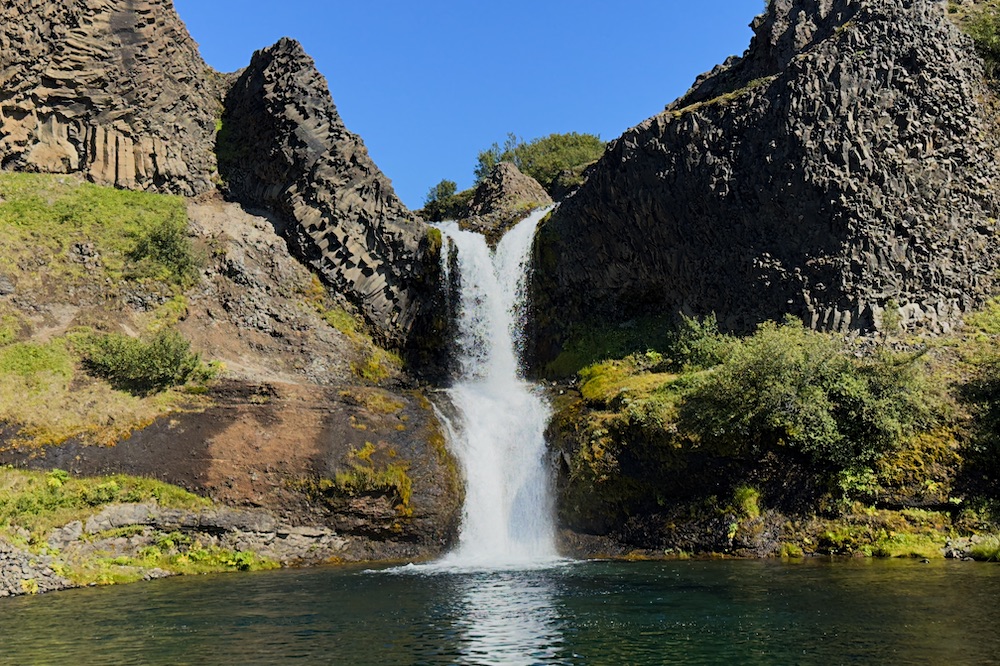
The icing on the cake is the Rauðá (Red River), which flows through Gjáin, and the Gjárfoss waterfall on it. It is a dream setting for the legendary Icelandic trolls, elves and fairies. What makes the place even more unusual is that it appears almost out of nowhere: all around lie bare plains of lava, scoria and gravel, and suddenly the ground drops away into a green, sunken valley with birch trees, grass and waterfalls. You only see it once you reach its edge, to the great surprise (and delight) of travelers.
Gjáin reminded us a little of the slopes of Þórsmörk, but with a touch of Rivendell from The Lord of the Rings. Photos don’t quite capture it – in person, the place makes a remarkable impression. If you’re not planning to visit Þórsmörk or hike the Laugavegur trail, make sure to stop here.

Where I book my own Iceland trips
Best Iceland deals
Selected partner sites, best prices
How Gjáin was formed
The tall walls enclosing the heart of Gjáin to the south and east are lava with striking columnar basalt. They belong to the Tungnaárhraun lava fields – a series of vast lava flows formed mostly 7,000-9,000 years ago during large eruptions in the highlands. The hollow itself was carved much later by floods of the Þjórsá river, which cut deep into the lava. The last time the Þjórsá flowed through Gjáin was during a major spring flood in 1953, which swept away much of the vegetation and soil (source: the information board at Gjáin).
The Rauðá rises just above Gjáin and is fed by numerous springs welling up from beneath the lava edges; it then flows past Stöng, the ruins of a large Viking-Age farm, and into the Fossá river. Gjáin has been protected from grazing since 1938, and since the early 2000s the birch woodland has spread considerably – Gjáin and the area around Stöng keep getting greener.
Gjáin – tips and practical information
- The best time to visit Gjáin is from early June to early October. At other times of the year, it is either inaccessible and covered in snow or simply dull in color.
- There are two parking lots: one right on the edge of Gjáin and another at Stöng. From the upper one, a short path leads down to the bottom of the hollow – you can stroll around for a while, go back to the car and then drive on to Stöng. You can also do it on foot: from the parking lot at Stöng, a circular trail about 2.5 km (1.5 miles) long leads through a birch grove with a stop in Gjáin. The path is mostly easy to follow, but you will need to cross the Rauðá twice on stepping stones; from Stöng it is about 700 m (just under half a mile) to the first viewpoint deep in Gjáin, overlooking Gjárfoss (source: the information board at Gjáin). With stops for photos and a look into the caves, allow about an hour for the loop.
- Since Game of Thrones was filmed in Gjáin, the place has become much more popular. If you go there in summer, chances are you won’t be alone.
- Road 327 to Stöng and Gjáin is a gravel road in poor condition – bumpy and full of potholes. We don’t recommend it without a 4×4, and the short stretch between Stöng and Gjáin is the roughest – without a 4×4, park at Stöng and walk. In winter the road may be impassable.
- A marked 8 km (5-mile) trail also leads north from Gjáin to Háifoss – a popular route for both hiking and cycling.
How to get to Gjáin
Gjáin is in the upper part of the Þjórsárdalur valley, along Road 32 (Þjórsárdalsvegur), which you can reach from the Golden Circle side via Fludir. Just east of the Fossá river, turn north onto Road 327 (Stangarvegur) – it leads to Stöng and Gjáin (source: Náttúruverndarstofnun, in Icelandic).
On the way, you can also stop at Hjálparfoss, and further up the valley lies Háifoss, one of the highest waterfalls in Iceland. If you don’t have a car, you can see Hjálparfoss, Stöng and Gjáin on a private Þjórsárdalur Valley tour.