

Ef þér líkar ekki veðrið, bíddu í fimm mínútur — if you don’t like the weather, wait five minutes (local saying). Iceland’s weather doesn’t just change day to day — it can swing from sunshine to horizontal rain and back within the hour. Pack for everything, every single day — summer being the one genuine exception.
The short answer: July and August are the best months for most visitors. But I have to warn you: no season is perfect for everything. You will have to give something up — at least for your first couple of trips.
I’ve been to Iceland 9 times over the past 7 years — all private trips — and I’m planning trip #10 this summer. Let me walk you through the pros and cons of each season.
There’s no single best time to visit Iceland
Every season in Iceland is genuinely worth it — for specific things. Summer brings relative warmth, up to 23 hours of daylight, full access to the interior highlands, whales, and puffins.
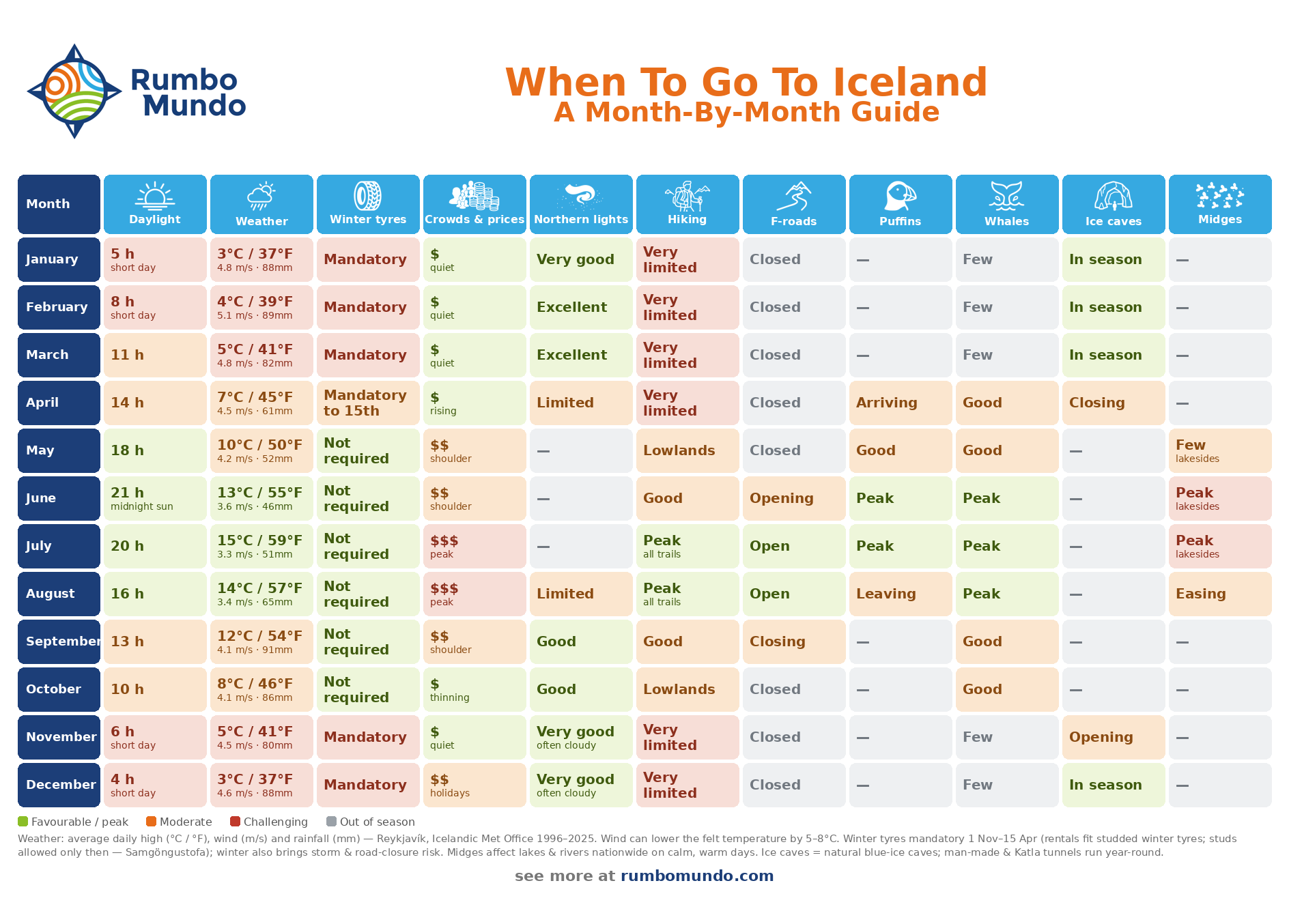
When to go to Iceland — a month-by-month guide
| Month |  |  |  |  |  |  |  |  |  |  |  |
|---|---|---|---|---|---|---|---|---|---|---|---|
| Daylight | Weather | Winter tyres | Crowds & prices | Northern lights | Hiking | F-roads | Puffins | Whales | Ice caves | Midges | |
| January | 5 hshort day | 3°C / 37°F4.8 m/s · 88mm | Mandatory | $quiet | Very good | Very limited | Closed | — | Few | In season | — |
| February | 8 hshort day | 4°C / 39°F5.1 m/s · 89mm | Mandatory | $quiet | Excellent | Very limited | Closed | — | Few | In season | — |
| March | 11 h | 5°C / 41°F4.8 m/s · 82mm | Mandatory | $quiet | Excellent | Very limited | Closed | — | Few | In season | — |
| April | 14 h | 7°C / 45°F4.5 m/s · 61mm | Mandatory to 15th | $rising | Limited | Very limited | Closed | Arriving | Good | Closing | — |
| May | 18 h | 10°C / 50°F4.2 m/s · 52mm | Not required | $$shoulder | — | Lowlands | Closed | Good | Good | — | Fewlakesides |
| June | 21 hmidnight sun | 13°C / 55°F3.6 m/s · 46mm | Not required | $$shoulder | — | Good | Opening | Peak | Peak | — | Peaklakesides |
| July | 20 h | 15°C / 59°F3.3 m/s · 51mm | Not required | $$$peak | — | Peakall trails | Open | Peak | Peak | — | Peaklakesides |
| August | 16 h | 14°C / 57°F3.4 m/s · 65mm | Not required | $$$peak | Limited | Peakall trails | Open | Leaving | Peak | — | Easing |
| September | 13 h | 12°C / 54°F4.1 m/s · 91mm | Not required | $$shoulder | Good | Good | Closing | — | Good | — | — |
| October | 10 h | 8°C / 46°F4.1 m/s · 86mm | Not required | $thinning | Good | Lowlands | Closed | — | Good | — | — |
| November | 6 hshort day | 5°C / 41°F4.5 m/s · 80mm | Mandatory | $quiet | Very goodoften cloudy | Very limited | Closed | — | Few | Opening | — |
| December | 4 hshort day | 3°C / 37°F4.6 m/s · 88mm | Mandatory | $$holidays | Very goodoften cloudy | Very limited | Closed | — | Few | In season | — |
Favourable / peakModerateChallengingOut of season
Weather shows the average daily high (°C / °F), wind (m/s) and rainfall (mm) — Reykjavík, Icelandic Met Office 1996–2025. Wind can lower the felt temperature by 5–8°C. Winter tyres are mandatory 1 Nov–15 Apr; rentals come fitted with studded winter tyres (studs allowed only in that window — Samgöngustofa). Winter also brings storm and road-closure risk. Midges affect lakes and rivers nationwide on calm, warm days. Ice caves = natural blue-ice caves; man-made and Katla tunnels run year-round.
From my personal experience winter is highly underrated: it gives you the Northern Lights and the spectacular ice caves inside Vatnajökull glacier — both far more spectacular in person than any photo suggests. Plus snow-covered landscapes that summer visitors simply never see.
Spring offers long days at meaningfully lower prices. And Autumn is the odd one out — in my view the low prices are its only real advantage.
So when is the best time to visit Iceland? It depends on what matters most to you. Here’s how to decide:
Want to see it all, but go only once?
Sorry my friend, no can do, you’re out of luck. Seeing everything in one go is just not possible with Iceland. Midnight Sun, puffins, and the interior highlands are summer-only, while Northern Lights and ice caves are winter-only. These are just some examples and there’s no workaround. You need to visit at least twice – happens to many a visitor 🙂 See the table below for all the details.
When to go to Iceland
Want to see as much as possible in one go?
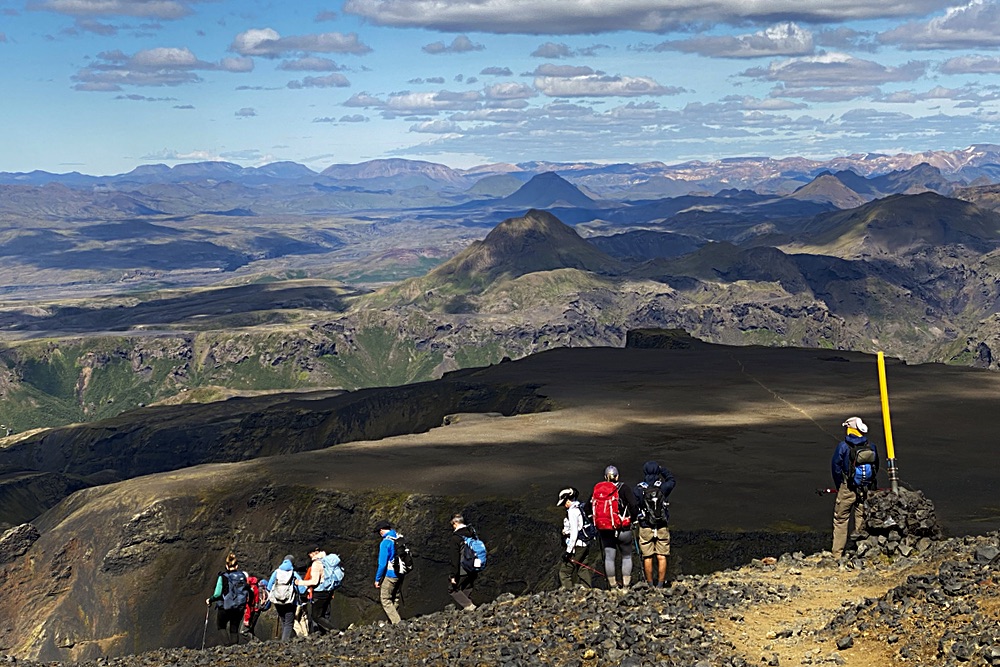
Go for a summer trip, with a 4×4 vehicle and at least 15 days at your disposal. You get all the top spots on Ring Road, as well as the Westfjords, interior highlands, whales, puffins, Midnight Sun, a chance for a couple of amazing hikes and the best weather to top it all. It might be quite expensive, but it will certainly be memorable. See our 15-day self-drive guide for details.Fimmvörðuháls trail
Best value for money?
May or September are probably your best options. Near-summer daylight, meaningfully lower prices, manageable weather and the Ring Road largely to yourself. Our 7–13-day Ring Road guide fits perfectly.
Travelling on a budget?
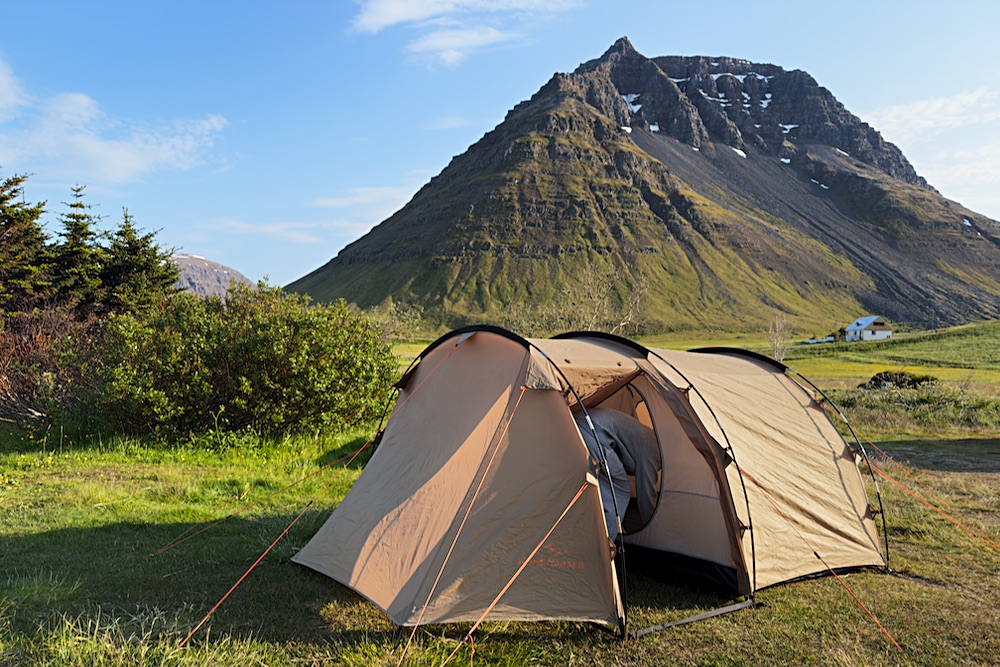
Choose June or September if you’re happy to camp — both months work for tent travel at lower prices. Spring is the smartest balance of cost and conditions. Autumn is the cheapest, but the weather is a genuine gamble.Bolungarvík, Westfjords
Consider also simply keeping your trip short: you can easily see 60–70% of Iceland’s top spots in under a week, and our 3–7-day guide works great as a budget option in any season.Northern Lights and ice caves your priority?
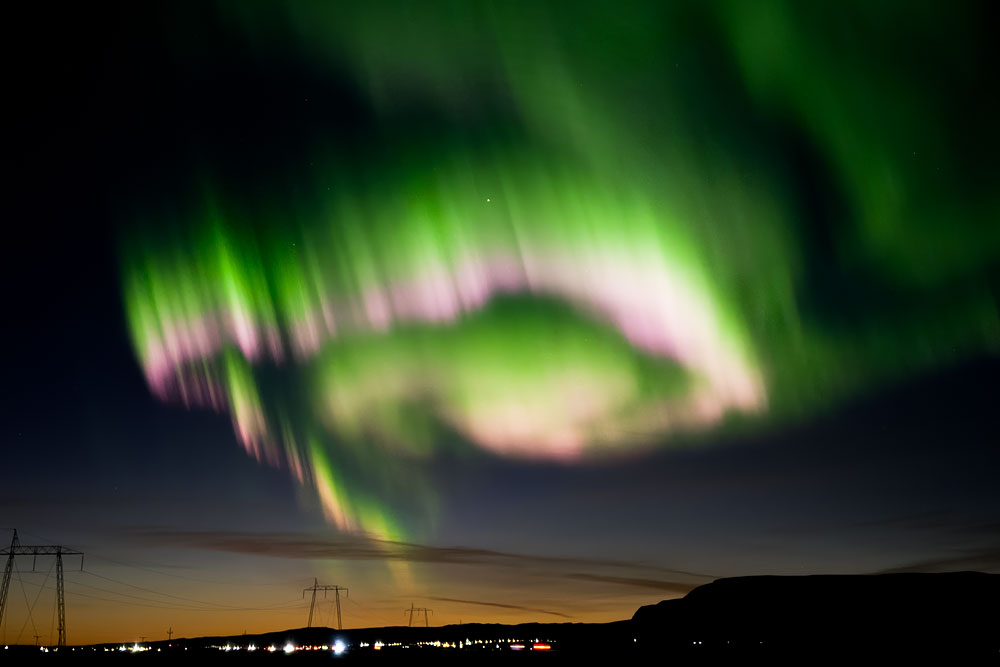
Then you need to face Iceland’s winter — there is no alternative. Both of these are winter-only experiences. February and March offer the best combination of aurora activity and clearer skies. See our complete winter Iceland guide for everything you need to plan.Winter Iceland
With this in mind this guide starts with a weather reality check — Iceland’s climate surprises most first-time visitors, and understanding it shapes everything that follows. Then let me walk you through each season in turn: what it genuinely delivers, what it costs, and what kind of trip it actually suits. If you’re interested in details for each month – be sure to see our Iceland weather guide, which shows temperatures, wind, precipitation and more, based on raw data from Icelandic Meteorological Office, for years 2000-2025.
What Is the Weather Like in Iceland?
Most of Iceland has a Subpolar Oceanic climate — which may sound mild, but is deceiving. Average temperatures are never extreme in either direction, yet individual days can swing far from those averages. A summer day in Reykjavik can be a pleasant 18°C in sunshine or a miserable 8°C in horizontal rain — sometimes both on the same day.
Ef þér líkar ekki veðrið, bíddu í fimm mínútur — if you don’t like the weather, wait five minutes (local saying). Iceland’s weather doesn’t just change day to day — it can swing from sunshine to horizontal rain and back within the hour. Pack for everything, every single day — summer being the one genuine exception.
A few things to understand before picking your season:
Typical temperatures in Iceland
- around 4°C / 39°F in winter with 92.3% of days falling between -2°C / 28°F and 10°C / 50°F max. daily temp.
- around 9°C / 48°F in spring and autumn with 94.2% of days falling between 3°C / 37°F and 15°C / 59°F.
- around 14°C / 57°F in summer with 92.7% of days falling between 9°C / 48°F and 19°C / 66°F.
All above is based on Icelandic Meteorological Office Database, delivery 2026/01/06
See a more detailed review of Iceland’s weather in our Weather in Iceland guide.
Iceland’s seasons bleed into each other more than you’d expect. Averages shift by just 5°C/9°F from one season to the next, and any given day can easily run the same 5°C/9°F above or below that average. A warm spring day and a cool summer day are often the same temperature.
Strong winds will make it feel much colder than the actual temperature — sometimes dramatically so.
Snow and icy roads are not unusual from September through to May, especially in the northern parts of the island.
Wind is Iceland’s defining feature
Icelandic wind can make a 10°C day feel genuinely miserable, and it never fully goes away. For many locals, “good weather” simply means not much wind. Windproof layers are non-negotiable. Always check weather alerts on vedur.is before heading out — they’re almost always wind-related.
Rain is frequent, but uneven
Iceland splits fairly clearly into more rainy months and less rainy ones. April through August averages 9–13 days per month with meaningful rainfall; September through March climbs to 16–18 days — well over half the month.
In summer, it tends to arrive in short heavy bursts — dry stretches of 2–3 weeks are entirely normal. September sees roughly double the total precipitation of June, and the rain there is far more persistent.
In winter, rain often becomes sleet — that grim mix of rain and snow near 0°C — but it can change to heavy snow at any time. Autumn is the wettest and cloudiest season by a clear margin, spring the second most unsettled.
Daylight swings are extreme.
In late June, Reykjavik gets about 23 hours of daylight. In late December, fewer than 5 — and those hours are often under heavy cloud cover, so the day gets no brighter than a dim grey. This shapes everything — from how long you can drive to what you can see, enjoy and photograph.
Want the full picture before you decide when to go and what to pack? Our Iceland weather guide goes much deeper — monthly temperature highs and lows, wind speeds, precipitation and snow, sunlight hours — all built on actual data from Iceland’s Met Office, not guesswork. Worth a read.
| Best time to visit Iceland — season overview | |||||||
|---|---|---|---|---|---|---|---|
| Season | Months | Temp. | Daylight | Precip. | Windy days | Crowds | Prices |
| Summer | Jun–Aug | 13–15°C 55–60°F | 17–23 h | ~50 mm | ~2 days | High | High |
| Spring | Apr–May | 7–10°C 45–50°F | 14–20 h | ~60 mm | ~6 days | Med. | Med. |
| Autumn | Sep–Oct | 8–12°C 45–55°F | 10–16 h | ~90 mm | ~7 days | Low–Med | Low–Med |
| Winter | Nov–Mar | 3–5°C 37–41°F | 4–12 h | ~85 mm | ~10 days | Low | Low–Med |
All figures: seasonal averages for Reykjavik, 2000–2025.
Temp.: average daily maximum temperature.
Daylight: time between astronomical sunrise and sunset.
Windy days: days per month with avg. wind speed ≥10 m/s (36 km/h).
Source: Icelandic Meteorological Office 2026: Icelandic Meteorological Office Database, delivery 2026/01/06, IMO self service.
The pattern is clear: summer delivers the best conditions at the highest cost; winter flips that completely. Spring is the value window — near-summer daylight at lower prices with far fewer people. Autumn is the one exception: the numbers look appealing, but the weather makes it the hardest season to recommend without caveats. Read on for the details.
Summer (June–August): Best for Most Visitors
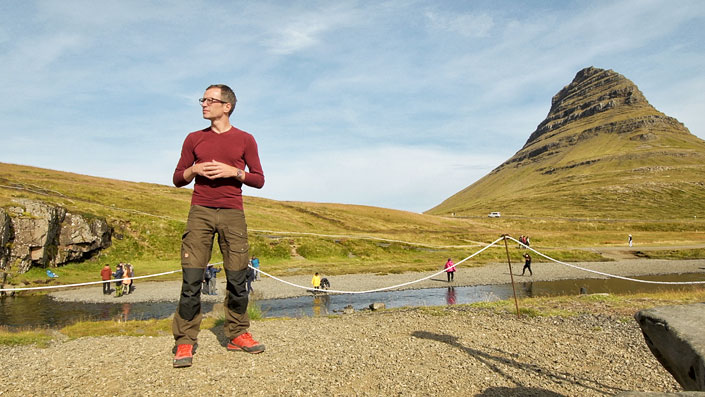
Summer is peak season for good reason. This is Iceland at its most accessible — warmest temperatures, the least rain, maximum daylight, and full access to every road on the island. The Midnight Sun — the sun staying above the horizon around midnight, from mid-June to mid-July — is a genuine experience. June actually has the longest days of the year, lower prices than July and August, and the north and east at their driest.
What the temperature figures alone don’t show: summer also has Iceland’s calmest wind — typically just 2 seriously windy days per month, compared to 7 in autumn and 10 in winter. With typical temperatures approaching 20°C (68°F), light wind and plenty of sunshine, Iceland often feels genuinely warm and comfortable.
One caveat: August is where conditions begin to turn — precipitation climbs noticeably and the season is already trending toward autumn well before the month ends, even as temperatures remain summer-like.
Main pros and cons of visiting Iceland in summer
- Warmest, driest weather of the year.
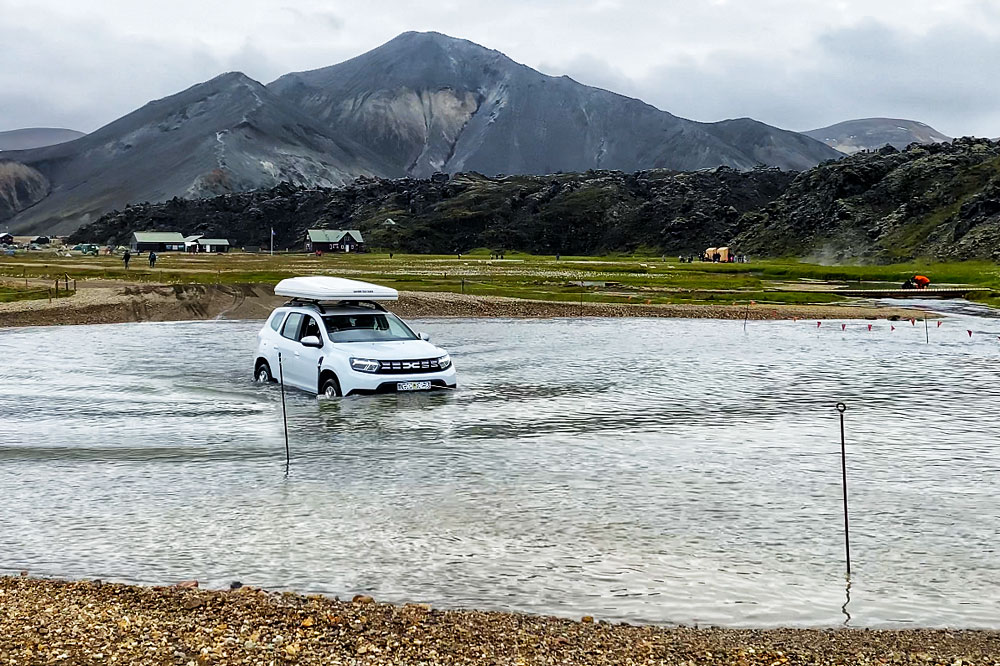
- Most F-roads open from around June 15th — access to Landmannalaugar, Þórsmörk, Kerlingarfjoll, Askja and many more; always check current status at road.is before heading out.
- Up to 23 hours of daylight — drive and photograph at any hour you choose (but do pack a sleeping mask — this is not optional).
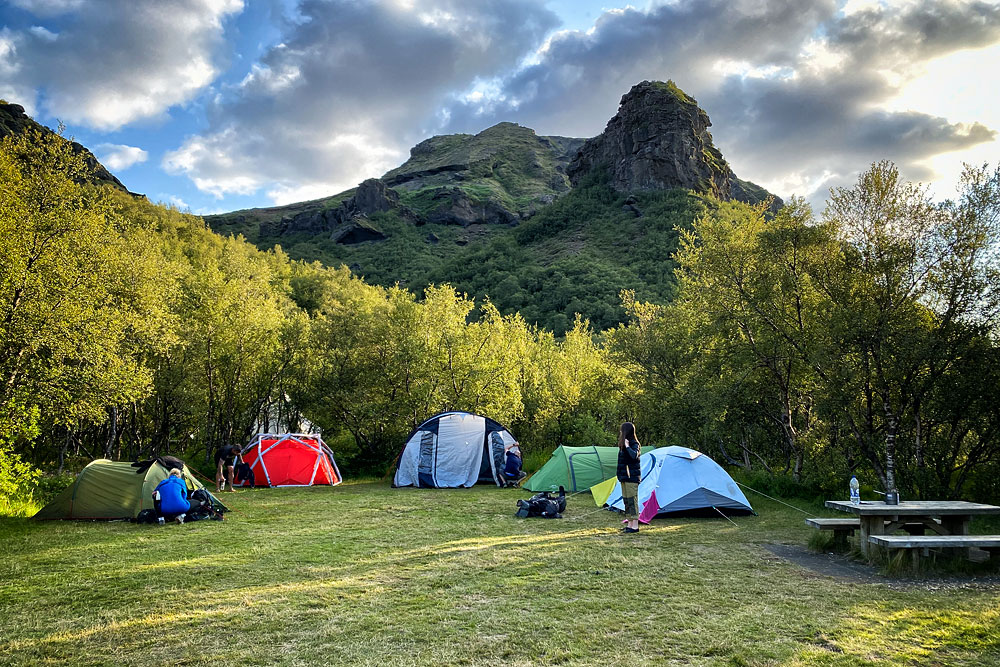
- All tourist services, campsites and mountain huts fully operational (most from mid-June) — and if you’re happy camping or travelling by campervan, summer is the only season where it’s genuinely comfortable; a great way to cut accommodation costs significantly.
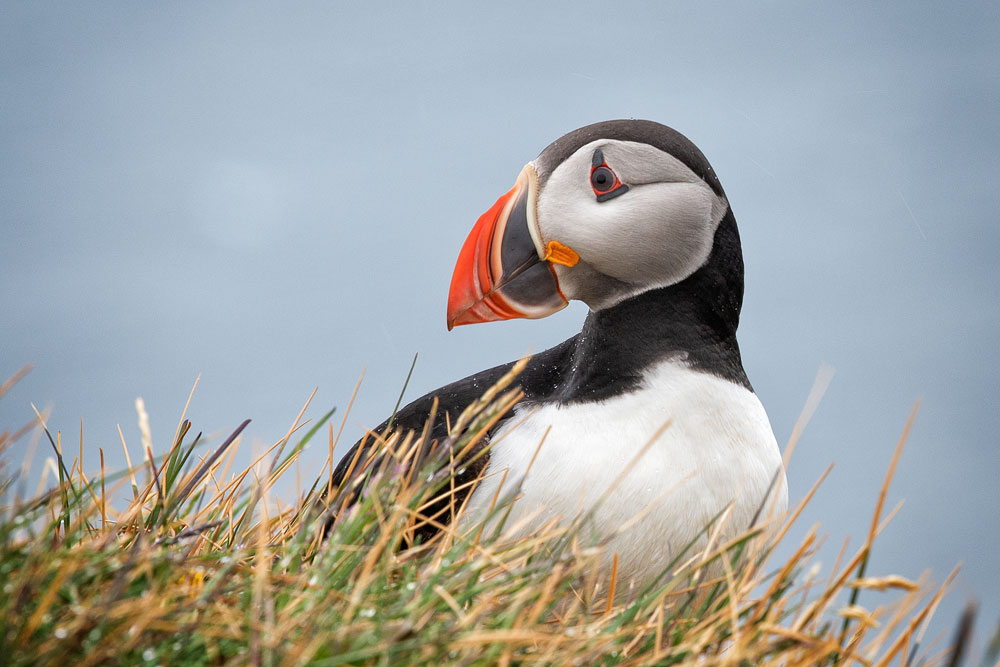
- Puffins in full season throughout summer — peak numbers in June and July, still present through August.
- Whale watching at its finest – best enjoyed in summer months on the northern shores of Iceland. See details here: Whale Watching in Iceland – All You Need to Know [Complete Guide].
- Most expensive time of year — accommodation and car hire peak sharply in July.
- Popular spots can get busy — noticeably more visitors than other seasons.
- Accommodation for July and August should be booked 6 months ahead minimum — popular places fill fast, despite being expensive; guided tours are more flexible, but top day trips fill up too.
- No Northern Lights and natural glacier ice caves not accessible in summer.
How to Plan a Summer Trip to Iceland
Summer is the most flexible season — almost any kind of trip works here. The holy grail is a full loop around the island, including the Westfjords, in a 4×4 with at least 14 days (ideally 20), including nights at highland campsites — this is the only season that makes it possible.
Summer is also the only season for multi-day hiking — Laugavegur, Fimmvörðuháls, Hellismannaleið, Hornstrandir and others are summer-only, and Iceland is one of the rare destinations where you can have a genuinely great trip without renting a car at all.
But summer also suits the standard Ring Road drive or a short south-west trip perfectly well; camping and campervans are a great budget option, though hotels and guesthouses are available if price isn’t your main concern.
See our 15-day summer guide for the full highland experience, or our 7–13 day Ring Road guide if you’re skipping the interior.
Spring (April–May): Best Value
April and May are increasingly popular — and for good reason. Days grow long fast (20 hours of daylight in May), prices are significantly lower than summer, and the roads are quiet. The landscape turns vivid green after winter, and waterfalls are at their most powerful from snowmelt.
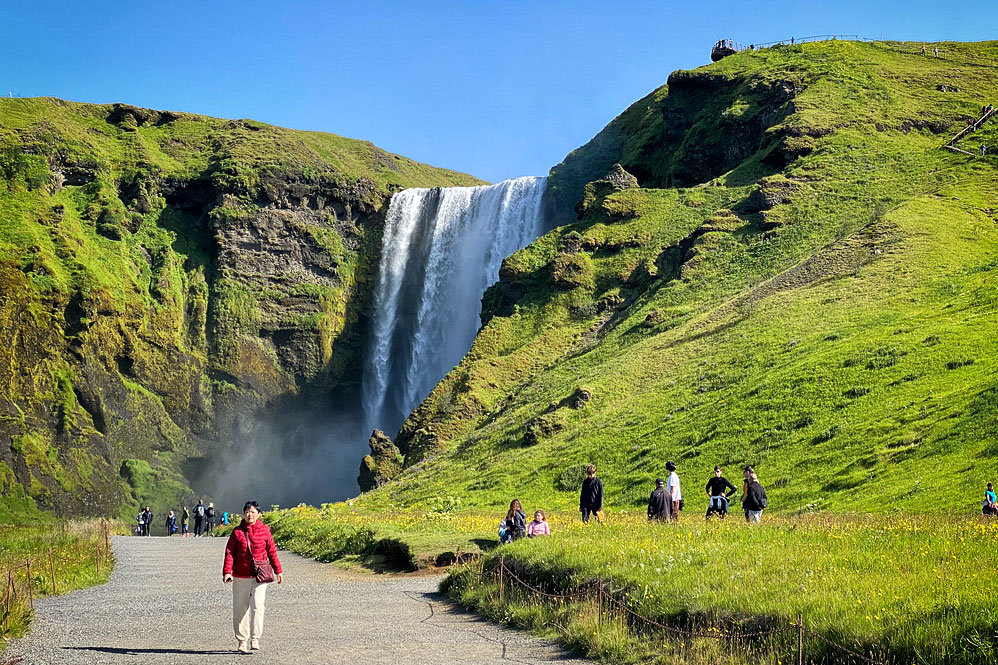
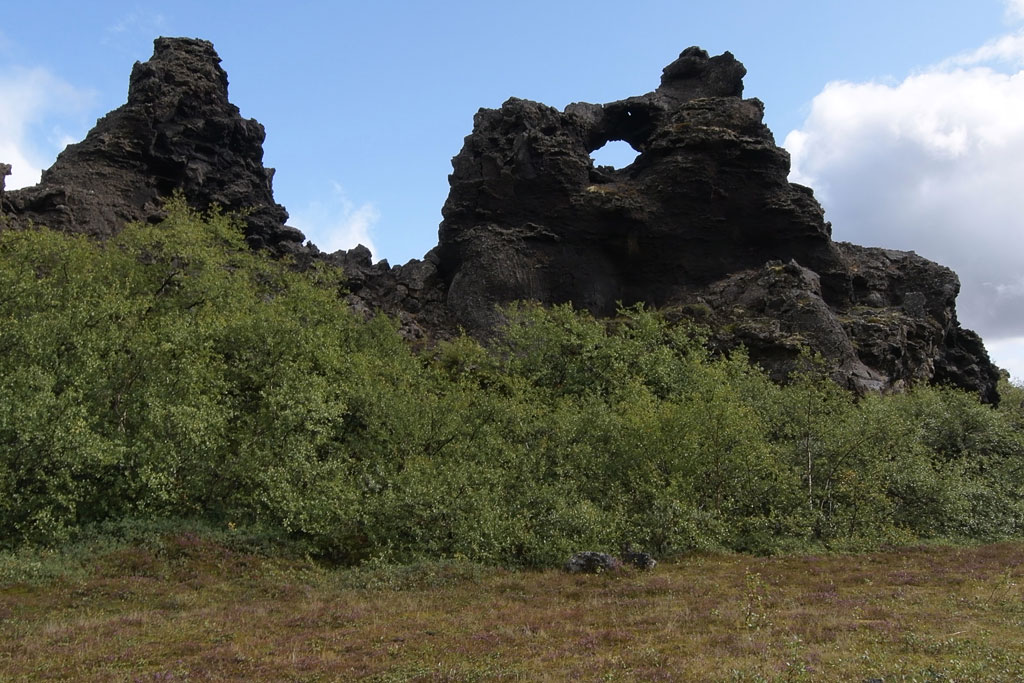


May often already feels genuinely pleasant — wind and rain ease off to near-summer levels, even if temperatures don’t quite catch up yet.
Main pros and cons of visiting Iceland in spring
- Significantly cheaper than summer — car hire and accommodation often 30–50% lower than July.
- Long days: up to 20 hours of daylight in May.
- Fewer crowds — noticeably less busy than summer, though Iceland’s main attractions are never truly empty.
- Puffins arrive from late April — you can already meet them at their favourite spots.
- Campervans are a great option — many sites are open from early spring or year-round. Tent camping is possible, but challenging, especially in April; summer is the better call for tents.
- Weather is unpredictable — snow on mountain passes is still possible in April.
- Most highland F-roads remain closed until late June.
- April is notably windier than summer — around 6 seriously windy days per month versus 2 in summer; May drops off sharply.
How to Plan a Spring Trip to Iceland
Spring is tailor-made for the Ring Road — 10–14 days in a regular car, staying in hotels, hostels or guesthouses, which are well-priced and comfortable at this time of year.
Seven days works as a minimum if that’s all you have, though you’ll feel the time pressure. A shorter 3–7 day south-west trip is also a solid option. Campervans work too, though hostels are the more comfortable and practical choice in unpredictable spring weather. See our 7–13 day Ring Road guide for details.
Autumn (September–October): Proceed With Caution
Autumn is the most difficult season to recommend unreservedly. Yes, it’s the least expensive season (and significantly so), and some autumn days are genuinely beautiful — but more often than not, the weather is really bad.
Rain, wind, and rapidly shortening days define the season. Iceland has a word for the deceptive autumn sky: gluggaveður — window weather — meaning it’s best to enjoy through the glass. The ability to dry your clothes overnight often becomes your main concern.
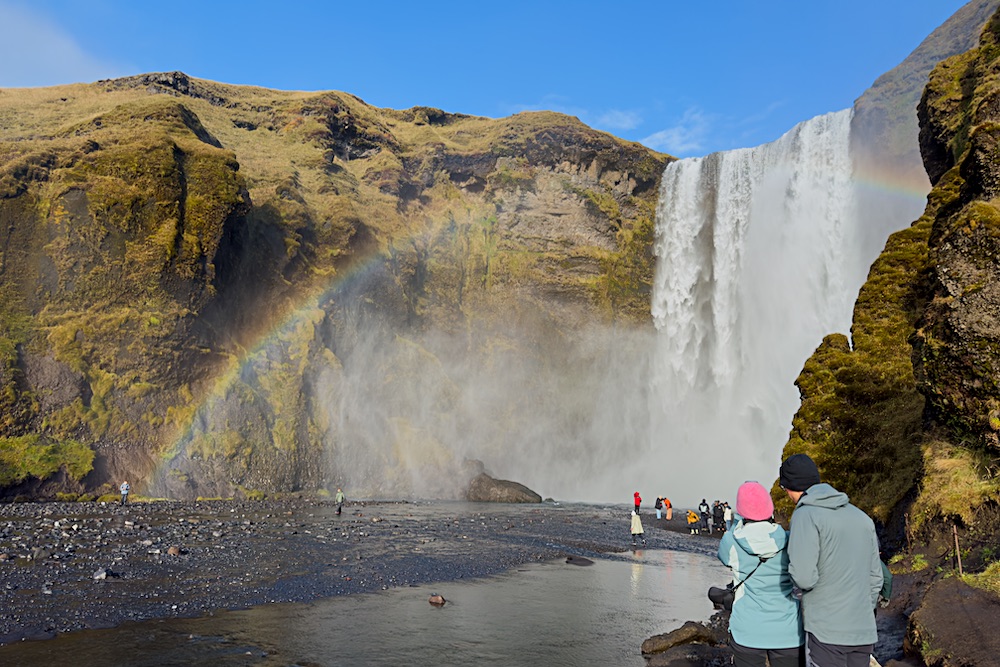

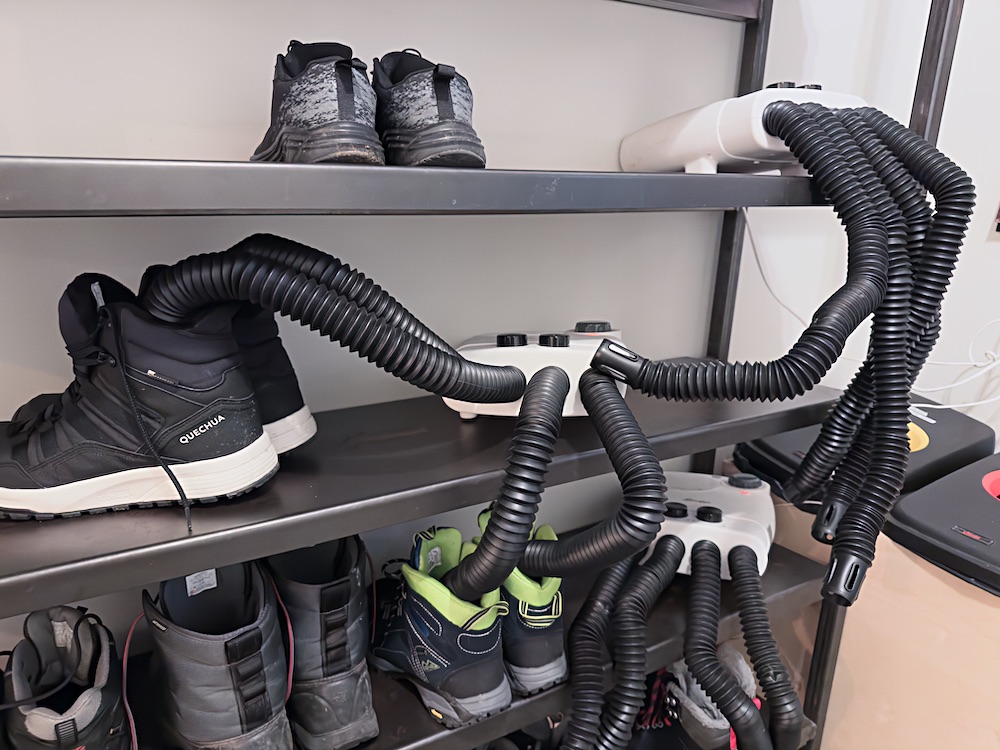
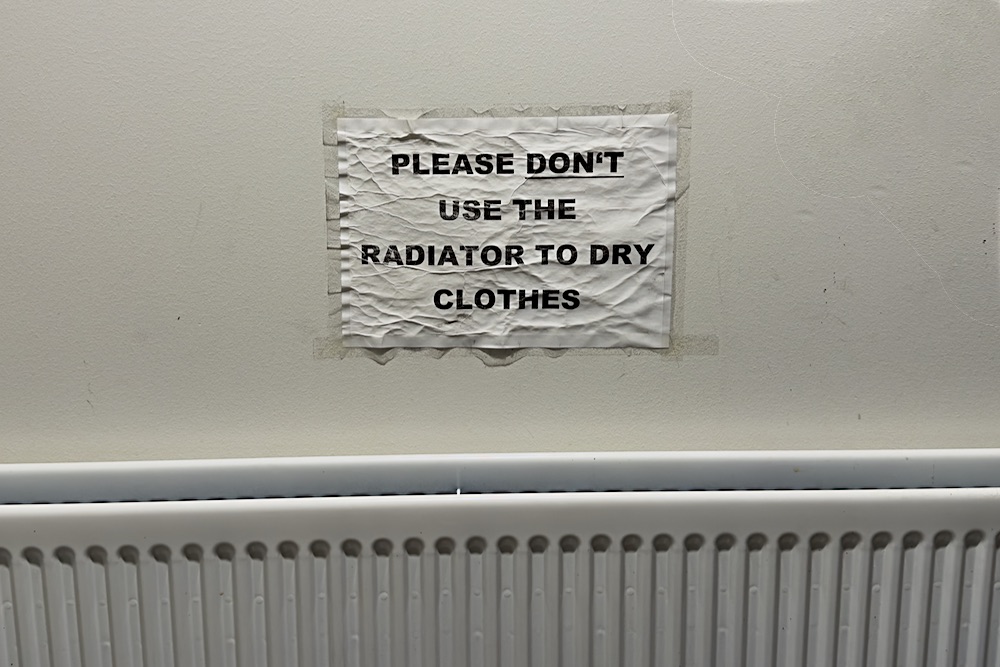
The crossing to “wet season” begins in late August — and by September it’s unmistakable: from around 10 rainy days in July to 16 in September and beyond, from 49 mm of precipitation to 96 mm, and average wind picking back up from 11 to 14 km/h.
Autumn is the season to choose if summer prices are out of reach but you still want to see the country. Just make sure waterproof means waterproof, head to toe.
Main pros and cons of visiting Iceland in autumn
- Prices drop sharply from summer peaks — October and November are the most affordable months in the calendar. If you’re willing to take a risk with the weather, autumn is Iceland on a genuine budget.
- Northern Lights return from mid-September — October offers solid viewing conditions (if the skies are clear).
- Crowd levels drop significantly from mid-September onward (but many campsites close for winter then).
- Poor weather becomes the norm — especially in the East and North of the country.
- September is still a bit busy: cruise ship season hasn’t fully ended, south coast spots remain crowded despite worsening conditions.
- Highland F-roads close progressively through September, some as early as mid-month.
- Daylight drops fast: from around 15–16 hours in early September to under 10 by late October.
How to Plan an Autumn Trip to Iceland
Autumn works much like spring in terms of what’s possible — Ring Road or short south-west trip, regular car, similar trip lengths. The key difference is accommodation: hostels are strongly advisable over camping or campervans. You’ll want a warm base, a drying rack, and a hot shower after most days out. See our 7–13 day Ring Road guide for more details and recommended itinerary.
Winter (November–March): Northern Lights and Solitude
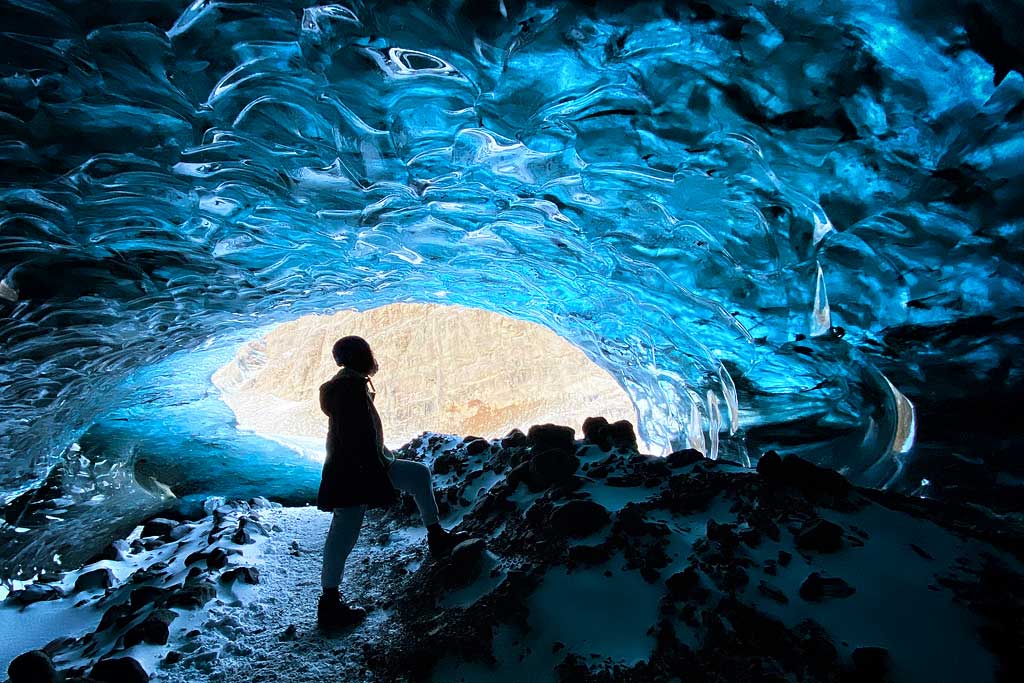
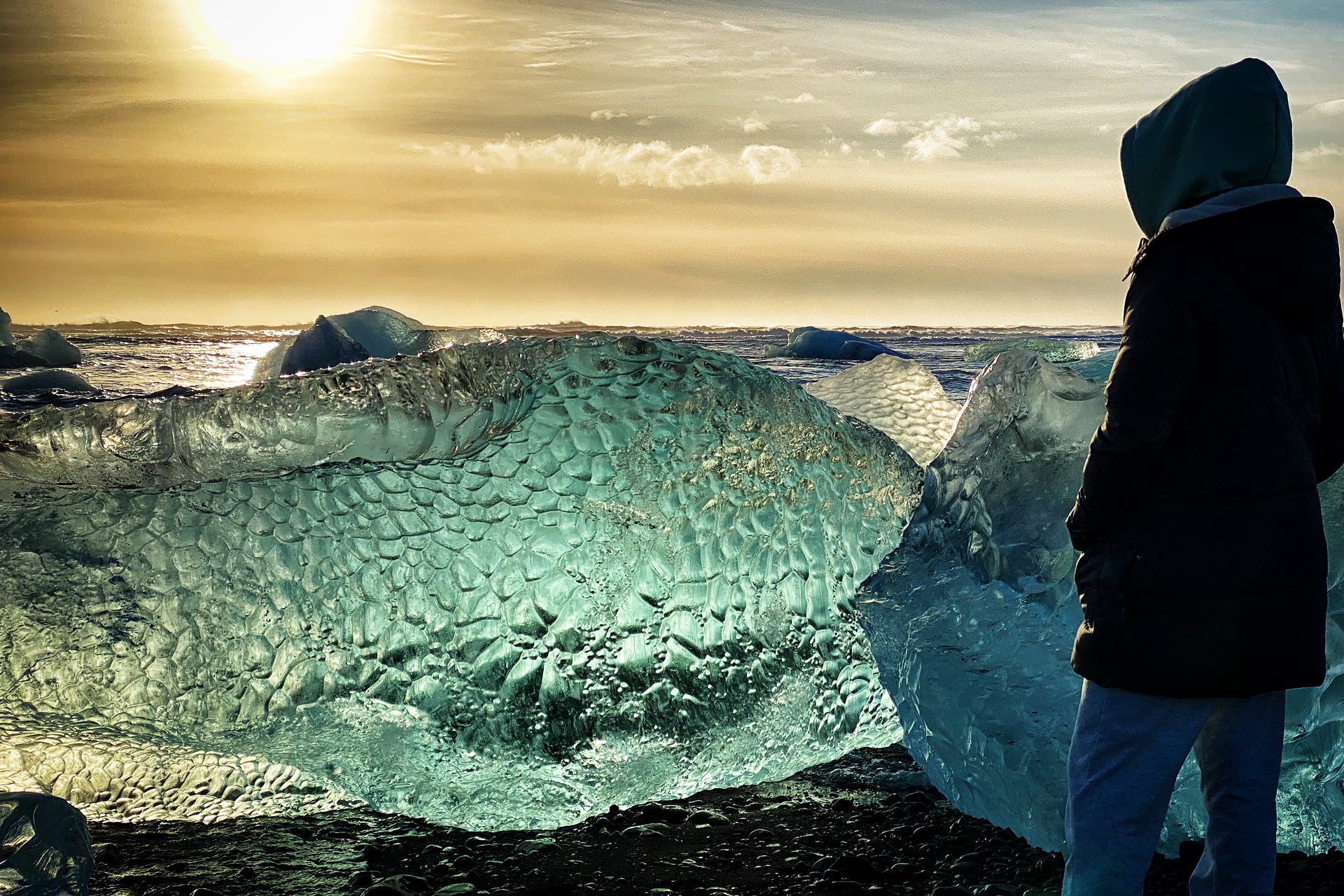
Winter in Iceland is demanding, but it delivers things that simply don’t exist at any other time of year: Northern Lights, natural ice caves, extraordinary glacial landscapes, and (usually) affordable prices. Once the New Year has passed, the days are lengthening, high-pressure systems bring clearer skies, and the Northern Lights are much easier to catch as a result.
On the temperature front, the cold itself is often more manageable than you might expect. In December, only about 1 day in 7 (13.6%) sees the maximum temperature stay below freezing, while more than a third (42%) of December days enjoy 6°C / 43°F or higher. Nights of course do feel wintry, but only a third of them fall below -5°C / 23°F. See the histograms below for details.
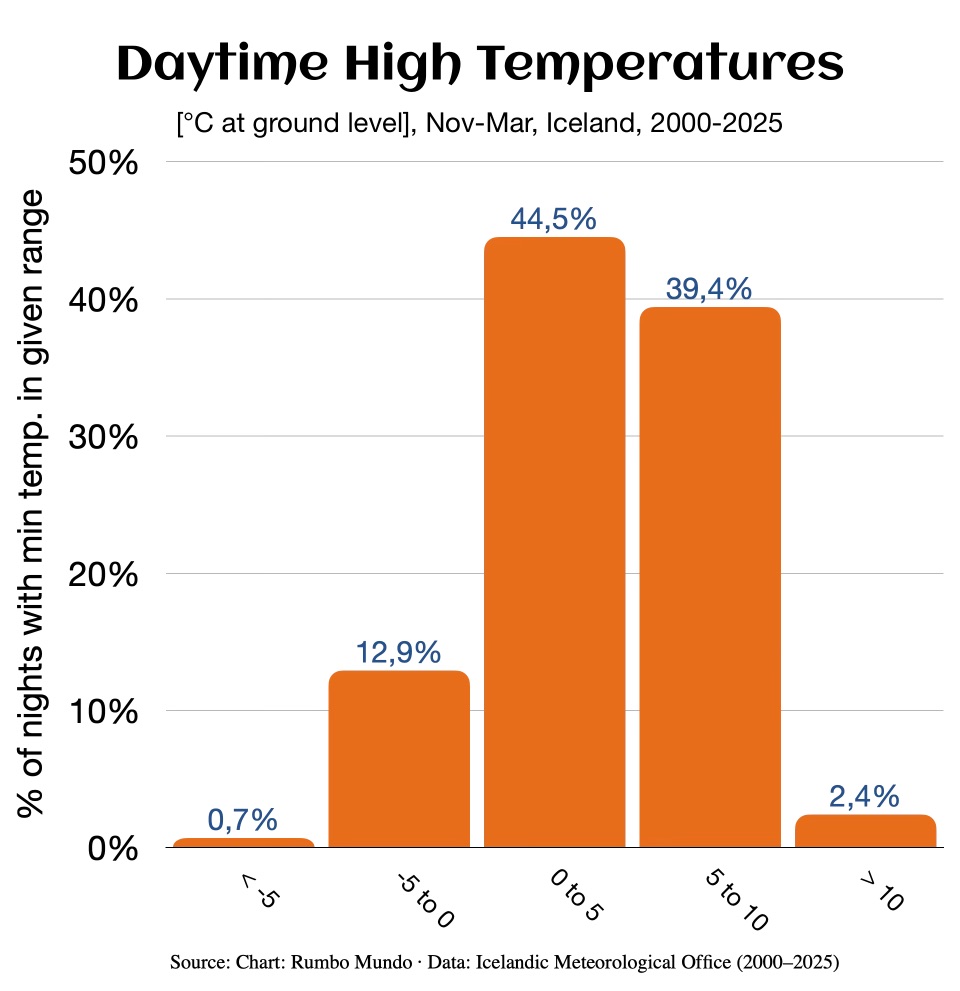
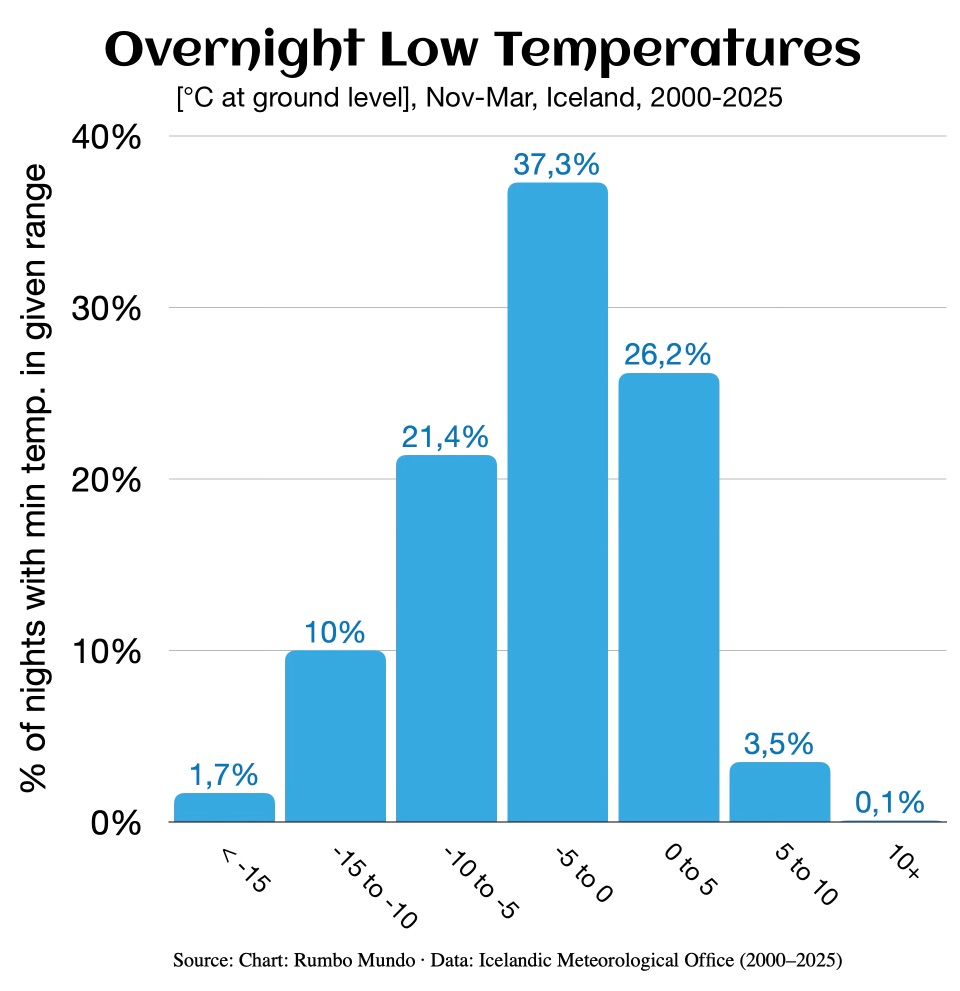
Daily maximum temperatures stay above 0°C / 32°F in every winter month (statistically, averaged, for years 2000-2025). Source: Icelandic Meteorological Office 2026: Icelandic Meteorological Office Database, delivery 2026/01/06, IMO self service
Of course Iceland’s weather is all about crazy changes, so these averages can be misleading. You should not be surprised if the daily highs on your specific winter trip range anywhere from −10°C (14°F) to +10°C (50°F). Wind is a bigger challenge in Iceland’s winter.
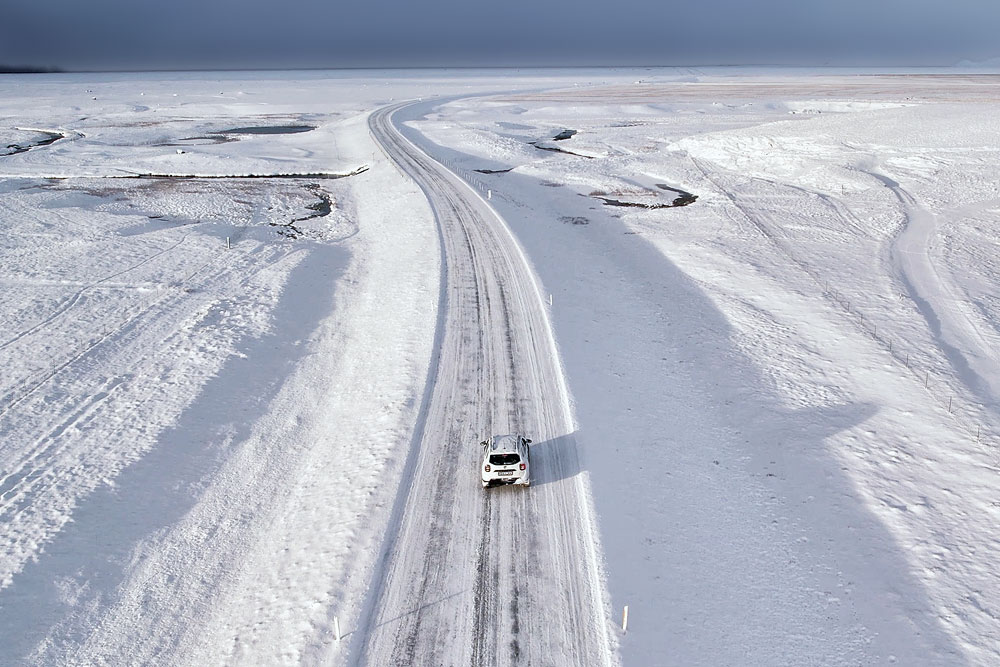
Wind is the most dangerous driving factor in winter Iceland — not ice or snow. Studded tyres handle slippery roads well as long as you slow down; wind strong enough to push a car off the road is a different matter entirely. Check wind alerts on vedur.is before every journey and avoid driving under orange or red weather alerts. Pay at least as much attention to the wind forecast as to road conditions.
In eastern and northern Iceland you’ll find high mountain passes on the Ring Road that are often temporarily closed in winter — either due to heavy snow and ice, or extreme winds. Therefore choosing to drive all around Iceland in winter is a high-risk decision.
Main pros and cons of visiting Iceland in winter
- Northern Lights — the window runs October through April, but February and March typically offer the best combination of clear skies and dark nights.
- Natural ice caves inside Vatnajökull glacier — also best enjoyed in February and March.
- Affordable prices — car hire and accommodation often 40–60% below July rates.
- Iconic spots (Seljalandsfoss, Skógafoss, Jökulsárlón) — often near-empty.
- Dramatic snow-covered landscapes unlike anything summer offers.
- All highland F-roads completely closed and mountain sections of the Ring Road can close temporarily too (esp. in East and North).
- Very limited daylight: 4–6 hours in December and January.
- Severe storms significantly more frequent than in other seasons
How to Plan a Winter Trip to Iceland
Winter works best as a focused short trip — around 5 days is the sweet spot, and there’s little reason to push beyond that. Stay on the South and West shores, don’t attempt the full Ring Road, and book yourself into hotels or guesthouses.
Check weather alerts on vedur.is before every journey — in winter Iceland, a storm can change everything within hours. The rewards — Northern Lights, ice caves, empty landscapes — are worth every constraint. See our 3–7 day guide and the complete winter Iceland guide.
Planning Your Trip — Which Guide Is Right for You?
Going all out in summer — 15-day 4×4 guide. The full Iceland experience: Ring Road, Westfjords, highland F-roads, and everything in between. Needs at least 14 days, a 4×4, and some nights under canvas.
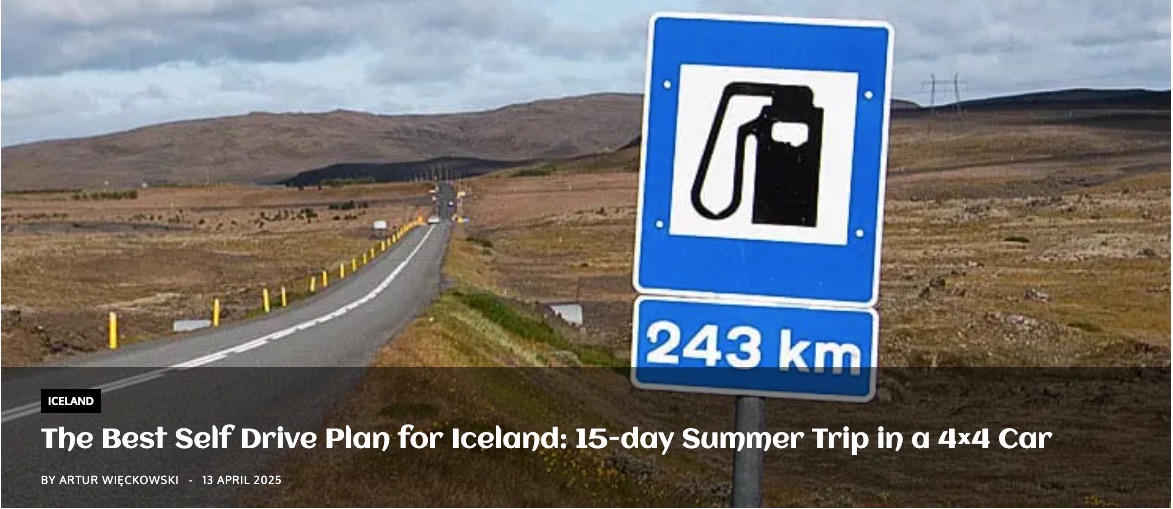
The Best 15-day Summer 4×4 Self Drive Plan for Iceland
Spring, summer or autumn loop — 7–13 day Ring Road guide. The standard Iceland trip done properly. Regular car, flexible trip length, works in any non-winter season.
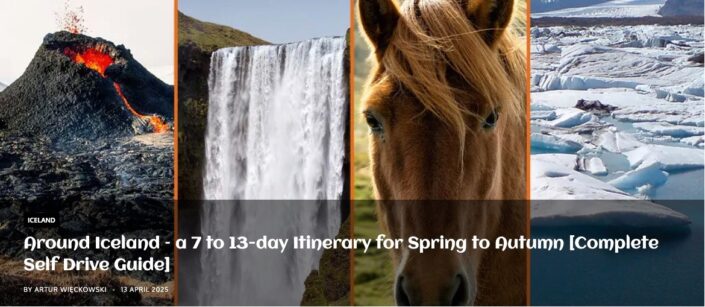
Around Iceland – a 7 to 13-day Itinerary for Spring to Autumn
Short trip or first-timer — 3–7 day south-west guide. The essential Iceland highlights in under a week. The default choice for winter, and a solid option any time of year. Can also be done entirely without a car — great for solo travellers or pairs who’d rather not drive, and often cheaper for small groups.
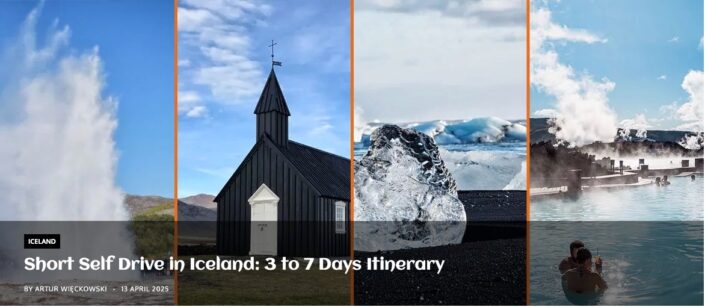
SW Iceland’s greatest hits — a 3 to 7 Days Self Drive Itinerary
Visiting Iceland without renting a car: Sightseeing in Iceland without a car. Bus tours, cycling, hitchhiking, on foot — there are more options than most people realise, and they suit very different budgets and travel styles. Summer also opens up multi-day hiking trails: Laugavegur, Fimmvörðuháls, Hellismannaleið, Hornstrandir — among the best in the world. No vehicle needed, and a completely different Iceland from what most visitors see.
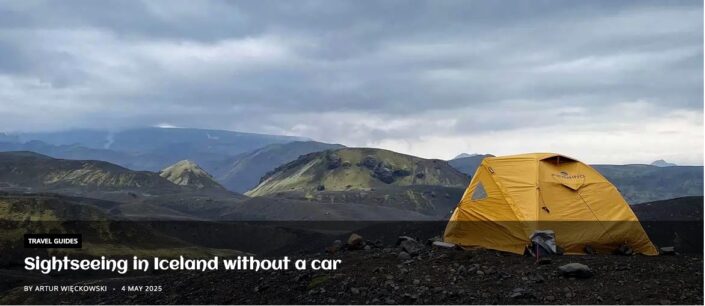
Sightseeing in Iceland without a car – what are your options
Winter specifically — complete winter Iceland guide. Everything you need to know about planning a winter trip: Northern Lights, ice caves, where to stay, what to expect. Read this alongside whichever trip-length guide fits.
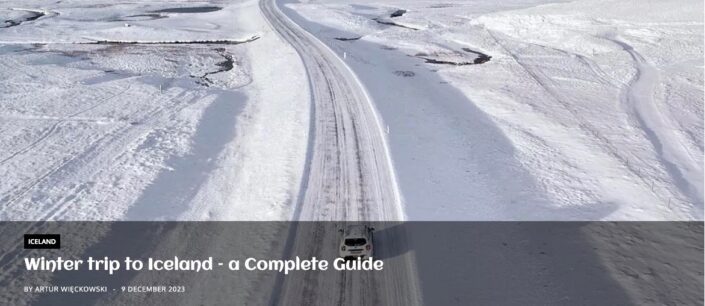
Winter trip to Iceland – a Complete Guide
A Few Things Iceland Won’t Warn You About
How early should I book for Iceland?
For out-of-season travel:
book your car (or camper) 2–3 months ahead; accommodation can generally be left to last minute.
For high season:
book accommodation 3–6 months ahead, car rental 2–3 months. Individual tours can generally be booked later — most offer free cancellation up to 48 hours in advance, so there’s no harm in booking early. Some tours do sell out well ahead (popular ice cave time slots, for instance) — book those 1–2 months in advance. Browse a great catalogue of Iceland day tours and multi-day tours at rumbomundo.tourdesk.is.
Booking campsites:
as a general rule, campsites don’t require advance booking — and most don’t even allow it. If you want an electric hook-up, call your preferred site 1–2 days ahead and ask them to keep one for you (where available). Two highland campsites are exceptions: Landmannalaugar (must be booked in advance; no electricity available) and Kerlingarfjöll — bookings are mandatory, and powered pitches must be selected at the time of booking; you can’t add electricity after the fact.
What to pack for Iceland?
The essentials are windproof layers and a swimsuit — but Iceland adds a few items to the packing list that many travellers don’t anticipate:
- swimsuit, flip-flops, towel — visiting hot pools is essential Icelandic experience in every season. Some pools — the Blue Lagoon especially — have highly mineralised water that can be harsh on hair; a shower cap, beanie, or hair tie is worth packing if you care about that. You can also buy or rent shower caps at the pools.
- water shoes — useful in wild hot pools and essential on interior hikes (crossing streams).
- sleeping mask if you’re used to sleeping in darkness (so esp. if you travel in summer).
- sunscreen if you travel in summer – there’s no trees to hide from the 23-hour daylight.
- insect repellent if you travel in May-June; Iceland has small midges/gnats near lakes and rivers that can be bothersome (consider a mosquito net hat, if you’re allergic or hate getting swarmed).
- windproof and waterproof outer layers – if you hike trails like Laugavegur, you need top-notch protection; if you travel by car, you’ll be fine with “consumer-grade” gear (that is: unless you travel in Autumn and aim to sightsee no matter the weather).
- Iceland map on your phone for offline use – Google Maps lets you download the entire country to your phone and it’s the best way to navigate the island, especially where signal is poor. For hiking, use mapy.com instead (not maps.com — an easy one to mix up).
Is Iceland good for families with kids?
Very much so. Hot pools, puffins, whale watching, and geysers all work brilliantly with children. The Perlan museum in Reykjavik is the best start for a family trip — plenty of interactive exhibits, a “real” ice cave inside the building, and panoramic views of the city. Highland F-roads are less suitable for young children (rough terrain, long distances from services), and some glacier hikes have minimum age requirements. For the Ring Road and the south shore, Iceland with kids works beautifully.
How expensive is Iceland?
Iceland is one of Europe’s most expensive destinations — though significantly cheaper outside summer. Expect roughly $50–80 for a restaurant main course, $100–150+ per night for budget accommodation, and minimum $100/day for car hire in high season. Travelling in autumn or spring (October–November especially) typically costs 30–50% less. See this guide for all the important details: Prices in Iceland: How Much Is Food, Fuel, Tours
Do I need cash in Iceland? How do I pay?
Cash is almost never needed — Iceland is one of the world’s most cashless societies. Contactless payment (Apple Pay, Google Pay) works in 99% of places, from Reykjavik restaurants to remote petrol stations. If you’re heading into the interior, carry 1,000 ISK per person just in case. ATMs are rare, so don’t count on finding one when you need it.
Two things worth checking before you leave home: make sure your card isn’t blocked for international transactions; and make sure you know your PIN. In Iceland — as across Europe — card purchases are confirmed by PIN or contactless, not by signature. If your card isn’t added to your phone’s wallet, your PIN is your backup. Not knowing it at a remote petrol station is a genuinely bad situation to be in.
Do I need a local SIM card in Iceland?
EU travellers don’t need one — Iceland is covered by the roam like at home policy, and you won’t see a bump in your bill. Just check that you have enough GB on your contract (use Google Maps navigation in offline mode only, if you’re not sure you have enough);
Non-EU travellers will likely want a local SIM for calls and data. If your phone supports eSIM technology, you should be able to purchase an Icelandic eSIM even before leaving on the trip and that’s usually the most hassle-free solution.
Either way, you can skip the in-car Wi-Fi from the rental company — your phone’s hotspot usually does a better job and for no extra fee.
Do I need a 4×4 in Iceland?
Only if you’re planning to drive the highland F-roads in summer (Landmannalaugar, Þórsmörk (Thorsmork), Sprengisandur) – rental companies won’t allow 2WD vehicles on F-roads. A 4×4 is also worth considering if you’d feel more comfortable on slippery winter roads. For the Ring Road trip outside winter a regular car is perfectly fine. Always check road.is before any journey. And see our Complete Guide on Renting a Car in Iceland for lots of first-hand tips and details.
When can I see whales in Iceland?
April through October, with peak season June–August. Húsavík in the north is Iceland’s whale watching capital, but tours also run from Reykjavik and several other ports. See our complete whale watching guide for details on where, when and what to expect.
What are the absolute must-sees in Iceland?
Iceland’s top highlights span natural wonders, breathtaking landscapes, wildlife, and geothermal hot pools. The experiences most visitors put at the top of their list: geysers (esp. Strokkur), waterfalls (Skógafoss, Seljalandsfoss, Glymur, Dettifoss), the Jökulsárlón glacier lagoon with the adjacent Diamond Beach, Reynisfjara black sand beach, lava and volcano caves, natural ice caves inside Vatnajökull, whale watching, puffins, and geothermal hot pools. In winter, the Northern Lights join that list. The Golden Circle — Þingvellir, Geysir, Gullfoss — is the classic first-day itinerary from Reykjavik. For a curated selection with practical tips, see our Top 10 things to do in Iceland.
What Can You Enjoy in Iceland All Year Round?
Two things stand out — and both tend to surprise first-time visitors. The hot pools and the food scene.
- Hot pools and swimming pools
These are a genuine part of Icelandic daily life, not just a tourist attraction. The variety is remarkable: small neighbourhood pools where locals actually swim laps in a 10-metre pool before work; mid-sized geothermal pools that are genuinely lovely; giant destination spas like the Blue Lagoon; and an endless scatter of wild or near-wild hot pots across the island, some barely marked on a map. The smart move is to try at least one from each category. In our family travels, a day in Iceland without a hot pool visit requires a formal explanation — and it rarely happens twice. See our complete guide to Iceland’s hot pools, spas and swimming pools for the full picture. - The food scene
Iceland is expensive — a main course can easily run $70 — but lamb and langoustines here are genuinely world-class, traditional dishes like hákarl, gellur and svið are things you won’t find anywhere else, and there’s a quietly exciting new scene on top: hot dogs reinvented in a dozen ways, mathöll food halls, a greenhouse restaurant that puts its own tomatoes into everything including the beer. Worth exploring even on a budget. See our Iceland for Foodies guide.
See more questions answered on our extensive FAQ page. Or ask your question below, in the comments – we aim to answer them on same day.