

Seljalandsfoss and Gljúfrabúi are two beautiful waterfalls lying right next to each other on Highway 1. For some strange reason, only one of them enjoys the fame it deserves.
Seljalandsfoss – a waterfall that you will also see from behind
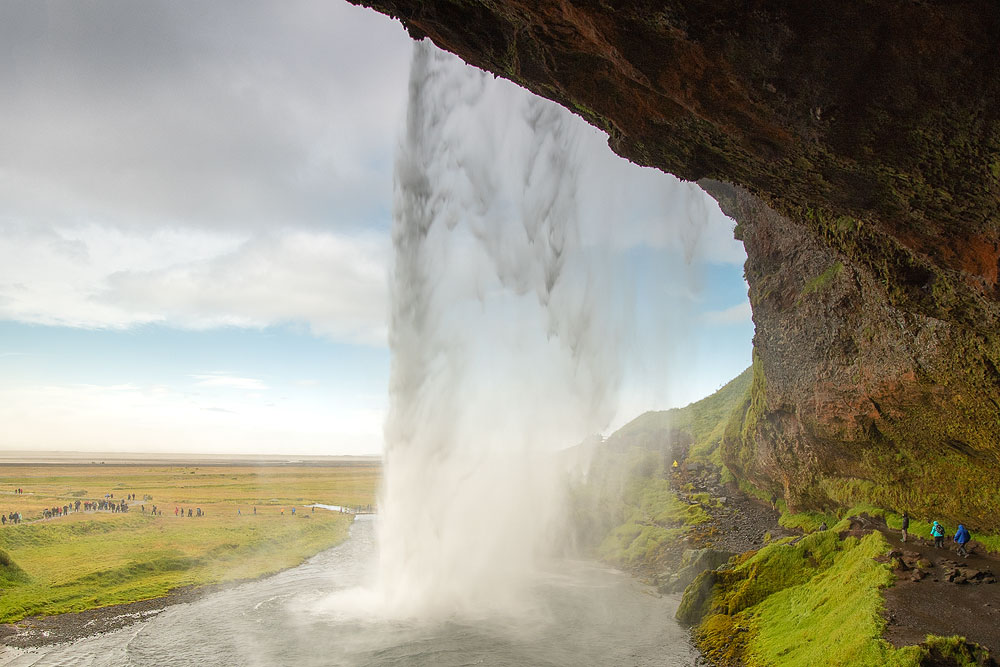
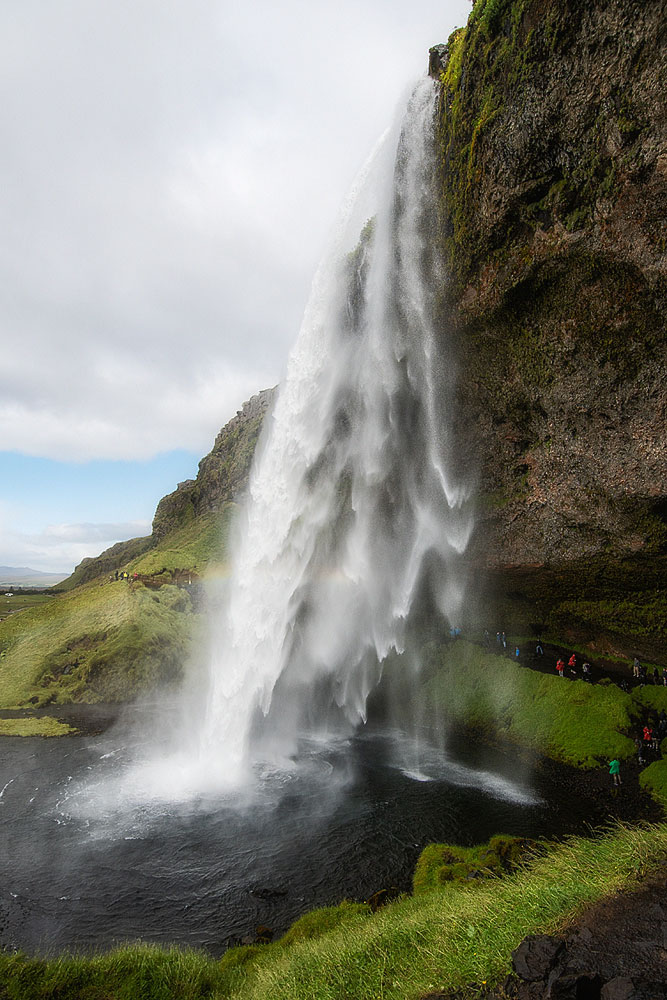
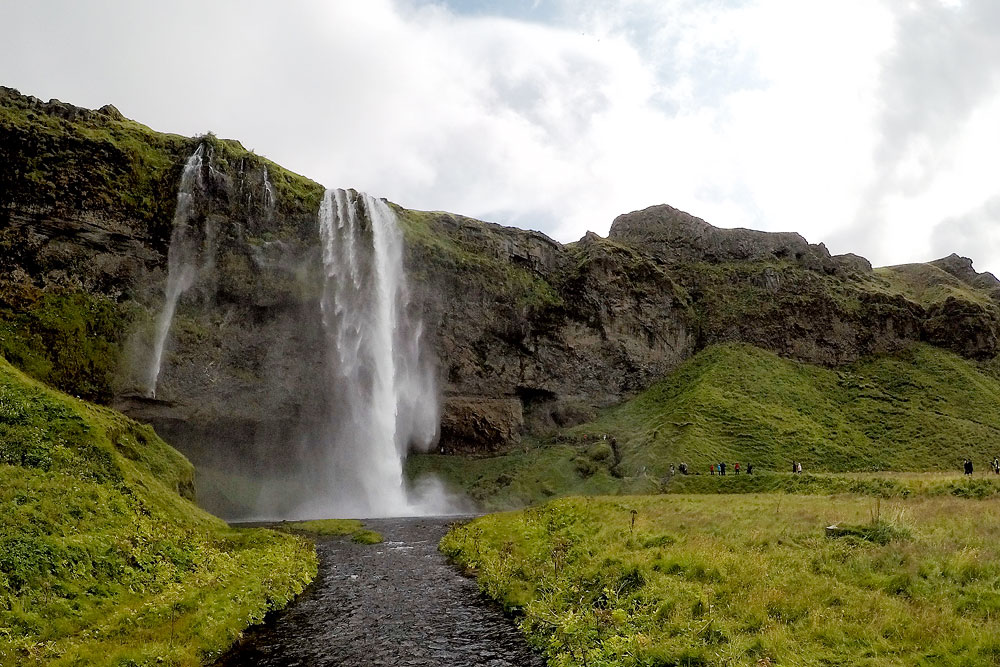
Seljalandsfoss is one of Iceland’s most popular, most visited and most photographed waterfalls. Its distinctive feature is a path that runs between the rock face and the column of water, so the waterfall can be seen “from behind”. There are several more waterfalls like that in Iceland, but this one is certainly the largest of them, well, and the closest to Reykjavik. No wonder the place is so popular – the view of the cascade from the inside is truly remarkable.
However, although the path behind the waterfall provides a reasonably safe passage, the strong wind almost always blowing in Iceland whips tourists with smaller or larger sheets of spray. So if you can, wear waterproof clothing and protect your camera! For the same reason the path itself and the rocks around it are usually slippery – be extra careful not to fall.
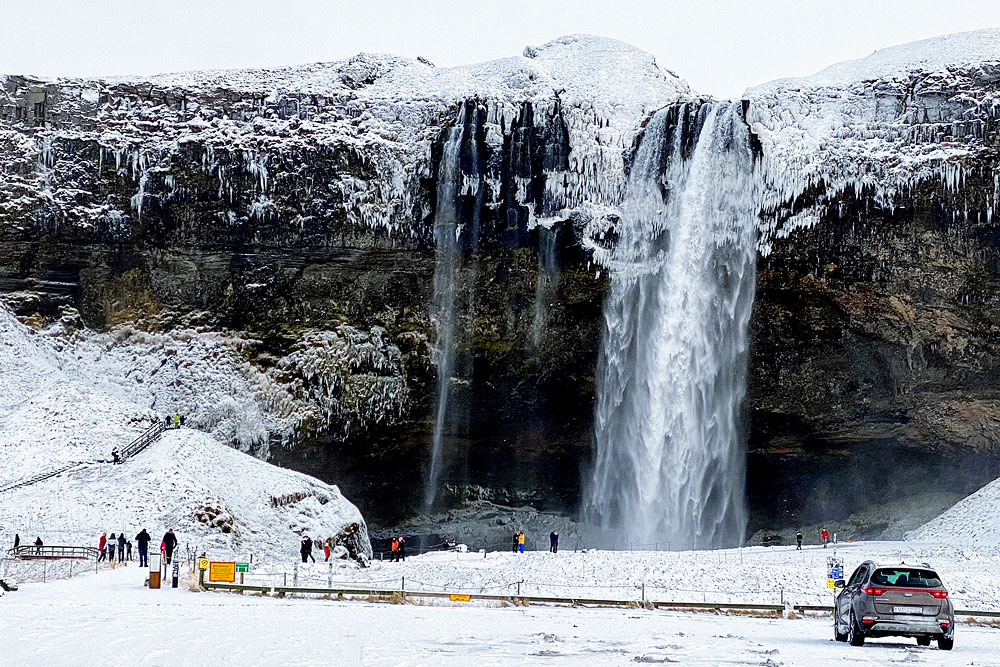
In 2017, it was announced that a visitor center was to be built near the waterfall. The design called for a building seven meters (23 feet) high with 2,000 square meters (about 21,500 square feet) of floor space. The landowners opposed the idea, saying that the center would significantly alter the natural appearance of the waterfall’s famous scenery. The café, gift shop, restroom and parking ticket office on the site today are housed in a small one-story pavilion that does not interfere with the beautiful landscape.
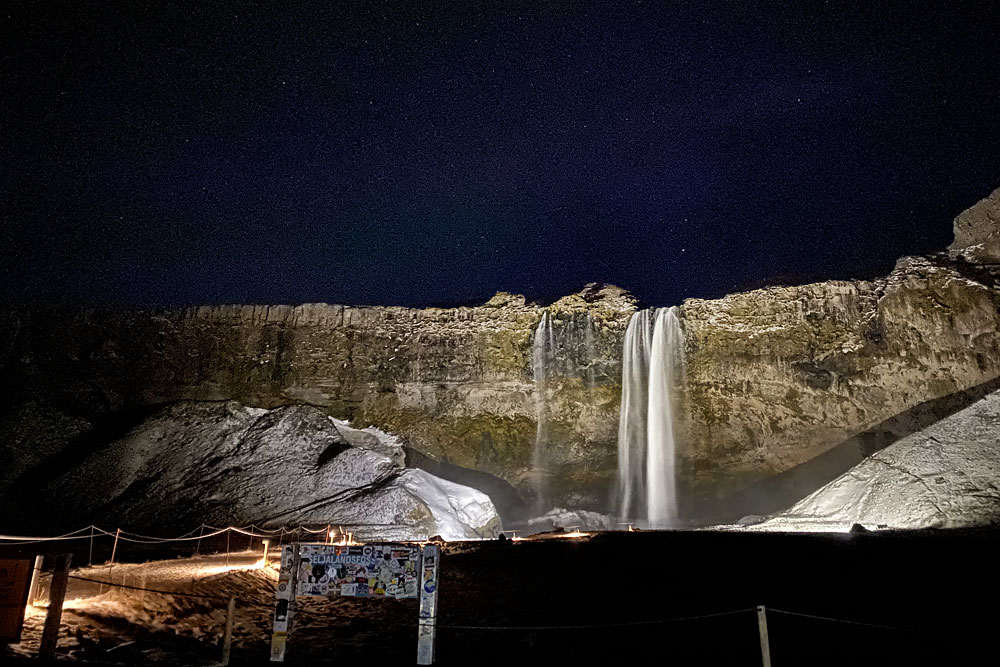
However, back in 2011, floodlights were set up on both sides of the waterfall to illuminate it at night.
Standing this close to the ring road, and looking the way it does, Seljalandsfoss is one of the best-known and most visited waterfalls in the country – one of our top ten. Extremely photogenic and picturesque, it is also beloved by photographers.
Gljúfrabúi – a hidden wonder of nature
Gljúfrabúi (also known as Gljúfrafoss) is a beautiful waterfall located right next to Seljalandsfoss – literally 500 meters (0.3 miles) away, a 10-minute walk to the north. Despite this, it is visited by many, many fewer tourists than its more popular “brother.”
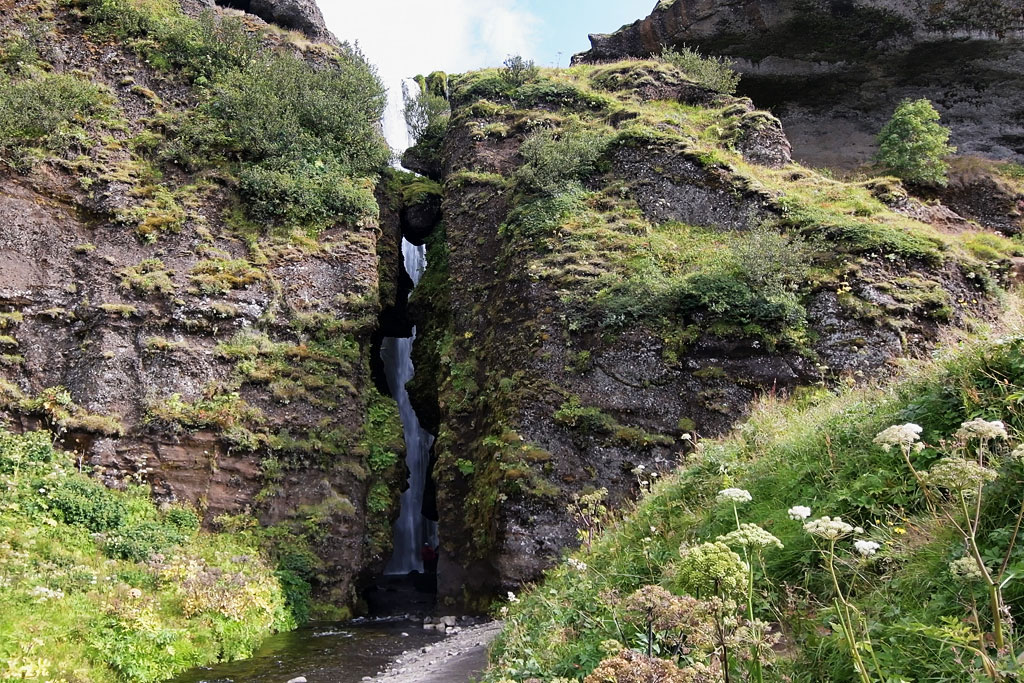
Gljufrabui is one of the hidden gems of the southern coast. At 40 meters (130 feet) high, it hides cleverly inside a cliff overlooking Iceland’s southern coast and the Atlantic Ocean. What hides it is a single huge rock called Franskanef, standing in front of the gorge and leaving only the very top of the fall in sight (Visit South Iceland). Perhaps because of this hidden location, many travelers completely unknowingly avoid it…
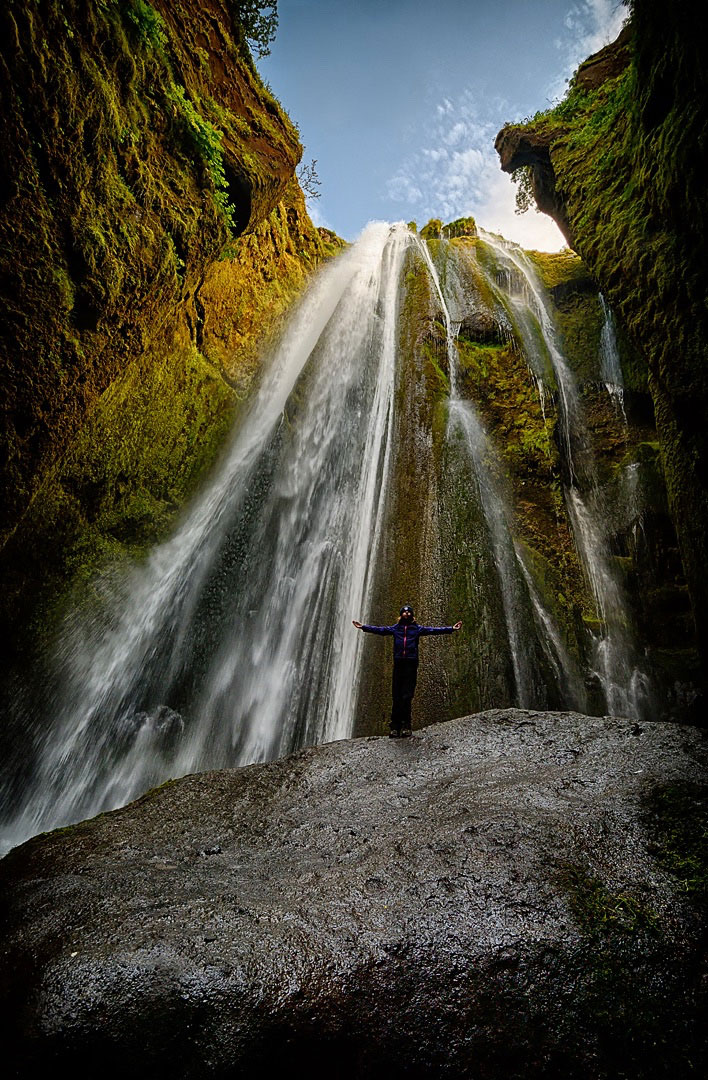
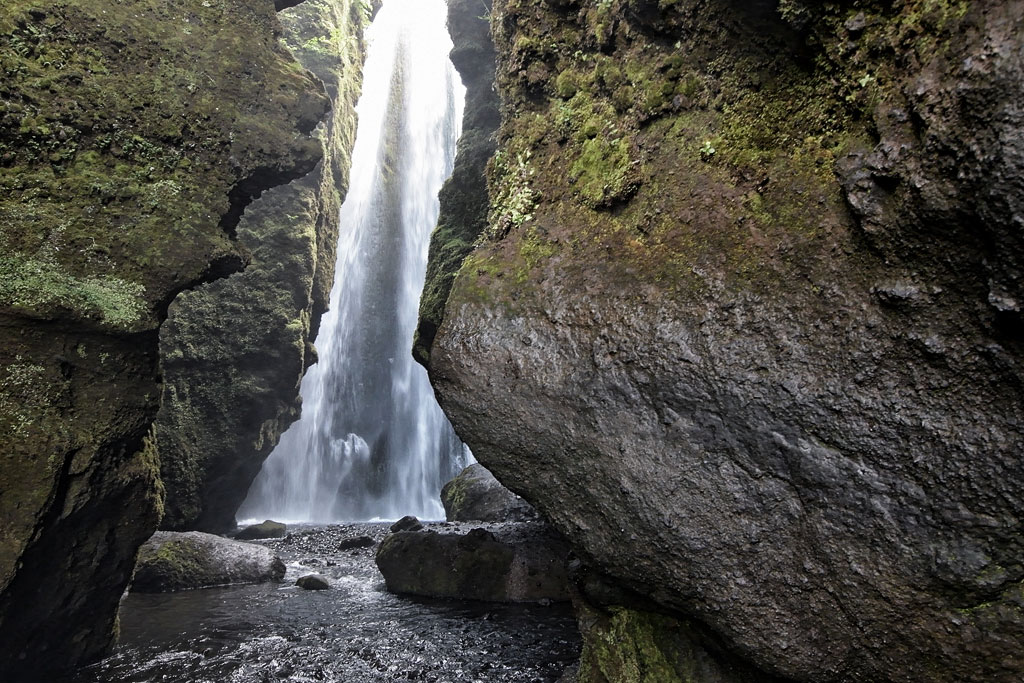
The waterfall falling from the green hills of the Eyjafjöll mountains into a gorge, or actually a half-open cave, provides a unique visual experience. The extraordinary effect is completed by sunlight pouring into it from above. The fairy-tale surroundings of green moss, silver mist, black lava and a roaring waterfall create a truly fantastic impression. Of course, inside you can also get that wet…
Hints and practical information
- The Seljalandsfoss and Gljúfrabúi waterfalls are located on Road 249 heading to the Thorsmork Valley, but no more than 1 km (0.6 miles) from the main ring road – Road 1; access to them does not require a 4-wheel drive car;
- The walk between Gljufrabui and Seljalandsfoss is no more than 15 minutes;
- Parking at Seljalandsfoss is paid: 900 ISK (about $8) per car as of June 1, 2026, 1,800 ISK (about $15) for a bus of up to 19 seats, 3,500 ISK (about $29) for a larger one and 400 ISK (about $3) for a motorcycle. The first 10 minutes are free, the ticket is valid until midnight, and the restrooms on site are included in it (operator’s price list, prices September 2026);
- The parking at Gljufrabui and the other one – at the adjacent Hamragarðar campground – used to be free, but in the summer of 2025 a reader of ours found the turn-off barriered off, and the municipality of Rangárþing eystra has a new parking area at Hamragarðar under construction, with the work due to be finished on September 15, 2026;
- You can get wet at both waterfalls. At Seljalandsfoss – passing behind the column of water, and at Gljúfrabúi, where the way into the gorge leads along the stream – it is worth taking your shoes off and wading in;
- At both waterfalls (naturally) it is usually wet and slippery – it is advisable to wear good shoes, well, and be careful;
- A narrow path next to Gljufrabui leads to the top of the cliff. There is a beautiful view from there, but when ascending (and descending!) take extreme caution – and remember that rocks can come loose inside the gorge.