


Deildartunguhver is a hot spring in Reykholtsdalur, the western region of Iceland, north of Reykjavik. No hot spring in Europe pours out more water – and quite possibly none in the world.
Europe’s most voluminous hot spring
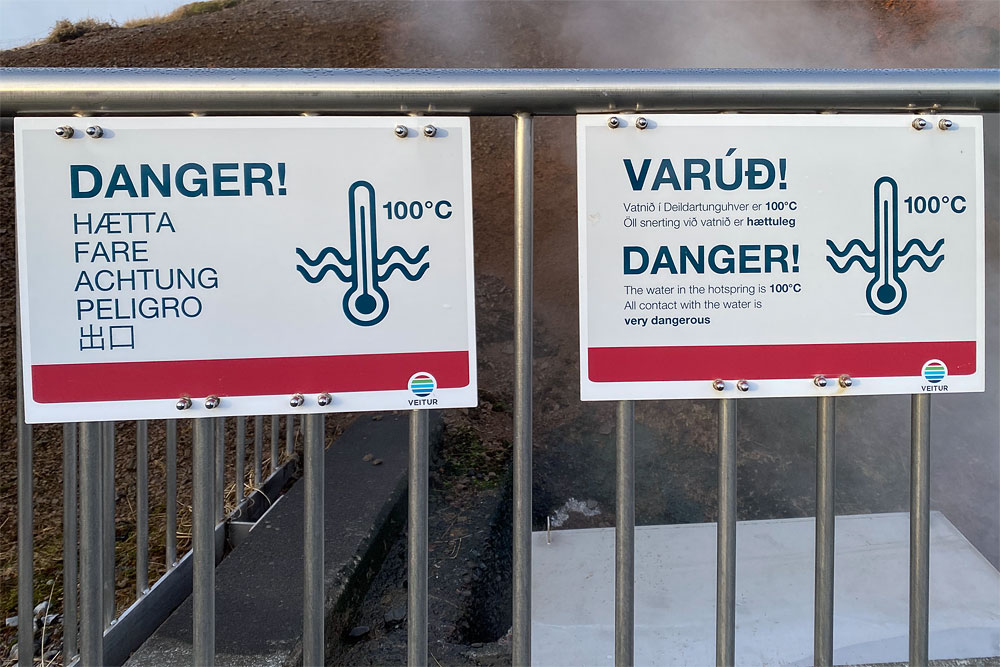
Deildartunguhver is the most voluminous hot spring in Europe, and is sometimes called the most voluminous in the world, though that is a hard claim to prove. The water comes out at boiling point, 100 °C (212°F), and as much as 180 liters – about 48 gallons – of it break to the surface every second. That is roughly half of what the whole Reykholtsdalur geothermal system sends up on its own, and no natural geothermal field in Iceland gives up more heat than that one.
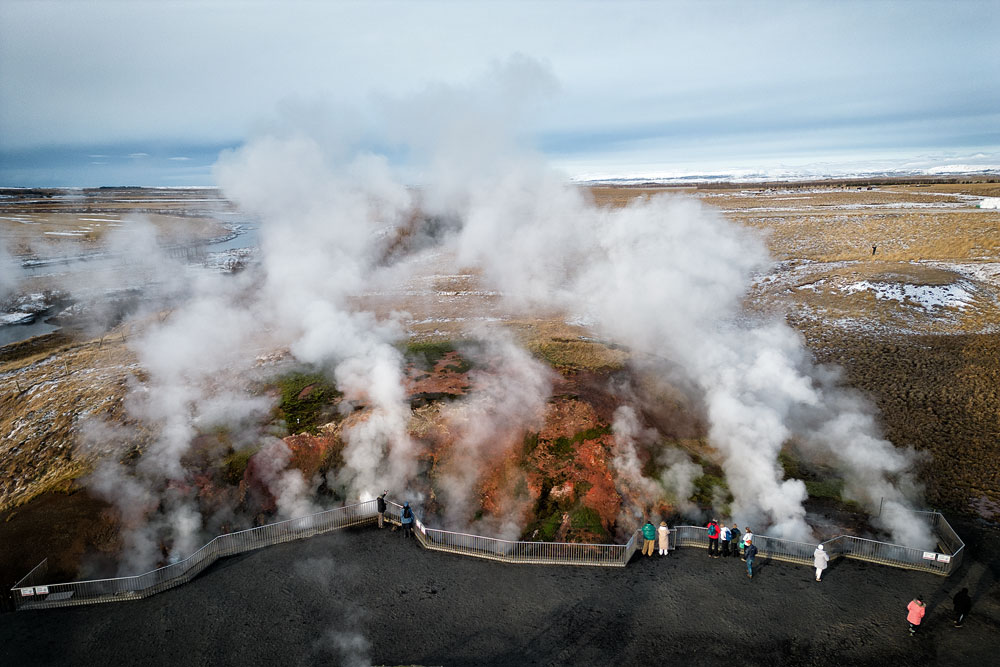
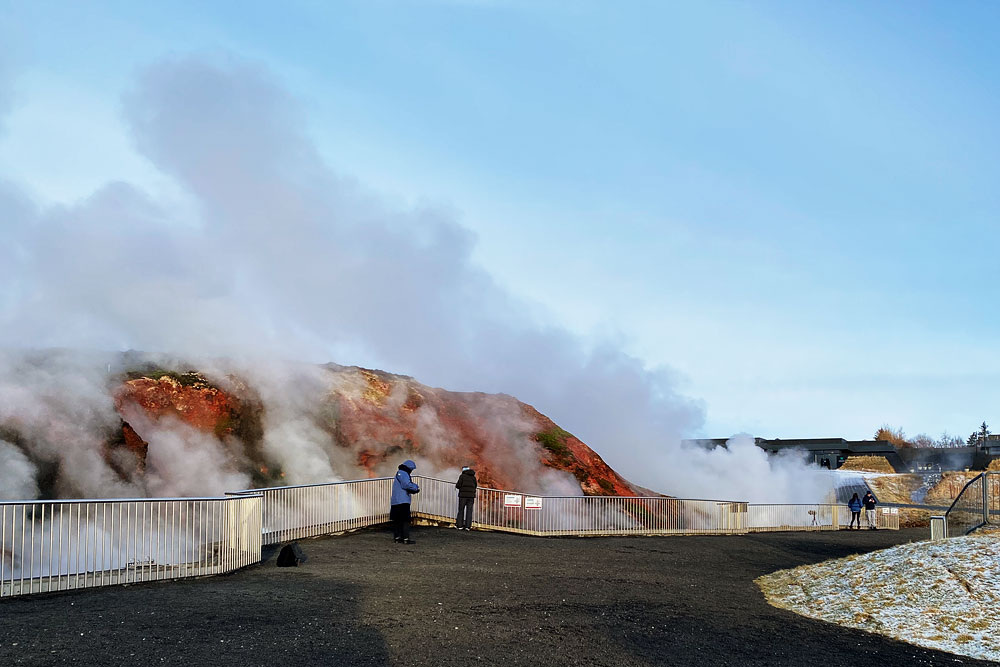
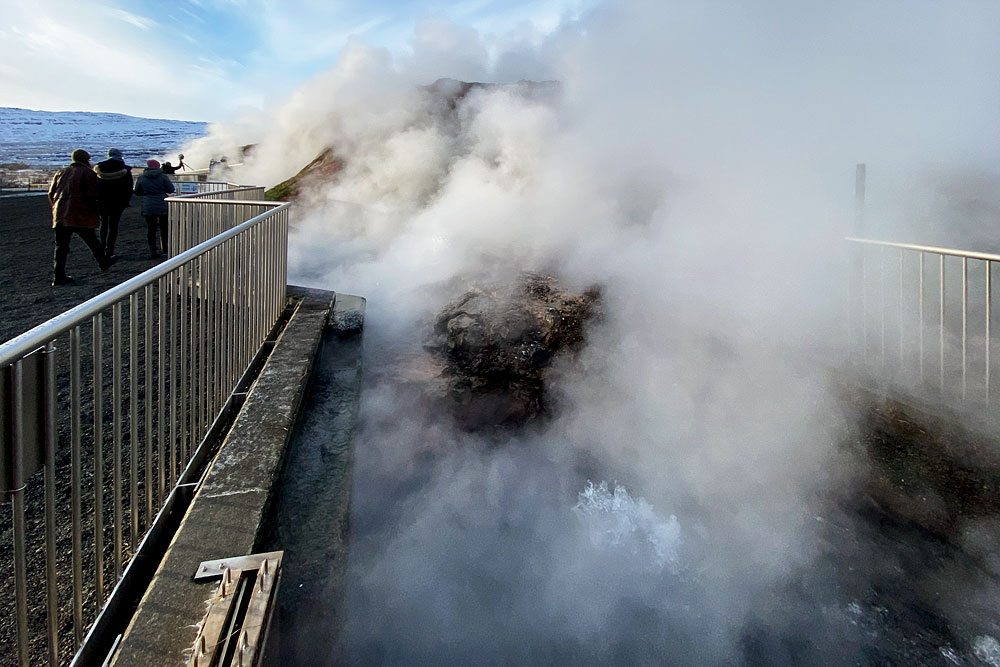
It presents itself as a constantly steaming small colorful hillside, at the foot of which boiling springs break out in several places, gurgling and splashing loudly in the process. Splashing, bubbling boiling water is dangerous, of course, so walkways and protective barriers have been built here, and we can look at the springs from close up, but safely. You still have to be careful, especially with children, because the boiling water is within reach and you can really hurt yourself.
A source of energy for the entire region
For us tourists, Deildartunguhver is just another noisy attraction created by volcanoes. But for Icelanders, it is first and foremost a real and very useful source of energy.
And it’s not just for heating the modern, intimate hot-water pool complex Krauma Geothermal Bath & Spa recently built right next door (which, naturally, you can visit when visiting Deildartunguhver).
The heating utility was founded in 1979, and in 1981 the hot water reached Borgarnes, Akranes and Hvanneyri. The pipe to Akranes alone runs 64 kilometers (40 miles) – the longest in Iceland and most likely the longest geothermal water pipeline in the world; the branch to Borgarnes is another 34 kilometers (21 miles). Pumping stations push the water along for two to three days, and even at the far end of that pipe it still has a temperature of more than 70 °C (158°F). This means that by showering or bathing even more than 50 kilometers (30 miles) away, you are still likely to benefit from the energy of Deildartunguhver’s hot spring… This is one fantastic example of how Icelanders are making efficient use of the geothermal energy on which they live, after all.
The largest settlement near Deildartunguhver is Reykholt, a beautiful village with a fascinating history. It was once home to Snorri Sturluson, a historian, writer, chieftain and poet, without whom we would know very little about Norse mythology, folklore and the history of that time.
How to get to Deildartunguhver
It’s definitely worth a look here if you’re exploring Iceland by driving around Route 1, or if you’re going to see the Snaefellsnes Peninsula (or are just returning from it). The spring is practically on the way to such attractions as Hraunfossar and Barnafoss or the caves Vidgelmir and Surtshellir in the Kalmanstunga area. Also nearby are Glymur – Iceland’s highest tourist waterfall and Grabrok – volcanic crater surrounded by houses.
To get from Reykjavík to Deildartunguhver, take Route 1 north and, before the bridge to Borgarnes, turn east onto Route 50 (Borgarfjarðarbraut). The turn onto the access road to the spring is best marked by the signpost to Krauma.
Coming down Route 1 from the north, turn onto Route 50 at the Baulan rest stop.
Pictures of the Deildartunguhver spring

This articleis very interesting!! Good job!