


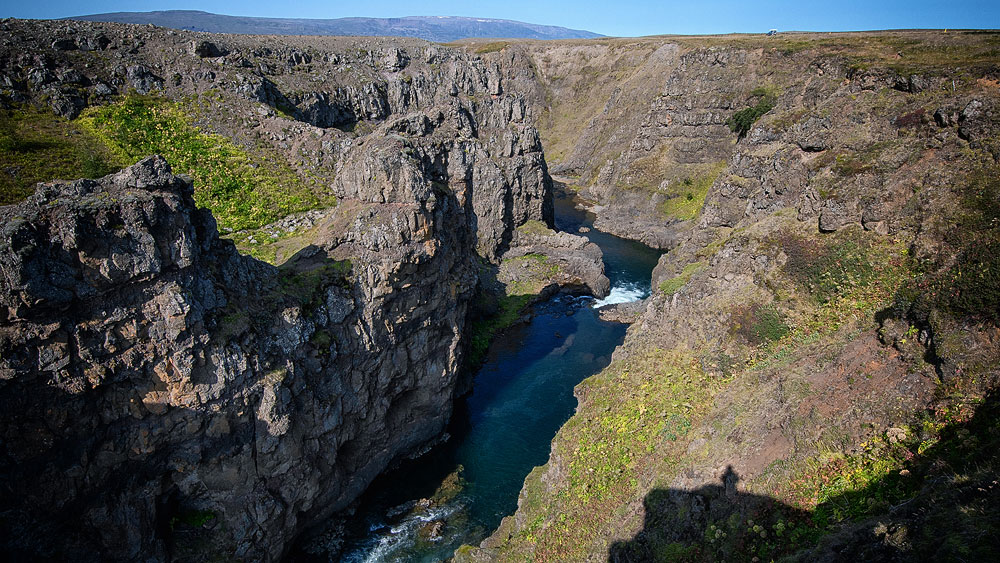
Kolugljúfur (Kolugljufur, Icelandic for Kola’s Canyon) is a canyon on the Víðidalsá River – one of Iceland’s most important salmon rivers, flowing through the Víðidalur valley (up to 1,200 salmon are caught here every year). The canyon is about a kilometer (just over half a mile) long and 40-50 meters (130-160 feet) deep, and it’s only about a 10-minute drive from Route 1, the Ring Road.
According to legend, the canyon was dug by a troll woman named Kola, who then made it her home. She is said to be buried in Koluhóll, a mound near the Kolugil farm – where, naturally, her treasure is hidden too. As usual in Icelandic legends, though, the treasure can’t be found, because the whole area is protected by Kola’s spells… According to the regional archive, locals who tried to dig into the mound gave up when the church seemed to catch fire or the river threatened to flood the land.
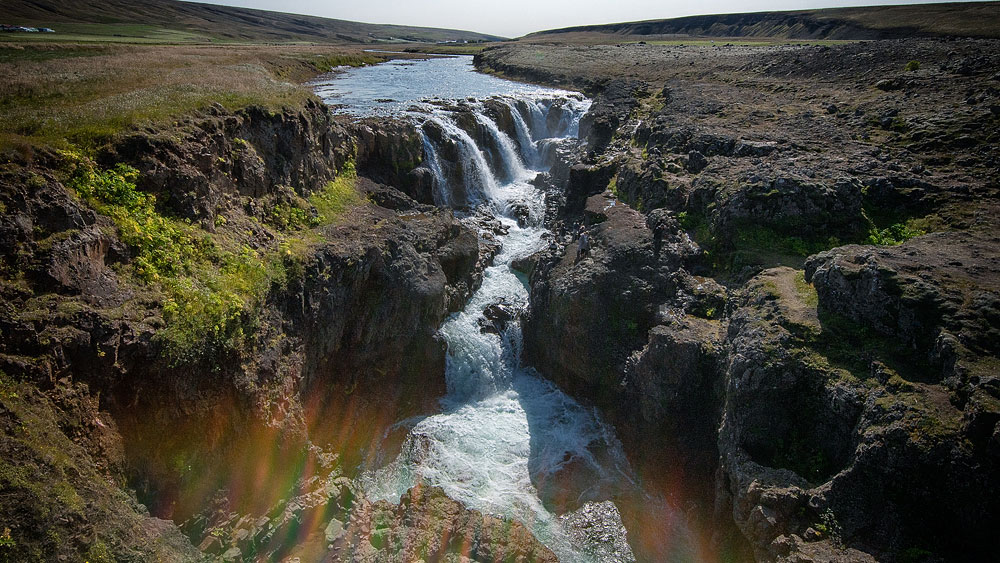
The gorge is very narrow in places, and there are several really nice, though rather small waterfalls. The largest, of course, is Kolufoss (the falls are also called Kolufossar), right next to the bridge over the river and two convenient parking lots. The view is lovely, and with a bit of courage you can also climb down to the foot of the waterfall and almost to the bottom of the canyon. Compared to Iceland’s largest and most famous waterfalls and canyons, this one is rather intimate, but no less charming. If you’re driving Route 1 in the northwestern part of the island, near Víðidalstunga, it’s worth a short detour to see Kolugljúfur and Kolufoss.
How to get to Kolugljúfur
Kolugljúfur is in the Víðidalur valley, south of Route 1, between Blönduós to the east and Laugarbakki to the west. According to the Húnaþing vestra tourist information, it’s only about 10 minutes’ drive from the main road.
When driving along the Ring Road, stay alert so you don’t miss the turn south onto Road 715. Where the road bends sharply at the mouth of the valley, take the smaller road up the valley to the southeast (from there, signposts point the way to the waterfall).
While you’re in the area, it’s also worth seeing Borgarvirki and Hvítserkur, the troll turned into stone on the Vatnsnes peninsula.