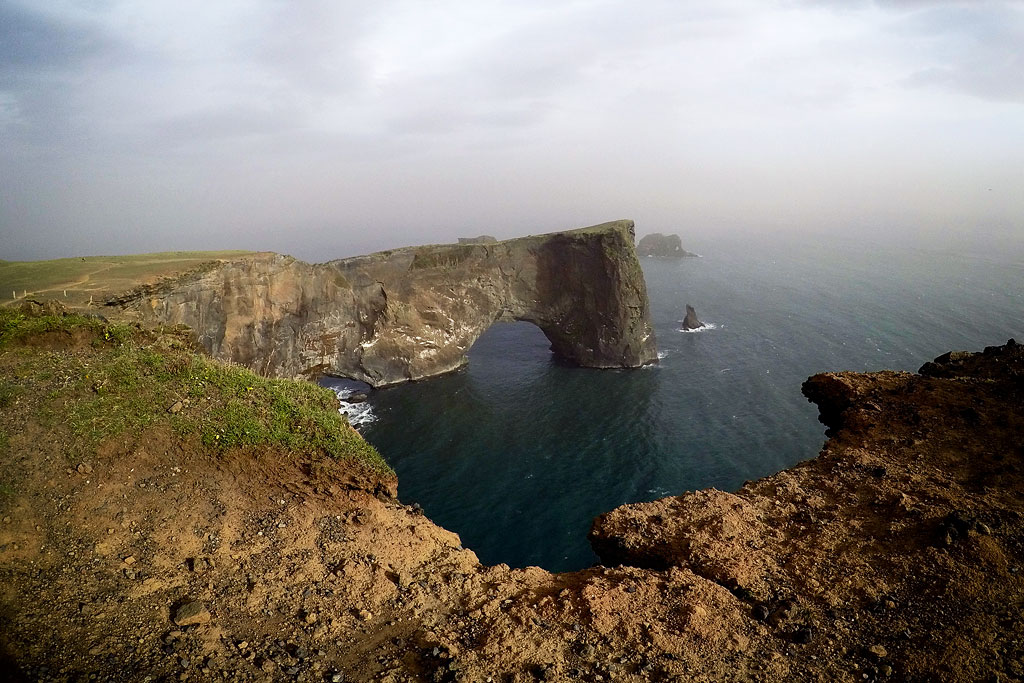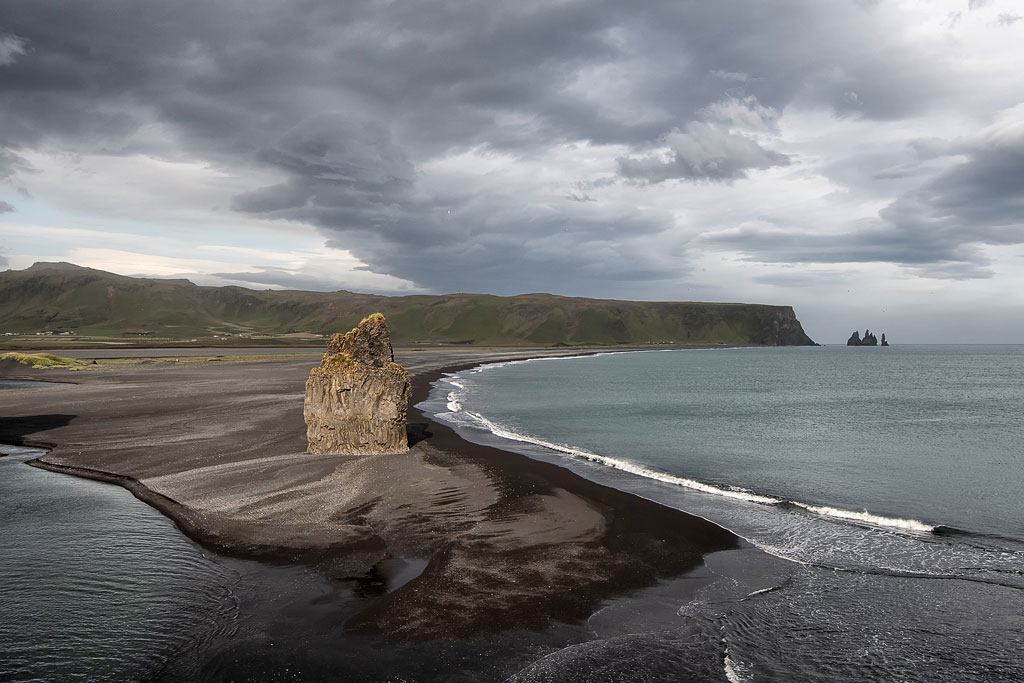


Dyrhólaey is a small peninsula that forms the southernmost tip of “mainland” Iceland. It is also home to a small black beach, Kirkjufjara.
The picturesque arch of Dyrholaey
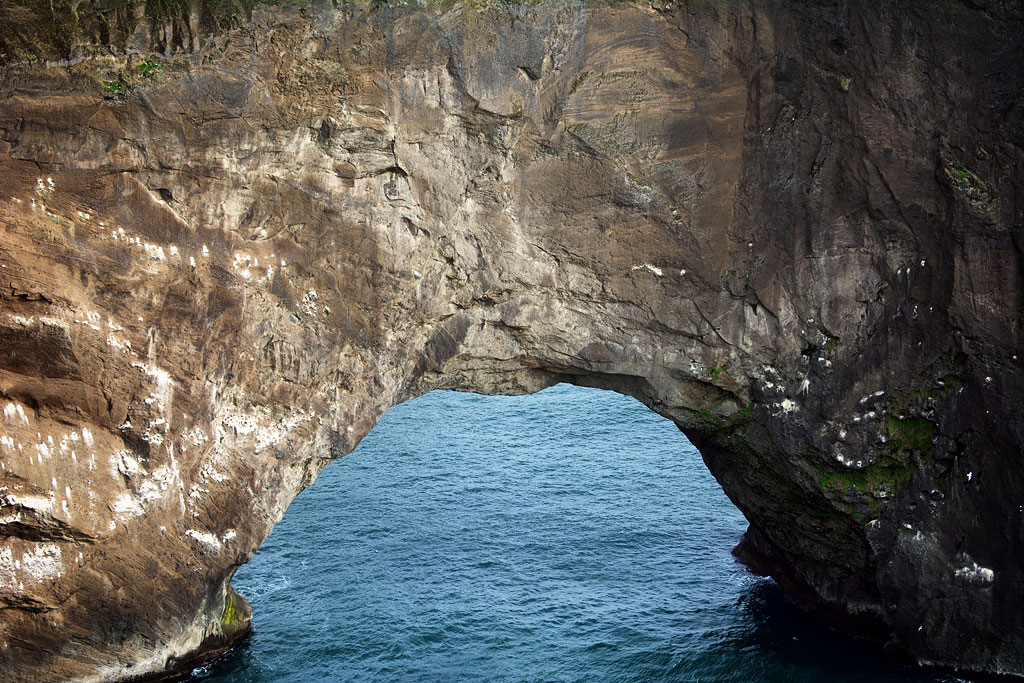
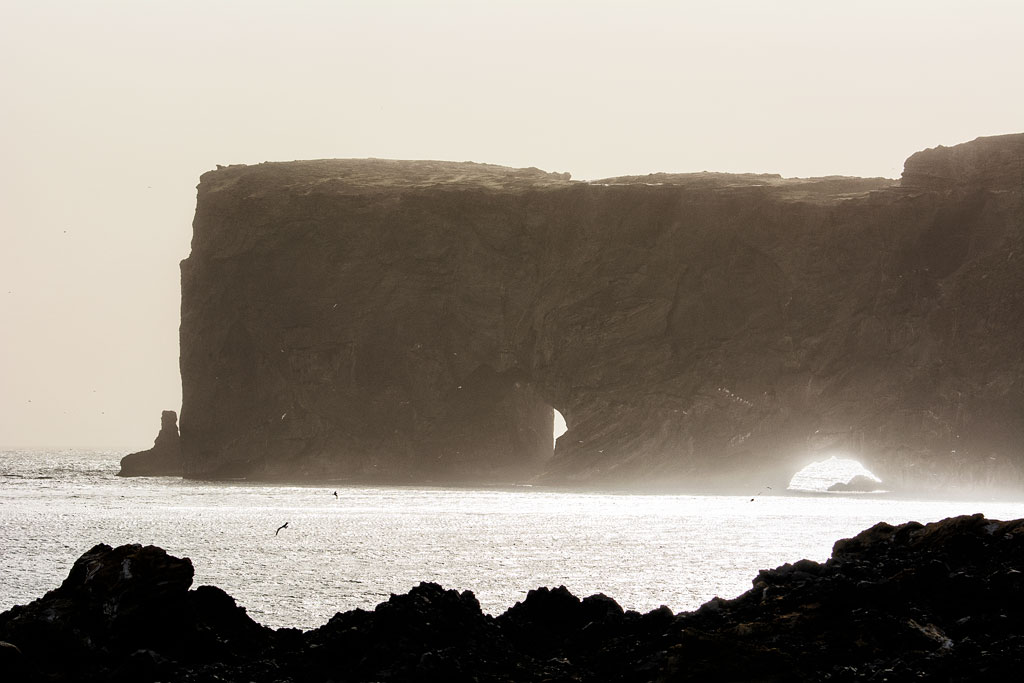
The Dyrhólaey peninsula itself is tiny, but what makes it so attractive is the massive rock arch (of the same name) at its southernmost tip. A narrow spur of rock juts out from the cape to the south, straight into the Atlantic Ocean, with sheer vertical cliffs on both sides. It is one of the most recognizable landmarks in the area.
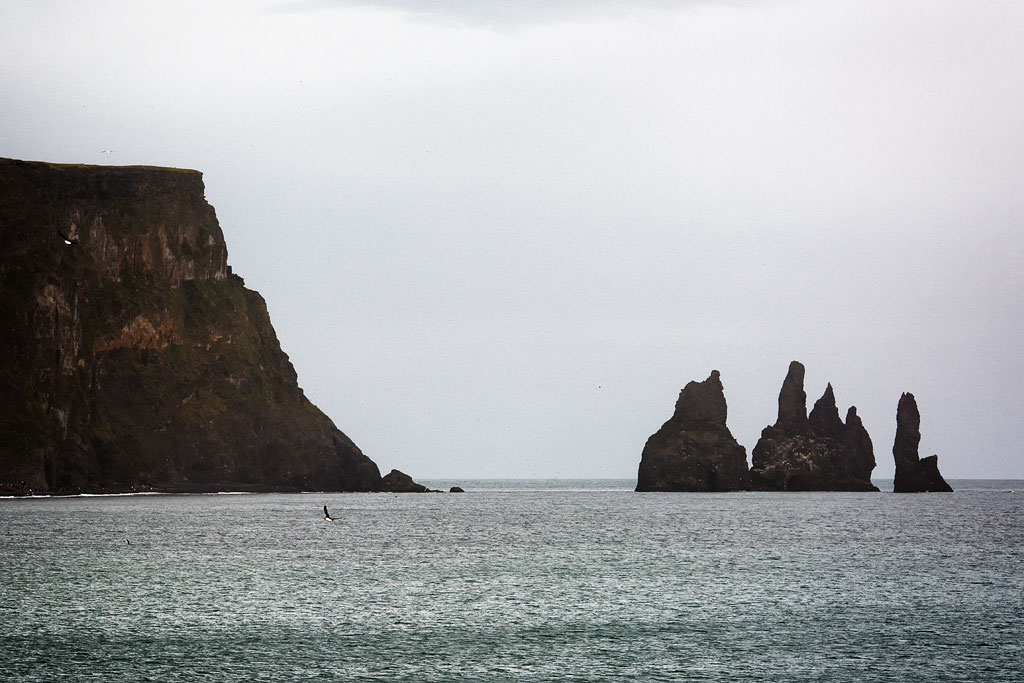
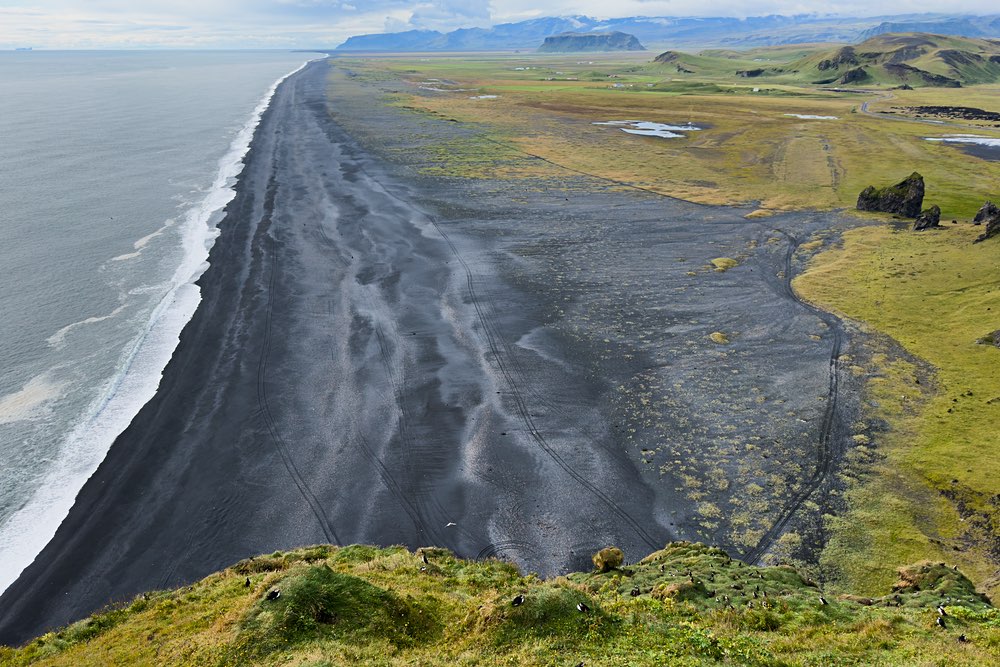
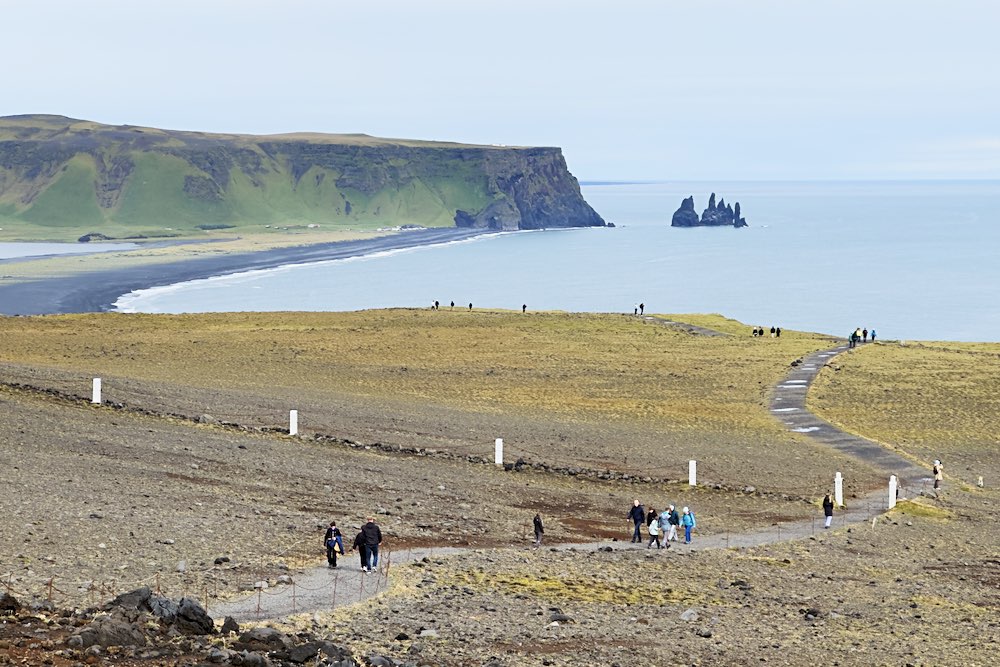
From the paths on top of Dyrhólaey, you can enjoy stunning views of the local black beaches, framed by the sparkling waves of the Atlantic on one side and distant mountain landscapes on the other. In good weather, you can even see the Mýrdalsjökull glacier from Dyrhólaey. To the east, Dyrholaey borders one of the most famous beaches in Iceland – Reynisfjara. And it is from Dyrholaey that you get perhaps the most beautiful view of it.
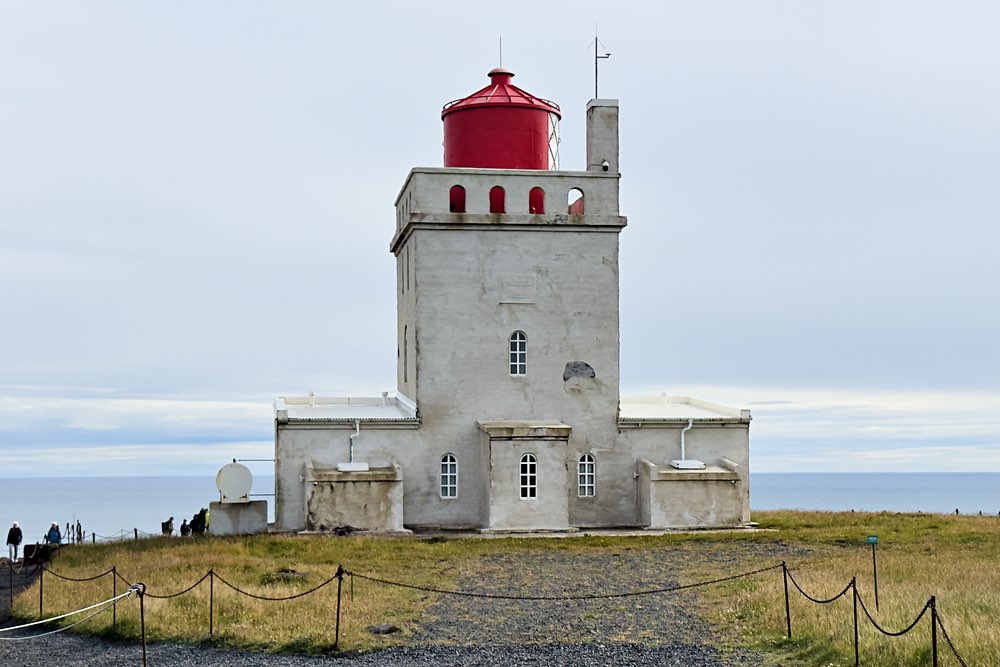
On top of Dyrhólaey stands Dyrhólaeyjarviti, a handsome old lighthouse with a square concrete tower, completed in 1927. It replaced an iron-frame lighthouse from 1910, the first of its kind in Iceland, and its light, 123 meters (404 ft) above the sea, can be seen from about 27 nautical miles away (source: Náttúruverndarstofnun).
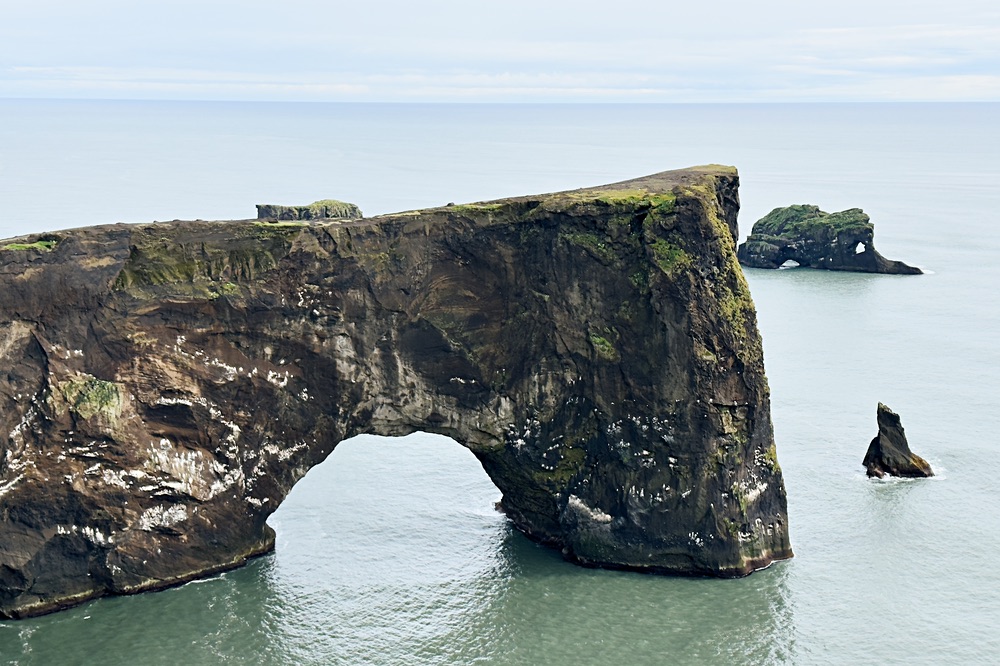
In 1993, a daring pilot flew through the opening of the Dyrhólaey arch. Small boats have also successfully passed through it.
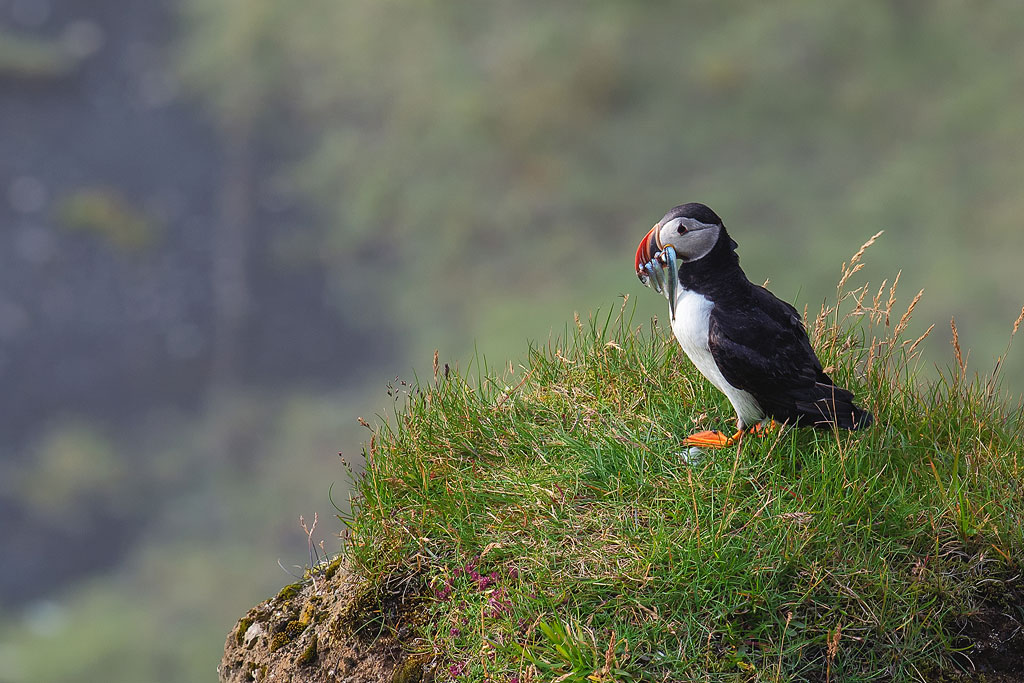
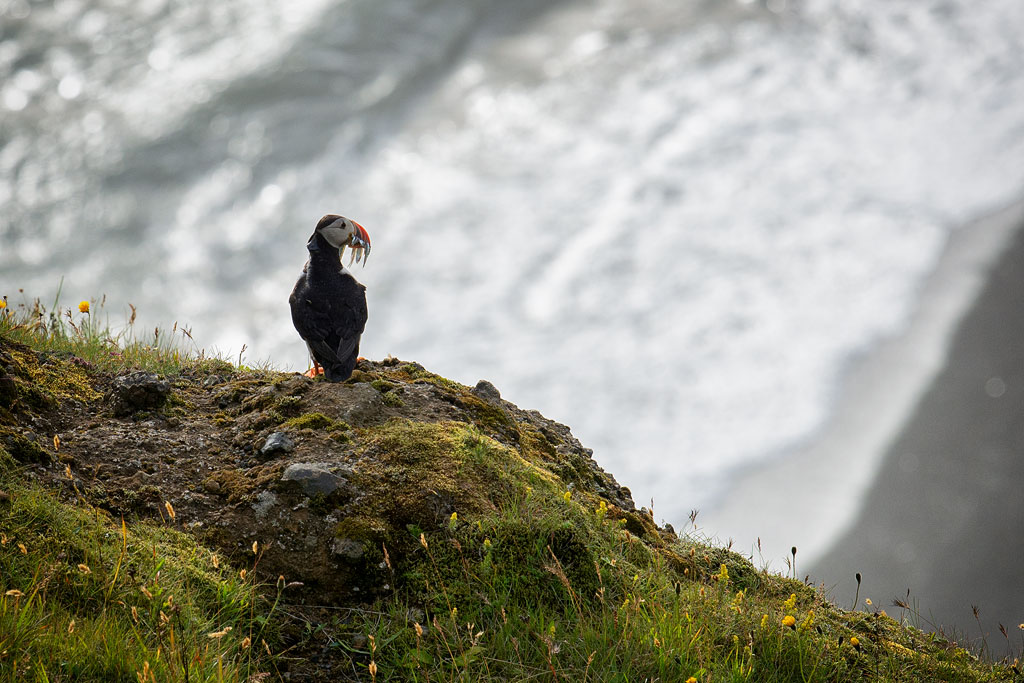
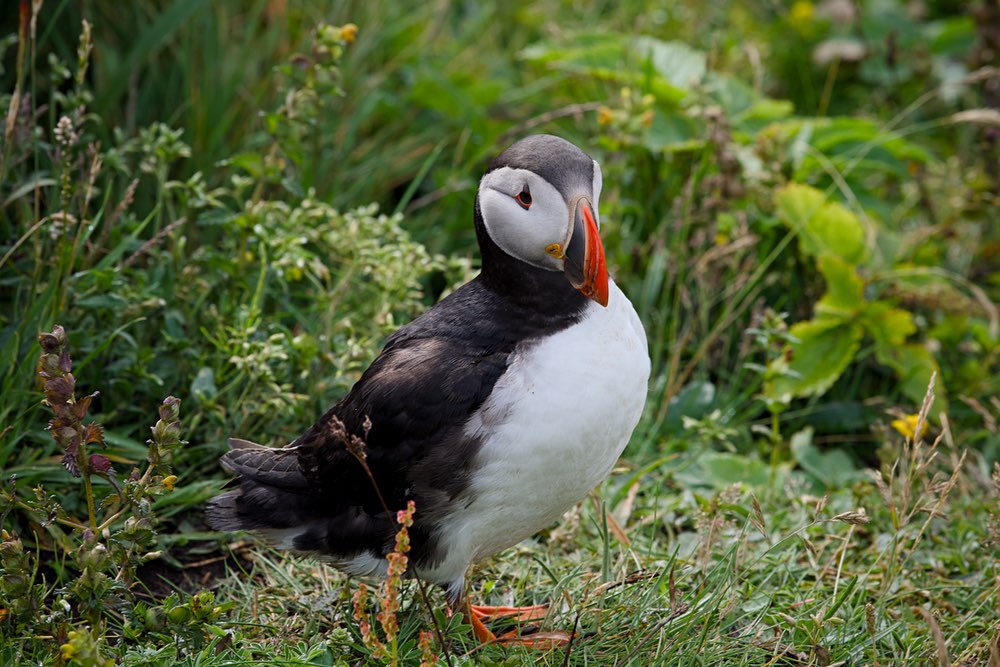
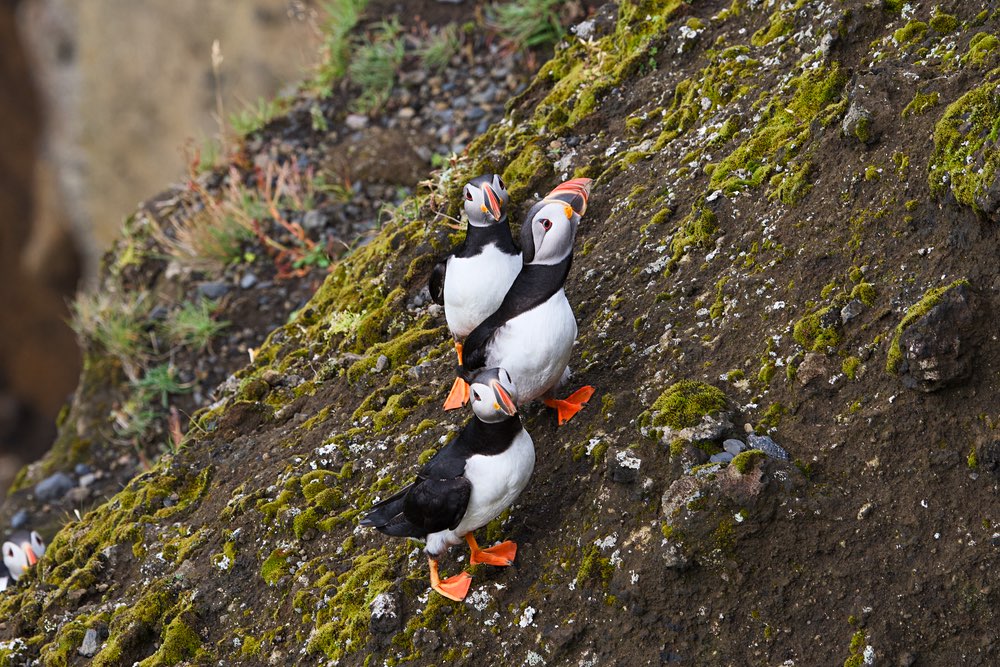
Dyrhólaey is also home to many species of birds – besides puffins you will see fulmars, arctic terns, guillemots and great skuas here. The most popular is Iceland’s favorite resident, the migratory Atlantic puffin. Although many puffins are not afraid of humans, do not try to touch them. Remember that they are wild animals and treat them with respect.
Dangerous Kirkjufjara beach
Most tourist attractions in Iceland are easily accessible and relatively safe. There are, however, a few where staying safe is hard. One of them is the black volcanic beach of Kirkjufjara.
Kirkjufjara is a small black volcanic beach, picturesquely tucked between the rocks of the cape. It offers beautiful views and great photo opportunities. Unfortunately, it is a very narrow beach, especially at high tide. There are only a few meters between the vertical cliff face and the ocean, and in heavy surf the water can reach all the way to the rocks. The cliffs themselves are another hazard: in strong winds, pieces of rock can break off and slide down.
The combination of an attractive but dangerous spot and the wild open ocean has unfortunately led to several fatal accidents. One of them happened in January 2017, when furious waves swept away a German family vacationing in Iceland. The husband and teenage children managed to save themselves, but the wife died in the ocean. Since then, the beach has been closed to visitors – the Nature Conservation Agency has shut off access to Kirkjufjara because of the danger posed by the surf.
Dyrhólaey and Kirkjufjara – practical information
Getting to the parking lot at Kirkjufjara is easy and suitable for all types of cars. The lot is at the end of Road 218, about 5 km (3 mi) west of Vik. The turnoff from Road 1 is clearly signposted.
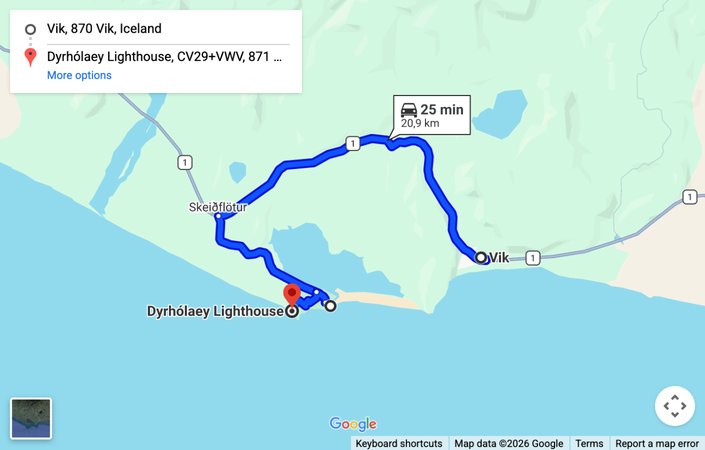
Map: driving route from Vik to the Dyrholaey lighthouse — click to open the interactive map
Access to Dyrhólaey is restricted during the breeding season of the birds nesting on the peninsula: from May 1 to June 25 the area is closed overnight, from 7:00 pm to 9:00 am (source: Náttúruverndarstofnun, April 2026). Throughout the season (May to September), stay on the marked paths and keep your distance from the nesting birds.
Since 2023 the road up to the Dyrhólaey lighthouse has been paved, and the old sign banning cars without 4×4 is gone – any car can now drive up to the lighthouse parking lot. The upper lot is small, though, and the access road is often badly narrowed by cars parked – illegally – on both shoulders; in winter the road up can also be treacherous. It is worth considering parking at the lower lot and walking up to the top of Dyrhólaey.
Parking at Dyrhólaey is paid: 750 ISK (about $6) per day for a passenger car (up to 5 seats), 1,000 ISK (about $8) for 6-9 seats and 300 ISK (about $2.50) for a motorcycle; one fee covers both parking lots, the lower one at Lágey (with restrooms open year-round) and the upper one by the lighthouse (prices September 2026, fee schedule no. 290/2026). The fee is charged by license plate through Parka and can be paid up to 24 hours after you leave.
Make sure to wear clothing that protects you from gusty winds, especially if you visit the peninsula in fall or winter.