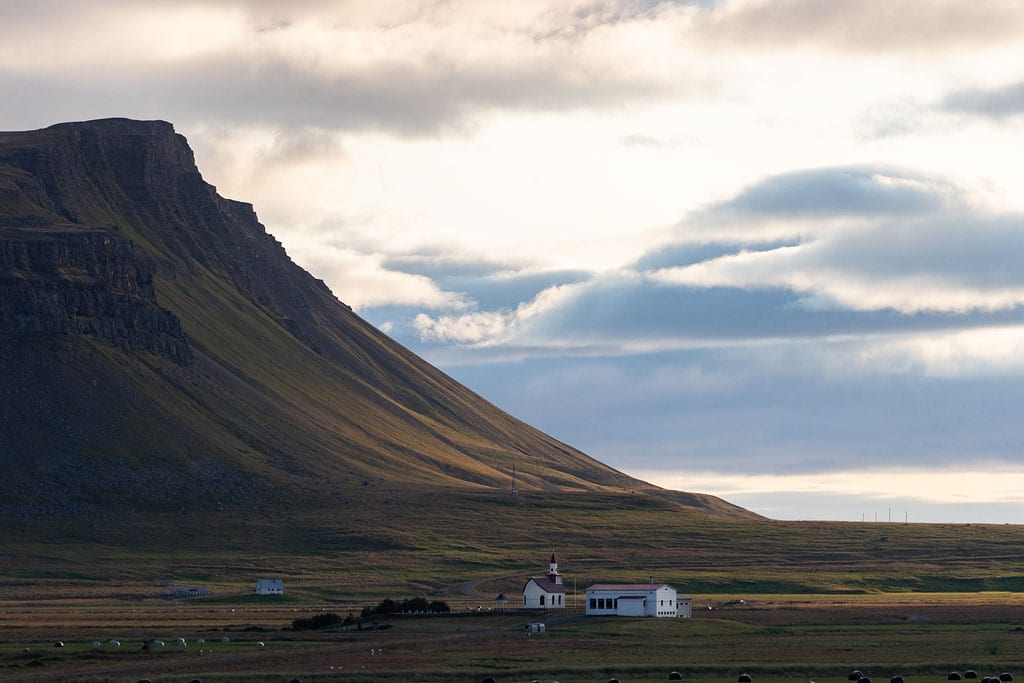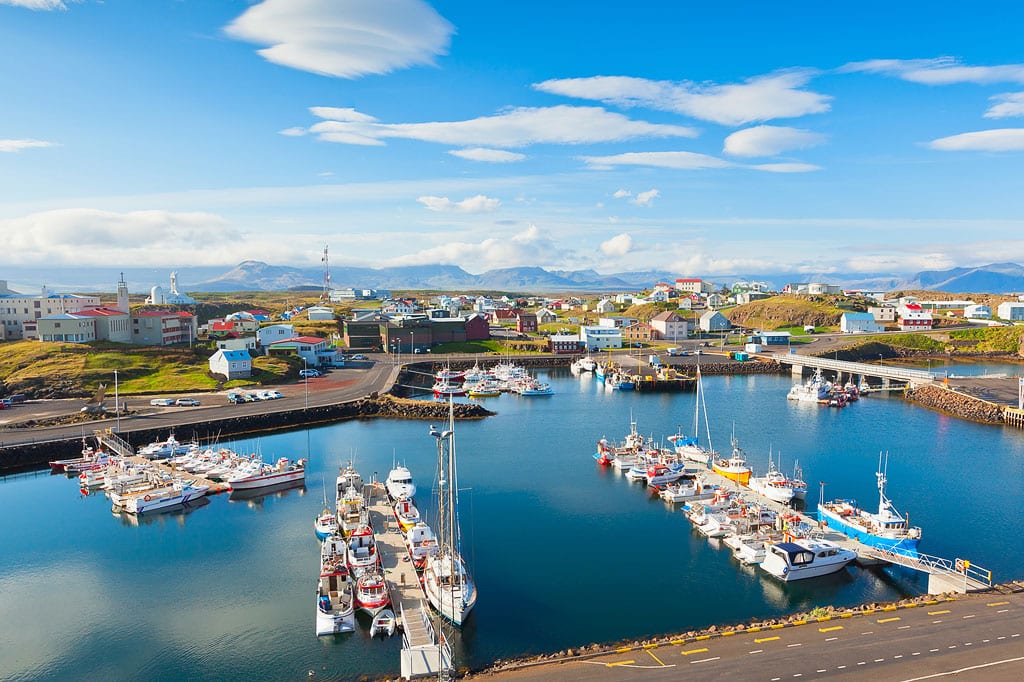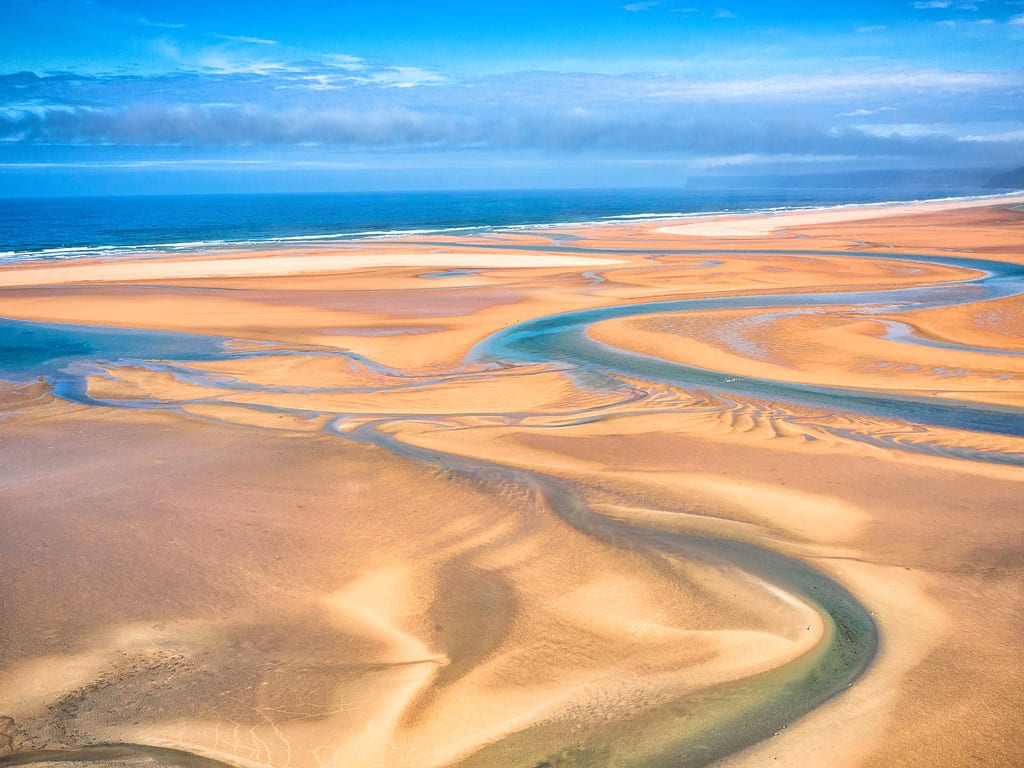


The Westfjords or West Fjords (isl. Vestfirðir) is the least populated and geologically the oldest region of Iceland. It is truly beautiful and offers several stunning – even for Iceland – places to see.
The Westfjords – wild and spectacular corner of Iceland
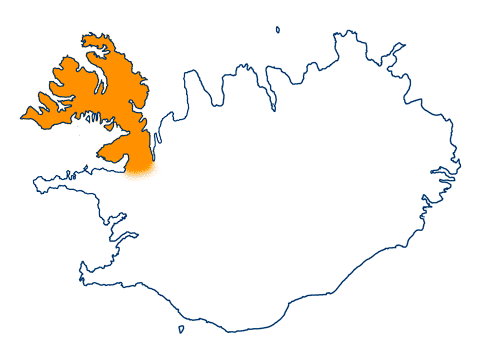
The Westfjords peninsula
Westfjords is a rather large peninsula in northwestern Iceland. It is also one of the country’s administrative regions – with the capital of Isafjordur (Ísafjörður). Only a narrow strip of land (7 km / about 4.5 miles) connects it to the rest of the country. Westfjords is home to approx. 7,000 people, with the majority living in the capital. Geologically speaking, it is the cradle and the oldest part of the island. Its rocks are as old as 16 million years!
The shoreline of Westfjords is spiked with steep hills and sharply incised oceanic fjords. All this makes the landscape here exceptionally beautiful, wild and dramatic, while significantly complicating overland travel. Most roads on the peninsula are mountain and gravel roads, which are difficult to drive on. In winter, many of these roads are completely or at least periodically closed.
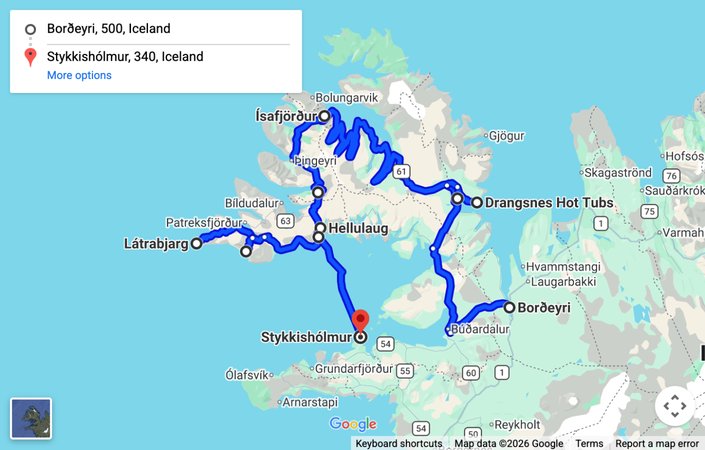
Map: driving route around the Westfjords — click to open the interactive map
It is enough to take roads 60 and 61 around the peninsula to see all the best things it has to offer. However, there are a few places worth mentioning.
Dynjandi Waterfall
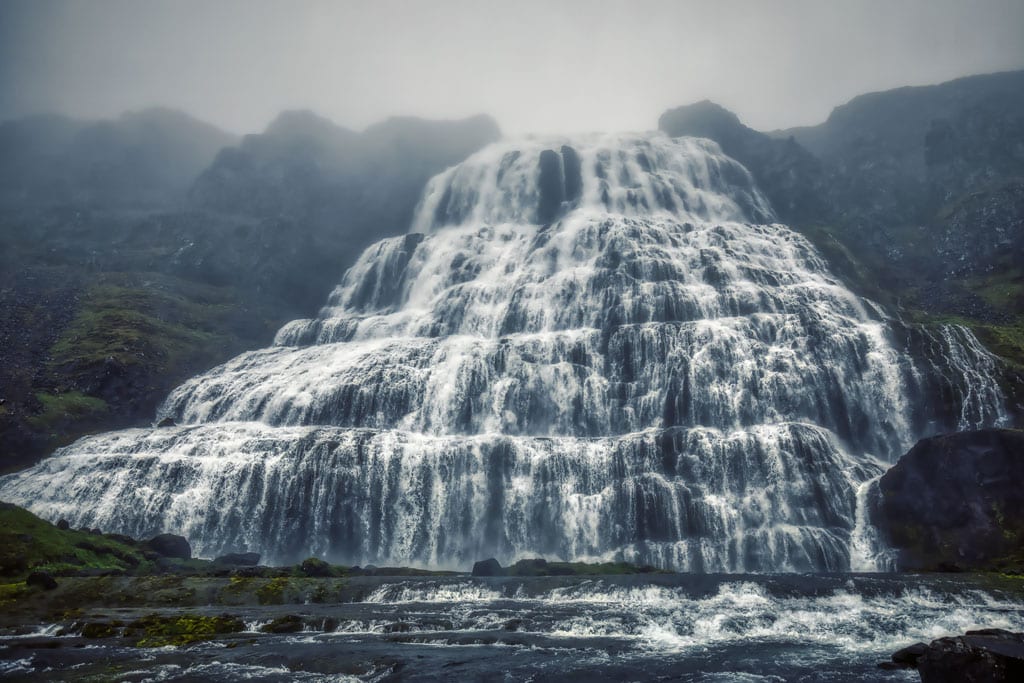
Dynjandi waterfall
Dynjandi is a rather tall waterfall (100 m / about 330 ft) in the western part of Westfjords, often referred to as the jewel of the region. Surely, it is one of the biggest attractions of the peninsula, and many travelers believe it is the most beautiful waterfall in the whole of Iceland. Given extremely tight competition in this department, it is a strong argument for seeing Dynjandi for yourself.
The amazing Dynjandi waterfall is off the road 60. It is about 35 km (22 miles) and 45 minutes north from the Brjanslaekur ferry port. Car parking is approx. 500 m (550 yards, a 15 minutes’ walk) from the foot of the waterfall.
The Jewel of Vestfirðir
Dynjandi cascades down in the form of a trapezoid. It is 30 meters (100 ft) wide on top and 60 meters (200 ft) wide at the bottom. Due to its shape and the white color of its frothy water it resembles a… wedding veil. Even though Dynjandi is not so much “falling” as it is flowing down a rock wall, many call it the most beautiful waterfall in Iceland.
Dynjandi (in Icelandic it literally means rumbling) is the original, old name of this waterfall. It is formed by the river Dynjandisá, flowing into the Dynjandisvogur bay. However, Google Maps (and the whole English-speaking online world) refers to it (also) as Fjallfoss. But fjallfoss means just any mountain waterfall, while original Icelandic maps don’t feature this name at all. I haven’t managed to establish why Google uses the name Fjallfoss, but I believe it should not be used at all.
In 1996 volunteers built a path in the rocks that leads to the foot of Dynjandi. Now, thanks to this path, the walk up takes little more than 15 minutes. On your way you can admire a few other beautiful waterfalls. All of them are marked and most have observation platforms so that you can take a rest and enjoy the beauty of Icelandic nature. These other waterfalls include:
- Hæstahjallafoss
- Strompgljúfrafoss (Strompur)
- Göngumannafoss
- Hrísvaðsfoss-Kvíslarfoss, opposite one another
- Hundafoss
- Bæjarfoss (Sjóarfoss)
Picturesque surroundings of Dynjandi
Dynjandi is located close to the Dynjandisvogur bay and the Arnarfjörður fjord. This area is known for vibrant bird activity, natural landscapes and spectacular coastline views. However, most tourists can’t be bothered to get here, so these delightful places are among the most unspoilt and peaceful in the country.
It is said that in the vicinity of the waterfall there is Iceland’s most beautiful, vividly red soil, owing its color to the iron it contains.
Látrabjarg cliffs – Iceland’s westernmost point
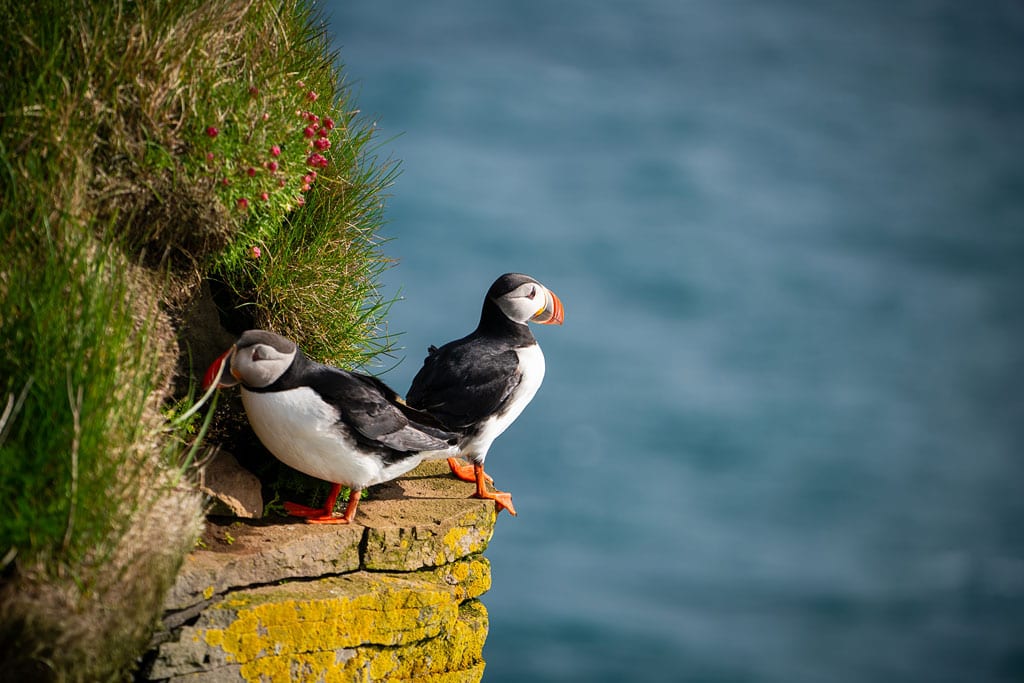
Puffins on Latrabjarg walls
Látrabjarg is a 400-meter (1,300 ft) tall cliff, stretching for 14 kilometers (about 9 miles). It is the westernmost point of Iceland and the best place to see the amazing puffins.
Látrabjarg is one of Iceland’s major bird-watching attractions. These steep cliffs are home to such birds as pretty and iconic puffins, thick-billed murres (Uria lomvia) and fulmars (Fulmarus glacialis). Interestingly, due to the large number of tourists, these birds have grown accustomed to humans and are not shy at all. But even though puffins can come really close to you, do not attempt to touch them and do not use flash while taking photos of them!
Cliff edges can be very fragile, so while walking, please be super careful.
There are many well-marked walking trails, varied in length, in the area. You can also drive up to the cliffs via a well-maintained gravel road. Here a 4×4 vehicle is not a necessity.
Golden Raudisandur beach
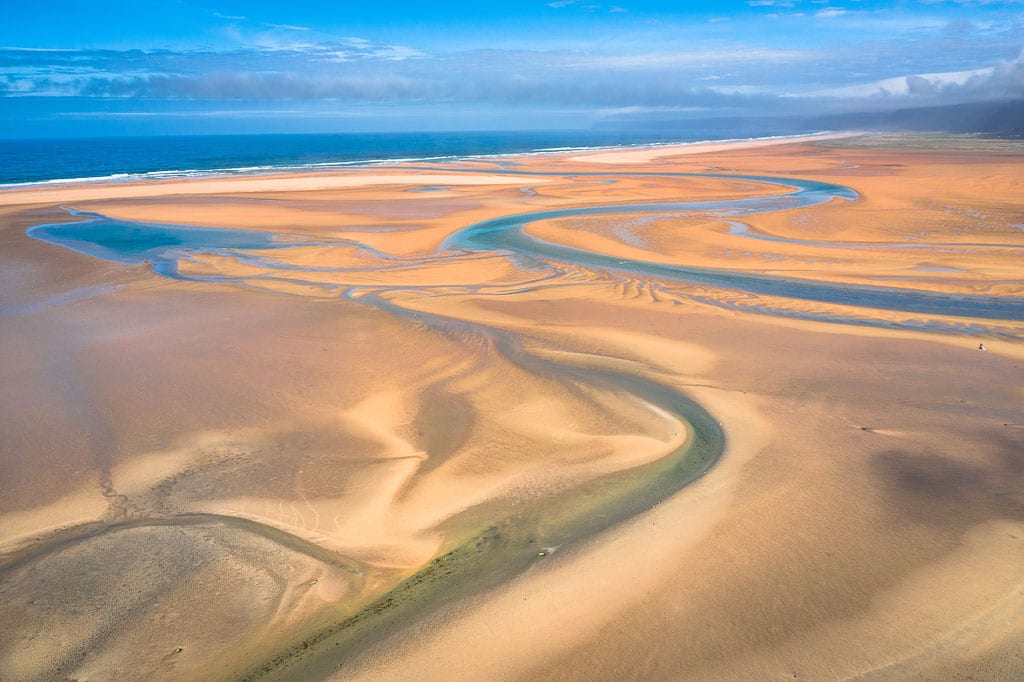
Raudisandur beach
Raudisandur (Rauðisandur or Rauðasandur) is a lovely beach with unusual red and golden sand, located in the southern part of the peninsula, not far from Látrabjarg.
Raudasandur is famous not only for its golden sand but also for excellent conditions to watch seals. You can often spot representatives of the two most common seal species bobbing in the water or soaking up sun on the beach. In this area you are also likely to spot whales.
The Raudasandur area has no volcanic activity anymore, so no black dust forms here and the sand is unlike that of many other Icelandic beaches.
To get to Raudisandur you have to take the road 60 up to Flókalundur and there turn onto 62, then 612 and then south on 614. It is very hard to get here in winter, with roads often closed due to snow. The road leading down toward Raudasandur is gravel, winding and steep, so drive slowly – a 4×4 vehicle is strongly recommended!
Hornstrandir reserve
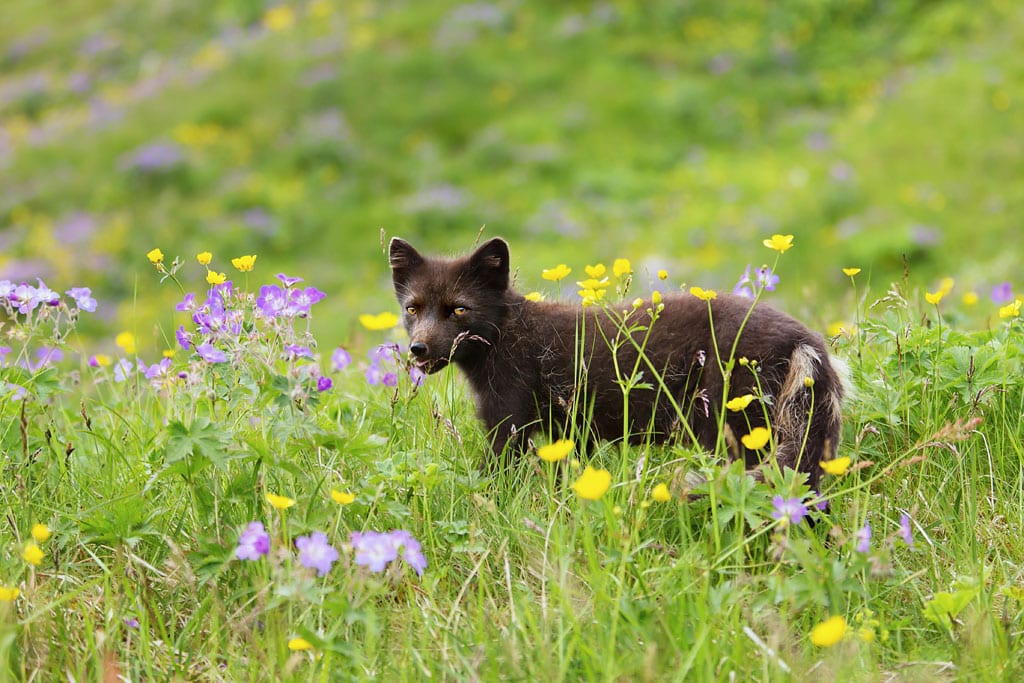
Arctic fox in Hornstrandir
Hornstrandir is the most isolated place in Westfjords and probably in the whole country. One can get there exclusively by boat and tourist infrastructure is practically nonexistent. It is located in the northernmost part of the peninsula. It offers breathtaking views of its raw tundra, picturesque cliffs and fjords, colorful flower fields and… ice. In 1975 this area was designated as a nature reserve.
Due to its unique topography and tall cliffs, it was extremely difficult for settlers to farm in the Hornstrandir area. Their main source of income was fishing and bird hunting. Farms were scattered far from one another, which made any neighborly assistance — especially in winter — really complicated. The area was popular among criminals, who came here not only to evade justice but also hoping to board a foreign ship and start a new life elsewhere.
Still, it was not criminals from central Iceland that locals feared most. It was polar bears. Even to this day these mammals come here floating on icebergs from Greenland and walk ashore. So as you can see, life in Hornstrandir was never easy and often lonely. Today, the memory of long-ago settlers lives on in just a handful of old buildings and farms.
Hornstrandir fauna and flora
There are about 260 different plant species in Hornstrandir. Some of these spread across the whole Westfjords peninsula, while others are endemic species that live only in the reserve. Due to the harsh subpolar climate and flora that is unlike the rest of the country, you will see no grazing cows, horses or sheep here. So these plants are left in peace to thrive.
The reserve is home to Iceland’s only indigenous mammal — the mesmerizing arctic fox. It regularly hunts birds that nest along the towering cliffs, thus controlling their population. In Hornstrandir hunting is strictly prohibited, meaning the arctic fox is safe here. Many of these animals are not shy when facing tourists and they may attempt to get close to camps hoping for food.
Among other inhabitants of the reserve we have numerous species of Icelandic birds: arctic terns (Sterna paradisaea), black guillemots (Cepphus grylle) and of course puffins.
Hornstrandir trips
One can’t drive into Hornstrandir. The place is only available by boat, best from the nearby town of Isafjordur (Ísafjörður). Mind you, a one-way trip for an adult is as much as 17,200 ISK (about $145).
There are a number of tour operators that offer day trips to Hornstrandir. Naturally, such trips cost more than just a two-way boat ticket, starting from $350 and going all the way to almost $2,000.
Hiking is the most popular activity when visiting Hornstrandir. Depending on your preferences, you can join a one- or multi-day guided trip or walk on your own. If you choose the latter, remember to stick to marked trails. Going off trail can not only be dangerous but it could also bring harm to unique Icelandic nature. The reserve is also good for kayaking and birdwatching.
Due to its specific location, Hornstrandir is regularly soaked with heavy rain and it can be very windy here. In order to travel comfortably (and safely), make sure you have clothes of the right kind (and quality).
Other attractions of Westfjords
One of the main reasons to visit Westfjords is to see millions of seabirds that nest in the striking cliffs. The most common bird species of Westfjords include puffin, gyrfalcon (Falco rusticolus), white-tailed eagle (Haliaeetus albicilla), snowy owl (Bubo scandiacus), black-bellied plover (Pluvialis squatarola), whimbrel (Numenius phaeopus), and redshank (Tringa totanus). Many rocks and cliffs offer great views of their colonies, but the most popular place to watch these birds is Latrabjarg.
Other well-liked activities around here are: seal watching (seals come here to rest in many places), kayaking, boat cruises, hiking (especially if you are looking for peace and quiet) and soaking in geothermal springs.
Westfjords is also a perfect place to see the Northern Lights and experience the polar night. From late November to late January the inhabitants of Westfjords only get a few hours of dimmed light, and there is no sunshine to speak of.
If you love museums, you can visit the Bolungarvík Natural History Museum, the Hversdagssafn – Museum of Everyday Life, the Museum of Icelandic Sorcery and Witchcraft, the Westfjords Heritage Museum, and the Samúel Jónsson Art Museum. However, to be frank, museums are not what Vestfirðir does best – there surely are a few more interesting ones in Europe 😉
Westfjords hot pools
Drangsnes Hot Pots
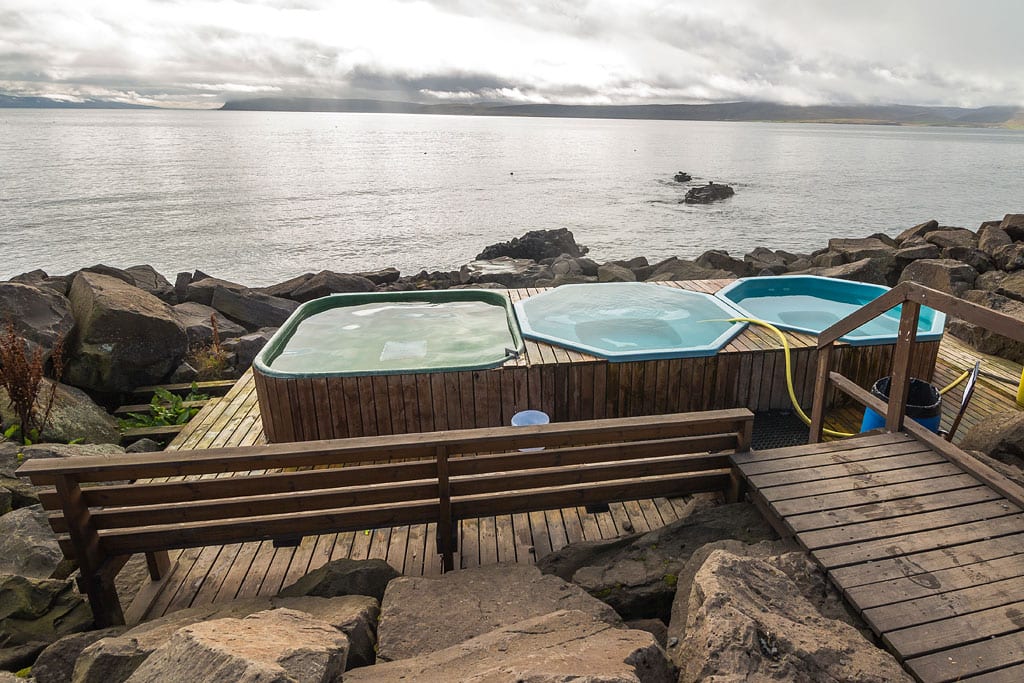
Drangsnes pools
Drangsnes Hot Pots are three geothermal pools in the small town of Drangsnes. The pools look like three jacuzzi tubs – modern bathtubs, tastefully set in a wooden deck that is placed on a rocky seawall. From this bath you can enjoy a stunning view of the fjord, and at the right time – the sunset. The proximity of the road and town will prevent you from feeling like in a totally remote place, but still a hot dip right next to the icy ocean can be both pleasant and photogenic.
The Hot Pots are open all year round, and until recently they were free. Today the owners ask for a fee (2024: 1,200 ISK / about $10 per adult and 500 ISK / about $4 per child aged 6-12), paid on trust at the shower building across the road – cash into a box, or by card at the terminal on the wall.
They are right next to the road (and a small parking area) but they are so small that you can easily overlook them. Across the road you will find a heated changing room, showers and toilets.
If you prefer less wild bathing conditions, literally 500 meters (550 yards) east, by the coastal road, you will find the local community pool Sundlaugin á Drangsnesi (open every day, but only 11 a.m. to 6 p.m.).
Drangsnes is on the road 645 in the eastern part of the Westfjords peninsula. Driving from Reykholar it is approx. 90 km (55 miles) and 1:30 hours northeast. From Bordeyri – 130 km (80 miles) and a 2 hour drive north.
Flókalundur Hot Pots
Near the town of Flokalundur (by the southern junction of roads 60 and 62, approx. 5 km / 3 miles north from the Brjanslaekur ferry port) there are two more places to enjoy hot baths – one with more infrastructure and another less “civilized”.
Hellulaug is small, wild and beautifully located – about 500 m (550 yards) northeast of the Flókalundur hotel and gas station. There is a clear sign by the road 60 that will lead you to the pool. Hellulaug are two natural rock pools on the fjord coast. There is no infrastructure to speak of, apart from a small parking area and a few litter bins. You get to feel completely isolated from the rest of the world 🙂
Sundlaug orlofsbyggðar í Flókalundi is a more sophisticated option. Tiled pools with changing rooms, showers and the like. The pools are surrounded by transparent walls, so the wind is not too strong while the view of the bay remains unobstructed. It is all very nice and private but you have to pay to get in. This pool is on the road 62, on its western side, a bit above the road. The turn is clearly marked.