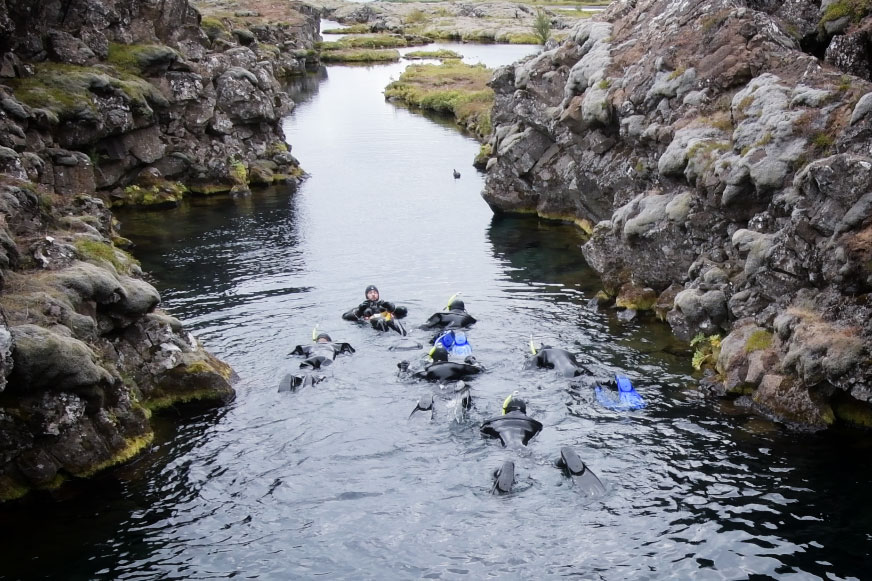


Silfra is a beautiful rock fissure filled with water from a lake. You can both dive and snorkel in this unusual place. But is it worth the effort?
Intercontinental fissure
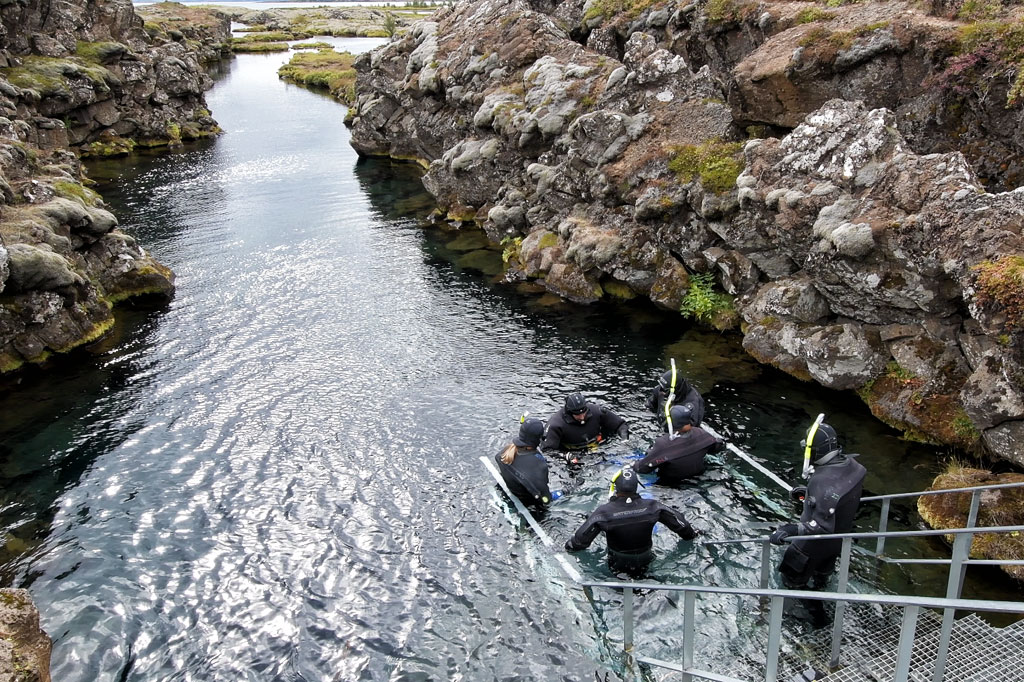
Silfra is a rock fissure formed during an earthquake in 1789. Like much of Iceland, Silfra lies where two great tectonic plates drift apart – the North American and the Eurasian. Roughly speaking, this is one of the places where the boundary between America and Europe runs. As throughout Thingvellir National Park, the vertical rock walls of Silfra are very evocative, and it’s really easy to believe that North America is on one side of the rift and Europe on the other. In reality, it would be more accurate to say that what you see there is the rift itself – the mid-Atlantic ridge and the boundary zone between the two continents.
The rift is filled with water from nearby Lake Thingvallavatn (Þingvallavatn) and is certainly part of one of Iceland’s most geographically interesting sites.
Diving in Silfra
For those unaccustomed to diving, or whose experience comes mainly from the colorful coral reefs of Egypt or Thailand, diving – or snorkeling – in Silfra is certainly an extraordinary experience.
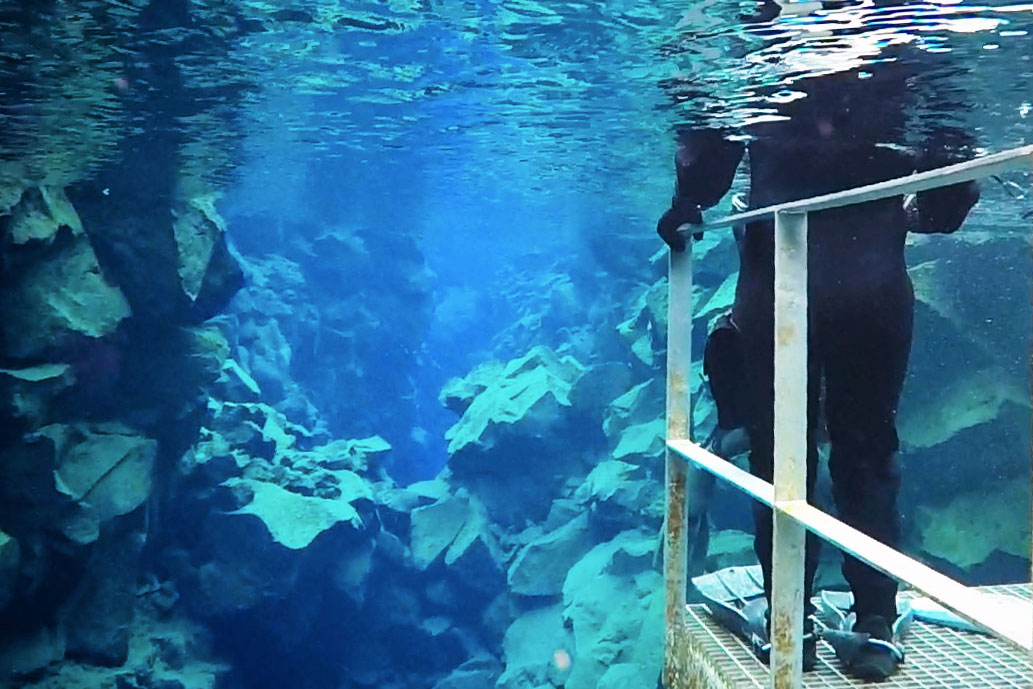
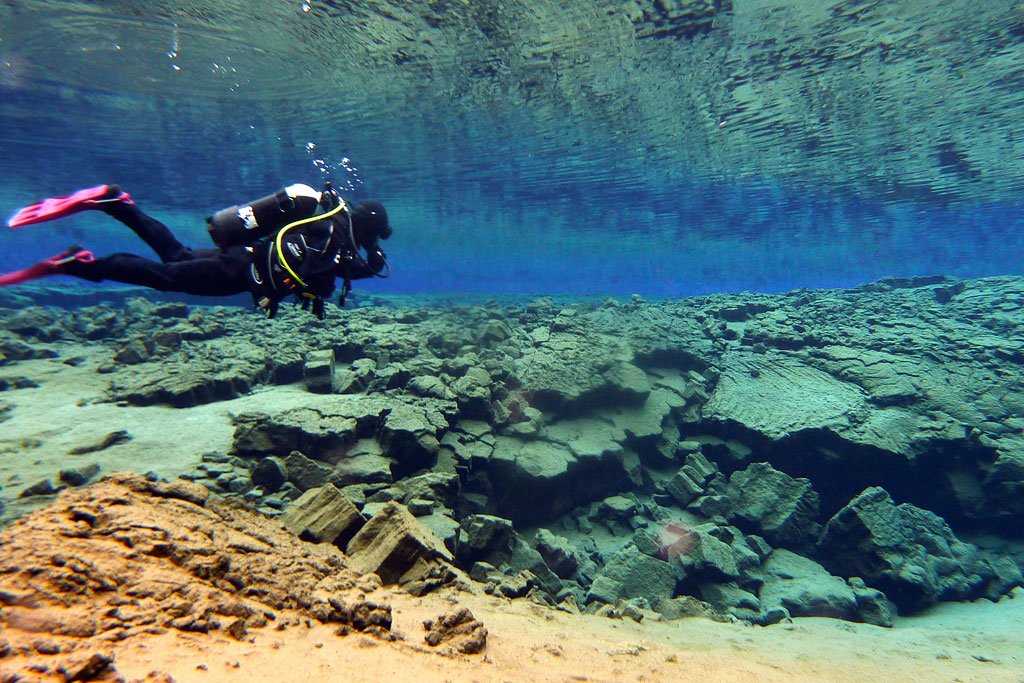
Here you swim in crystal-clear water, in a rock fissure with almost vertical walls only a few yards apart. The azure underwater world of volcanic rock rubble and pristine lava landscapes offers an experience that cannot be compared with anything else and is sure to stay with you for years.
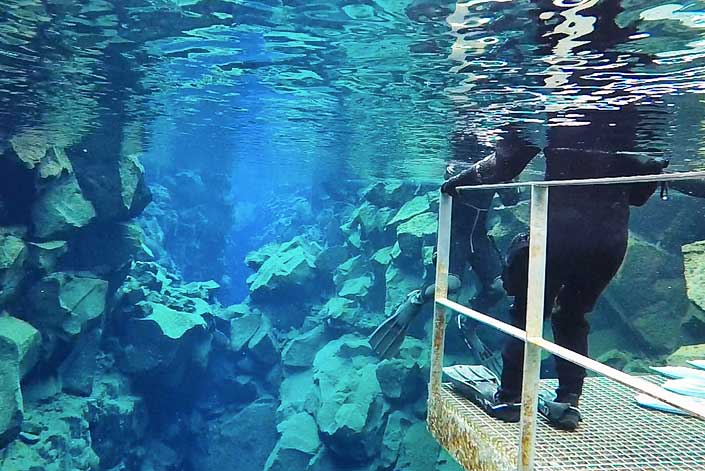
But diving in Silfra is not all sunshine and rainbows. Even if you find the essentially monochrome rocks, with no coral reefs, crustaceans and so on, interesting and beautiful in their own austere way, they are exactly the same rocks you will see in the rest of Thingvellir Park.
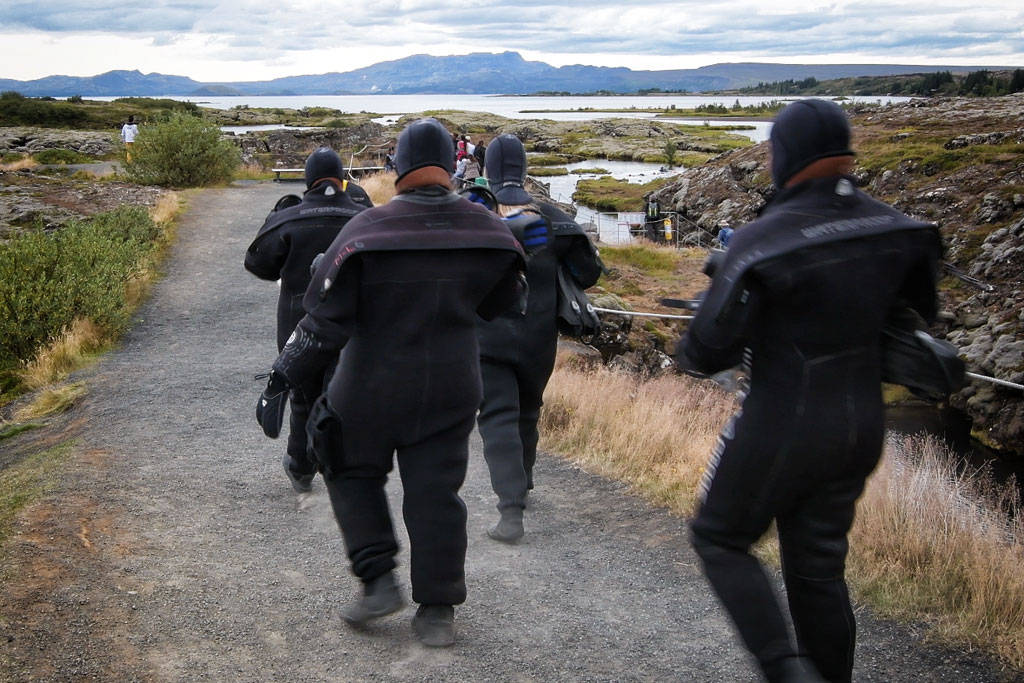
The biggest problem, however, is that we are far north, so although the water is fresh (and that’s a huge advantage), its temperature, even on the most beautiful summer day, hovers between 2 and 4 °C (36 and 39°F). That’s why a dry suit is absolutely essential, and although it keeps you reasonably warm, it is itself terribly uncomfortable, especially on the surface before you go underwater. Your head, neck and hands are less protected from the cold, and your face – apart from the mask – is simply doomed to soak in 3 °C (37°F) water.
Moreover, although the lake water is extremely clear, Iceland doesn’t always have beautiful sunny weather. If you get a cloudy day, it will be rather grayish-brown underwater too. The colorful photos on dive operators’ websites often stretch reality; the ones showing a rather monotonous greenish-blue palette are much closer to the truth. The “pretty” colors show up only near the surface and/or right where you shine a strong flashlight.
Paradoxically, it may be more interesting in winter, when you dive just by the light of flashlights. Just consider what happens when you leave 35°F water and step out into 30°F air. It’s an adventure for the tough…
Is it worth diving in Silfra?
Snorkeling in Silfra costs 21,499 ISK (about $180), or 26,499 ISK (about $220) if you want to be picked up from your hotel in Reykjavik. Diving in Silfra costs 34,499 ISK (about $290), or 42,499 ISK (about $350) with pick-up (prices checked September 10, 2026).
The whole experience takes about 3 hours, but you’ll spend only about 30–45 minutes in (or under) the water: you have to choose a suit, put it on, go through a short briefing and so on.
The place is certainly – objectively speaking – one of a kind. In few other places in the world can ‘ordinary people’ even get into the water in a dry suit. And doing it in a tectonic crack between two continents is certainly a very interesting experience.
On the other hand, if you value comfort, swimming in a dry suit may well feel extreme to you. And yes, there have been serious accidents here, so don’t take it lightly.
And for more experienced divers: the site itself is not much different from many other rocky locations, except that it’s quite narrow and shallow (diving is allowed only down to 18 m, or 59 ft). If you know the Bells in Dahab, any of the ‘blue holes’ around the world, or if you’ve ever dived in an old flooded quarry, this is quite similar. If you want to add it to your tally – sure, go ahead 🙂 But in itself it’s not really worth the money, let alone the time you have to spend on it (plus we’re not big fans of diving in rental gear, especially a rental dry suit…).
Diving and snorkeling in Silfra: practical information
- The water in the lake stays at a constant 2–4 °C (36–39°F) and doesn’t freeze all year round, so diving and snorkeling in the rift are also possible year-round.
- Thanks to a long natural filtration process, the water is not only very clear, but also drinkable.
- To dive, you must be at least 17 years old and hold an Open Water Diver (OWD) certification and a dry suit certification (the park also accepts proof of 10 dry suit dives logged in the last two years).
- To snorkel, you only need to be able to swim, be at least 12 years old and in good physical and mental health; because the dry suit has to fit, you also need to be at least 145 cm (4 ft 9 in) tall and weigh at least 45 kg (99 lb).
How to get to Silfra
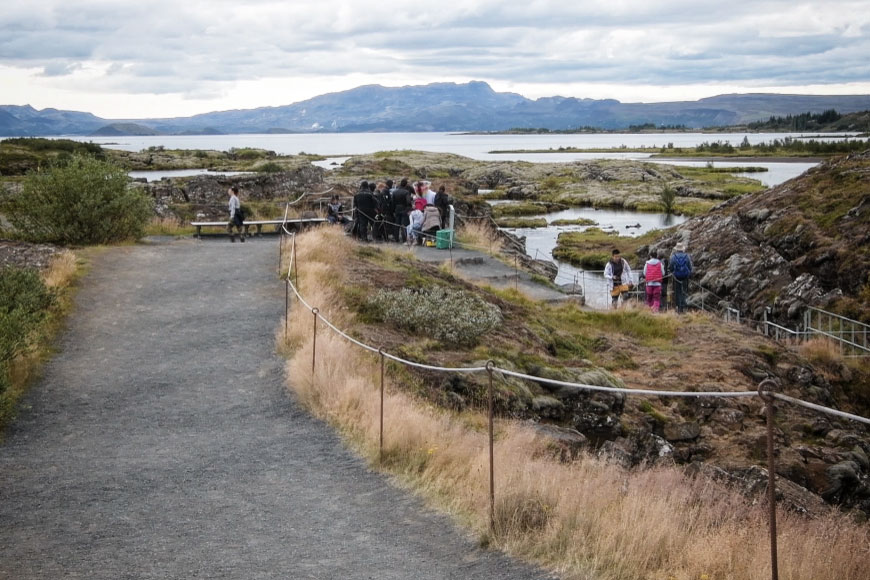
Silfra is located on the eastern edge of Thingvellir National Park, on Route 361. The divers’ parking lot is on the north side of the road, and the fissure itself is on the south side. From Reykjavik, take Route 36 heading east; the drive takes about 50 minutes.
Most dive centers offer pick-up and drop-off from/to Reykjavik. If you don’t plan to visit Thingvellir Park itself along the way, the transfer is worth it, as parking in the park (in the summer season) is not easy.
If you are interested in the details or want to book your tour, follow these links:
- Snorkeling in Silfra, meet on location: 21,499 ISK (about $180);
- Snorkeling in Silfra with pick-up from Reykjavik: 26,499 ISK (about $220);
- Diving in Silfra, meet on location: 34,499 ISK (about $290);
- Diving in Silfra with pick-up from Reykjavik: 42,499 ISK (about $350).
Photos from Silfra